
Introduction – The Making of Mastery
Every great story has a middle chapter, the part where comfort fades and character takes center stage. Volume I celebrated creativity and courage; this volume examines what happens after the beginning, when the applause fades and the work begins.
The Price of Greatness is consistency.
It’s showing up when inspiration doesn’t.
It’s choosing discipline over distraction, purpose over comfort, humility over pride.
Each story that follows reflects that cost, the long road between potential and performance.
These individuals didn’t just dream big; they paid in sweat, time, and faith to make those dreams real. As Jim Rohn taught: “We must all suffer one of two pains, the pain of discipline or the pain of regret.”
This is the volume of discipline, the climb, the grind, and the grace to keep going when no one’s watching.
Michael Jordan — The Relentless Pursuit
As a sophomore, Michael Jordan was cut from his high school basketball team. His coach told him he wasn’t good enough. That moment would have broken many young athletes. But for Jordan, it became fuel. The very thing meant to humble him instead hardened his resolve and ignited one of the fiercest competitive fires in history.
He turned disappointment into discipline. Every morning, while his friends slept, he was in the gym, honing his jump shot, refining his skills, and building the foundation of the mindset that would one day make him a global symbol of excellence. His mother, Deloris, once told him, “If you want to be great at something, you have to love it enough to work for it.” Michael did.
Years later, at his Hall of Fame induction, Jordan invited that same coach and said, in essence, “You were wrong, dude.” It wasn’t bitterness, it was proof.

Jordan’s greatness wasn’t an accident; it was engineered through obsession. He practiced harder than anyone else and demanded the same from his teammates, sometimes to their frustration, but always for their growth. His intensity wasn’t arrogance; it was accountability to the dream he’d promised himself as that cut sophomore kid.
When asked about his work ethic, teammate Steve Kerr said, “He practiced like it was the Finals every day.” Jordan turned games into classrooms and failure into feedback. He demanded excellence because he lived it first.
In the 1997 NBA Finals, sick with a 103-degree fever, Jordan played through what became known as “The Flu Game.” Barely able to stand, he scored 38 points, leading the Chicago Bulls to victory. It wasn’t talent alone that carried him that night; it was willpower. He later said, “My body could stand the crutches, but my mind couldn’t stand the sidelines.”
And then there were the legendary “revenge games.” Whenever an opponent taunted him or even outshone him once, Jordan filed it away like fuel. He turned slights, both real and imagined, into masterpieces of performance. One player trash-talked him the night before a matchup; the next night Jordan dropped 54 points and ended the game with a smile that said it all: never awaken a sleeping giant.
Off the court, he became the face of a generation. Air Jordan wasn’t just a brand; it was a belief made visible. He taught millions that excellence isn’t about the scoreboard; it’s about the standard you hold yourself to when no one’s watching.
Throughout his legendary career, Jordan won six NBA Championships, five MVP awards, and became one of the most marketable athletes in history. Yet even in retirement, his influence continues to ripple through generations, in every player who laces up a pair of Nikes and in every competitor who refuses to quit.
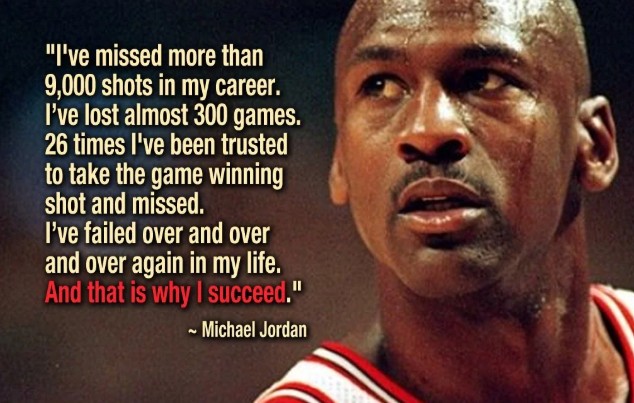
He once said, “I can accept failure; everyone fails at something. But I can’t accept not trying.” That mindset became the cornerstone of his career, the ability to turn pain into purpose and rejection into reason.
Michael Jordan’s legacy goes far beyond basketball. It’s about mastering the art of relentless pursuit, of never letting temporary defeat become permanent surrender. He is living proof that discipline creates destiny, and greatness is the byproduct of showing up, day after day, long after the world has stopped watching, and that the true measure of a champion isn’t the trophies on the shelf, but the hunger that never goes away.
Serena Williams — Strength, Grace, and Defiance
Serena Williams is more than one of the greatest athletes of all time; she is a movement in motion. Her story isn’t only about trophies; it’s about transformation. It’s about breaking barriers and redefining what strength, beauty, and resilience look like.
Born in Saginaw, Michigan, and raised in Compton, California, Serena and her sister Venus learned tennis on cracked public courts under the guidance of their father, Richard Williams. He saw greatness in his daughters long before the world did. Critics mocked him, sponsors ignored them, and the establishment doubted them. But the Williams family didn’t bend to expectations; they built their own.

From the beginning, Serena’s style was different. Her power, precision, and passion were unapologetically her own. She redefined not just women’s tennis but also the image of a female champion. Every swing was a statement. Every victory is a declaration that excellence has no stereotype.
Her rise was meteoric. At just 17, Serena captured her first Grand Slam title at the 1999 U.S. Open, defeating world No. 1 Martina Hingis. It was the first of 23 Grand Slam singles titles, the most by any player, male or female, in the Open Era. Over her career, she held the world No. 1 ranking for 319 weeks and became a global symbol of discipline, dominance, and determination.
But what defined Serena wasn’t just dominance; it was resilience.
In 2011, she suffered life-threatening blood clots and was told she might never play again. Most would have retired. Serena returned to win ten more majors. In 2017, she won the Australian Open while two months pregnant, a feat almost unimaginable in elite sport. After giving birth, she nearly lost her life again due to complications, yet she fought her way back, living out the truth of her own words:
“A champion is defined not by their wins but by how they recover when they fall.”
Serena faced more than opponents across the net. She battled stereotypes, body shaming, and relentless media scrutiny. Yet she carried herself with unshakable dignity, a blend of strength and grace that inspired millions. Her matches weren’t just competitions; they were declarations that power and femininity can coexist, that confidence can be contagious, and that greatness leaves room for grace.
Beyond the court, Serena became a fashion icon, entrepreneur, and advocate for equality. Through her foundation, she has provided scholarships, built schools, and championed causes that empower women and children worldwide. She used her platform to speak for mothers, for dreamers, and for those who are underestimated or unheard.

Even as the trophies piled up, Serena never lost sight of her faith or her roots. She credited prayer and family as the pillars that sustained her through both triumph and heartbreak.
When she announced her “evolution” away from professional tennis in 2022, she did so on her own terms; she didn’t retire; she evolved. Because that’s who Serena Williams is: evolution in motion.
And through it all, the beat goes on.
Her rhythm doesn’t stop at the baseline; it continues in boardrooms, in motherhood, and in the millions she’s inspired. She taught the world that strength is beautiful, that power can be graceful, and that champions aren’t born, they’re built through belief.
Ben Hogan — The Man Who Beat the Odds
I fell in love with golf at 11, and Ben Hogan was my dominant early influence. My first teacher modeled his game after Hogan, which naturally shaped the way he taught. Hogan was not a big man, but his work ethic was legendary. Being of similar size, I was drawn to his steely-eyed persona of “The Hawk”, one of the fiercest competitors ever to play professional golf.
Few stories in sports rival the resilience of Ben Hogan. His life reads like a parable of discipline, humility, and redemption through work.
Born in 1912 in Stephenville, Texas, Hogan grew up poor. His father tragically took his own life when Ben was just nine years old, leaving the family in hardship. To help support them, Hogan began caddying at Glen Garden Country Club, the same course where another Texas legend, Byron Nelson, learned to play.
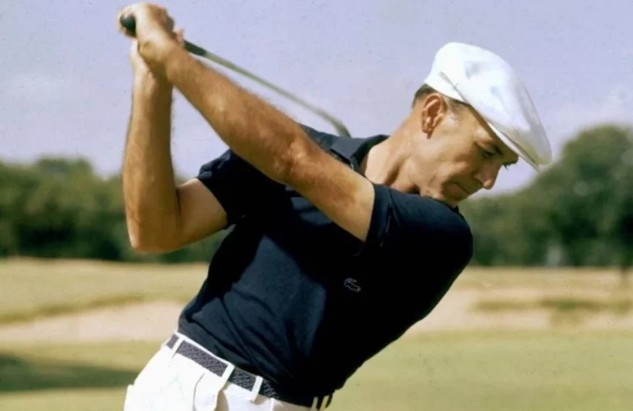
Those early years forged in him an unshakable work ethic. He wasn’t the most naturally gifted golfer, but he practiced harder than anyone. His mantra was simple: “The secret is in the dirt.” Every swing, every divot, every blister became a lesson.
Then, in February 1949, tragedy struck. Hogan and his wife, Valerie, were driving on a fog-shrouded Texas highway when a Greyhound bus suddenly veered into their lane. In a split second of instinct and love, Hogan threw himself across the seat to shield Valerie from the impact, a selfless act that likely saved her life. The crash shattered his pelvis, collarbone, ankle, and ribs, leaving doctors doubtful he’d ever walk again, much less return to golf.
But Hogan refused to surrender. Through sheer willpower and endless hours of rehabilitation, he rebuilt both his body and his swing. Even after his comeback, he played in excruciating pain. His legs swelled so severely that he had to wrap them tightly before each round just to manage the strain of walking four to six miles a day, four days in a row, the grind of professional tournament golf.
Less than two years after the crash, Hogan shocked the sports world by winning the U.S. Open at Merion, walking all 36 holes on the final day. That moment cemented his legend, not just as a golfer, but as a man of unbreakable resolve.

Hogan went on to win nine major championships and became one of the most technically precise players in history. His nickname, “The Hawk,” perfectly captured his essence, the piercing eyes, the analytical mind, and the watchful, predatory patience with which he dissected every course and every opponent. He stalked perfection, not people. He played with quiet intensity, never showing emotion, always calculating, always circling until it was time to strike.
Ben Hogan showed the world that mastery isn’t found in talent, it’s carved from struggle. The dirt he once dug for survival became the soil of greatness. His legacy reminds us that discipline, humility, and relentless focus can turn even tragedy into triumph.
Lee Trevino — The Working-Class Champion
Lee Trevino’s story begins not in country clubs but in cotton fields. Born in Dallas, Texas, to a poor Mexican-American family, Trevino was raised by his mother and grandfather after his father left early in his life. He dropped out of school at 14 and worked as a caddie to help make ends meet. His childhood was tough, but his spirit was tougher.
Armed with a homemade swing and an irrepressible sense of humor, Trevino made his mark as one of golf’s great showmen. He once said, “Pressure is playing for five dollars when you’ve only got two in your pocket.” That perspective came from experience. Before he ever teed it up on the PGA Tour, Trevino hustled for money games at local driving ranges and dusty public courses, learning how to win not just with skill, but with wit and nerve.

His swing was unconventional — short, compact, self-taught — but devastatingly accurate. What he lacked in textbook form, he made up for in precision and creativity. He could shape the ball both ways, flight it down in the wind, and play every shot with purpose. Fellow pros used to say, “If golf were played in a crosswind every day, Trevino would never lose.”
Trevino’s breakthrough came in 1968, when he shocked the world by winning the U.S. Open at Oak Hill, and again in 1971 at Merion, where he famously defeated Jack Nicklaus in a playoff. That same summer, he also won the Canadian Open and the British Open in consecutive weeks, a feat almost unthinkable today. He went on to win six major championships and 29 PGA Tour titles, carving out a Hall of Fame career with grit, guts, and a grin.
His personality was electric, funny, fearless, and unfiltered, but beneath the humor was humility. He never forgot where he came from or how hard it was to get there. When reporters asked about his confidence, he laughed and said, “I’m not saying I’m the best, I just believe I can beat you.”
Trevino also broke barriers. As one of the few Mexican-Americans in professional golf, he shattered stereotypes and opened doors for future generations. He didn’t grow up around privilege or private clubs; he battled his way into them. His story reminded millions of working-class fans that golf could be anyone’s if they worked for it.
Even after being struck by lightning during a tournament in 1975 —an injury that could have ended his career —Trevino returned to win again. He carried the scars, but also the smile, using humor as both shield and gift. He often joked, “If you’re caught in a storm, hold up a one-iron. Even God can’t hit a one-iron.”

At heart, Lee Trevino remained the same man he was as a barefoot kid from the cotton fields, grateful, grounded, and unshakably joyful. He played the game he loved with laughter on his lips and purpose in his heart.
His life teaches us that greatness isn’t reserved for the privileged. It’s earned by those who work hard, stay humble, and never lose their sense of humor, even when life throws lightning their way.
Arnold Schwarzenegger — Vision and Discipline
Before he was a movie star, a governor, or a global icon, Arnold Schwarzenegger was a kid from a small Austrian village with a dream far bigger than his surroundings.
He grew up in postwar poverty, in a house with no plumbing and a father who doubted him. But Arnold carried within him an unstoppable vision. He saw the future before anyone else could. At fifteen, he began weight training. By twenty, he was Mr. Universe. By twenty-three, he was Mr. Olympia — a title he would win seven times.

Arnold’s secret wasn’t just genetics; it was discipline. He once said, “You can’t climb the ladder of success with your hands in your pockets.” He visualized everything — the body, the career, the life—long before it existed. Vision wasn’t a fantasy to him; it was a blueprint.
As a teenager in Thal, Austria, he saw a black-and-white photo of Reg Park, the British bodybuilder who had played Hercules on screen. In that instant, Arnold found his destiny: he would build a body like Hercules’s — and use it to build a life far beyond Austria. Training in unheated gyms with makeshift equipment, he sculpted his physique one rep at a time. He told friends he would move to America and become the world’s greatest bodybuilder. They laughed. But belief, not approval, was his fuel.
In 1968, with a few dollars and a thick accent, he arrived in California. He barely spoke English, shared an apartment with other hopefuls, and trained under the mentorship of Joe Weider, who introduced him to the professional bodybuilding circuit. His best friend and training partner, Franco Columbu, became his brother-in-iron as they worked, trained, and dreamed together.
Arnold’s discipline was legendary: 5 a.m. workouts, English classes, and acting lessons sandwiched between day jobs. He entered competitions with unshakable confidence and soon began winning — Mr. Universe at twenty, and later seven Mr. Olympia titles. He didn’t just dominate the sport; he redefined it, bringing bodybuilding into mainstream culture.
Then came the next impossible goal: Hollywood. Casting directors dismissed him — his accent was “too heavy,” his name “too long,” his muscles “too much.” He smiled and kept going. Years of minor roles led to Conan the Barbarian, which made him a star, and The Terminator, which made him immortal.
“I’ll be back” became more than a movie line — it became a philosophy of persistence.

Not content with conquering entertainment, Arnold turned to public service. In 2003, he became Governor of California, guiding the world’s fifth-largest economy through turbulence with the same relentless drive he once brought to the gym.
From the small village of Thal to the global stage, Arnold Schwarzenegger’s life proves that the American dream isn’t a gift — it’s a grind. Every accent, every obstacle, every moment of doubt became another rep in the lifelong workout of faith, focus, and fearless ambition.
He never climbed the ladder of success with his hands in his pockets. He climbed it with calloused hands, relentless drive, and a vision so loud it drowned out every voice that said “impossible.”
Jim Rohn — The Architect of Personal Philosophy
Jim Rohn came into my life around the same time as Zig, and he’s continued to influence me ever since. Through his books, seminars, and timeless videos — and through the lives of men like Darren Hardy, Brian Tracy, and Les Brown, whose paths were profoundly shaped by his teachings — Jim’s impact on my life has been enormous.
If there’s been one guiding principle I’ve carried from him, it’s the power and necessity of personal growth. Jim believed we’re all meant to serve — but you can’t give what you don’t have. True service begins with developing yourself, expanding your capacity, and continually growing so you can better serve others.
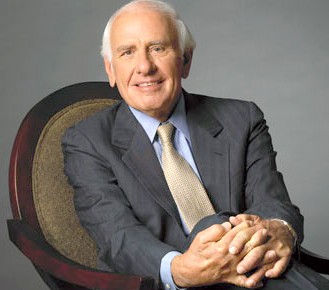
business philosophers.
Jim Rohn was a farmer’s son from Idaho who became one of the 20th century’s greatest business philosophers. His voice was calm, his words simple, yet his ideas reshaped lives.
Rohn’s journey began in obscurity. He worked as a stock clerk for Sears before a friend invited him to a seminar by Earl Shoaff, a mentor who changed his life. Shoaff taught him the principles of personal development, goal setting, and self-discipline. Jim absorbed every word.
Over time, he realized that success isn’t something you pursue — it’s something you attract by the person you become. That single insight became the foundation of his life’s work.
He often said, “Don’t wish it were easier; wish you were better.” That one line captures the essence of Rohn’s teaching: personal growth precedes professional success.
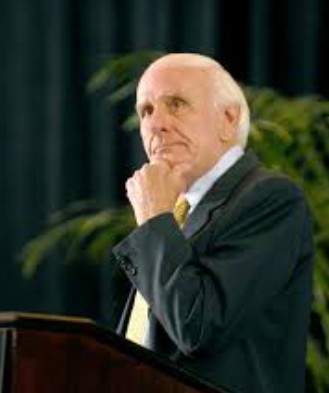
He also taught that we all pay a price in life: either the pain of discipline or the pain of regret. Discipline weighs ounces; regret weighs tons.
Jim’s ideas influenced millions, including future legends like Tony Robbins, Brian Tracy, and Les Brown. His words still echo today in boardrooms, gyms, churches, and classrooms.
He reminded us that motivation gets you started, but habit keeps you going — and that success is not about what you have but who you become in the process.
Jim Rohn’s wisdom continues to serve as a compass for anyone striving to live intentionally. He was the architect who showed us that if you build a strong foundation for your philosophy, you can weather any storm.
Jeff Bezos: Garage Beginnings, Global Empire
In 1994, Jeff Bezos had what most people would call the dream job.
He was a senior vice president at a leading Wall Street investment firm, earning a generous salary and the respect of his peers. But deep down, he felt a quiet restlessness — a whisper that asked, “What if there’s more?”
That whisper became a roar the day he read a statistic that changed everything: the internet was growing at 2,300% per year. The idea of selling books online seemed radical, even absurd, but Bezos couldn’t shake it. Logic said stay. Fear said wait. His heart said go.
So he did. With his wife, MacKenzie’s, unwavering support, he resigned from his high-paying job, packed up a 1990 Chevy Blazer, and drove from New York to Seattle. Somewhere along that long stretch of highway, Amazon was born.

The company began humbly — a garage, a desk made from a door, and a dream big enough to outgrow both. Jeff and MacKenzie personally packed and shipped books, driving boxes to the post office each night. There was no glamour, no guarantee — only grit.
From the beginning, Bezos thought long-term. He told investors that Amazon’s focus would be on customers, not quarterly profits. He knew that loyalty, not luck, built lasting success. He built a culture of experimentation, embracing failure as tuition for progress. Projects that didn’t work weren’t disasters; they were data. That mindset freed Amazon to evolve faster than its competition.
Bezos relied on what he called the Regret Minimization Framework — asking a straightforward question:
“When I’m 80 years old, will I regret not having tried this?”
That single thought erased his fear of failure. He realized the only true failure would be living with what-ifs.
He worked relentlessly, often sleeping on the office floor, and reinvested every dollar back into growth. When critics said his model would collapse, he just smiled and kept building.
Bezos said, “If you can’t tolerate criticism, don’t do anything new or interesting.” That mindset fueled Amazon’s evolution — from books to electronics, from cloud computing to global logistics.

His leadership wasn’t built on hype; it was built on principle. He asked his team to focus not on trends, but on what will never change: customers will always want lower prices, faster delivery, and better service. That clarity became Amazon’s compass.
From that compass came innovation after innovation — Prime, Alexa, AWS, Kindle — each one pushing the limits of what people believed possible.
Today, Amazon stands as one of the most influential companies on Earth — a symbol of persistence, imagination, and the willingness to play the long game.
Bezos reminds us that patience and vision are rare but powerful allies. Success may not come overnight, but for those who keep showing up, it always comes right on time.
He once said,
“I knew that if I failed, I wouldn’t regret that. But I knew the one thing I might regret is not trying.”
That’s the heartbeat of marching to your own beat — the courage to trade comfort for conviction, to leave behind certainty for the chance to do something that matters.
From a garage floor to the global stage, Jeff Bezos didn’t just dent the universe;
He redesigned its delivery schedule.
Howard Schultz — Leading with Heart
Long before he became the face of Starbucks, Howard Schultz grew up in the Brooklyn housing projects — the son of a truck driver and a stay-at-home mother. His family lived paycheck to paycheck, with no safety nets or guarantees — only hard work and hope.
One of the defining moments of his life came when he was seven years old. His father slipped on the ice and broke his ankle while working. Without health insurance, he lost his job, and the family spiraled into financial crisis. Howard never forgot that feeling — the fear, the helplessness, and the silence that filled their small apartment.
That experience shaped his mission: to build a company that cared about people as much as profits.
Schultz was the first in his family to attend college, earning a football scholarship to Northern Michigan University. After graduation, he worked in sales for Xerox before joining a small coffee equipment company. On a trip to Seattle, he discovered a local shop called Starbucks Coffee Company — then just a handful of stores. Fascinated by their passion for quality, he convinced the founders to hire him as head of marketing.

Everything changed when Schultz visited Italy on a business trip. There, he saw how Italians treated coffee not as a product but as a ritual — a daily act of connection and community. He dreamed of bringing that same sense of belonging to America.
When the Starbucks founders rejected his vision, Schultz left to pursue it on his own. He raised funds, launched his own café concept, Il Giornale, and later acquired Starbucks outright. What began as a small Seattle roaster grew into a global phenomenon — not because of coffee alone, but because of culture.
Schultz built Starbucks on a simple belief: that a company could be profitable and purposeful. He offered part-time employees healthcare and stock options — unheard of at the time — and created a workplace rooted in dignity and respect. When critics said it would destroy profits, Schultz said it would build people. Time proved him right.
But his journey wasn’t without challenge. Schultz faced burnout, criticism, and shareholder pressure. In 2008, after stepping down as CEO, he returned to rescue the company during the recession. His turnaround plan refocused Starbucks on its core values: connection, quality, and compassion. Within two years, the brand was thriving again.
He once said,
“Success is best when it’s shared.”
That sentence defines Howard Schultz. He transformed an ordinary beverage into an extraordinary bridge between people — proving that kindness and capitalism don’t have to be opposites.

From the projects of Brooklyn to boardrooms around the world, Schultz’s story reminds us that leadership isn’t about status or stock prices — it’s about service. He marched to the beat of empathy — and in doing so, taught the world that profit follows purpose, not the other way around.
Sylvester Stallone — The Fighter’s Dream
I saw the first Rocky movie when I was only eight years old. Little did I know that Sylvester Stallone would become one of the most significant influences in my life — inspiring my determination to never give up. Rocky III came out about the same time I started lifting, and Rocky IV was released right after my first bodybuilding show. Stallone was never the most naturally gifted actor, but, just as with the fighting strategies he used throughout the Rocky saga, he played to his strengths—and his success is without question.
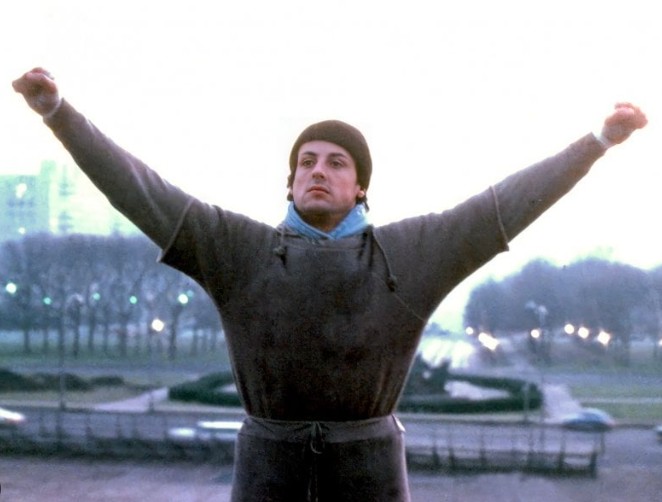
Before Rocky made him famous, Stallone’s life looked nothing like the silver screen. He was in a bad marriage and financially a mess. At one point, he even sold his beloved dog, Butkus, because he couldn’t afford to feed him. Then came the spark that would change everything: he watched Muhammad Ali fight Chuck Wepner, a little-known boxer who managed to knock down the champ. Ali went on to win the fight, but in that moment, Stallone saw something timeless — the courage of an underdog who refused to quit.
Three days later, he had his story.
Broke and living in a tiny New York apartment, Stallone poured his soul into writing the Rocky script. When he began pitching it, studios loved the story but not him. They offered $350,000 for the rights — on one condition: someone else would play Rocky Balboa. Stallone refused. He believed he was born to play that role.

He eventually sold the script for a fraction of that offer, but only on the condition that he star in it. The rest is history. Rocky went on to win three Academy Awards, including Best Picture, and launched one of the most iconic franchises in film history.
And in a poetic twist of fate, Stallone was later able to buy back Butkus — paying the man who had purchased him a much higher price, and even giving him a small role in Rocky I. The reunion became symbolic of Stallone’s entire journey: a story of perseverance, redemption, and loyalty to what truly matters.

He didn’t stop there. Stallone followed with another legendary series — Rambo — proving his grit extended far beyond the boxing ring. Decades later, at nearly eighty, he reinvented himself yet again with Tulsa King, reminding the world that true fighters never stop evolving.
Stallone’s journey reminds us that conviction often costs comfort. Sometimes you have to bet everything on yourself when no one else will.
His story is about resilience, faith, and the refusal to compromise your identity for acceptance. The man who wrote about a fighter became one — in life and in art.
Personal Reflection
I grew up with Rocky as more than just a movie — it was a mindset. Stallone showed me that greatness isn’t born from privilege or luck, but from hunger, grit, and the willingness to get back up one more time than you’ve been knocked down. Every time I’ve faced setbacks — in fitness, business, or life — I’ve thought of that scene of Rocky rising from the canvas, bloodied but unbroken.
Stallone taught me that the fight is never about who’s stronger; it’s about who refuses to quit. That belief has shaped my approach to coaching, training, and living. Whether I’m helping a client reclaim their health or fighting through my own storms, I carry the same spirit that fueled Stallone when he refused to sell his dream.
In my world, that’s what it means to march to your own beat — to keep swinging, no matter what life throws your way.
Elon Musk — All In
In the early 2000s, Elon Musk had already achieved what most would consider lifetime success. He helped build and sell PayPal, securing a personal fortune. By any measure, he could have retired comfortably. But comfort never inspired him — curiosity did.
While others celebrated their exits, Musk began dreaming again — this time not about software, but survival. He saw a world that was too dependent on fossil fuels, too comfortable with its limitations, and too afraid to imagine life beyond Earth. So he went all in.

He poured nearly every dollar he had into three ventures: SpaceX, Tesla, and SolarCity. Friends called him reckless. Investors called him naïve. The media called him a gambler. They weren’t wrong — he was betting everything.
Then came the crash.
By 2008, the economy was collapsing. Musk was running out of cash. Three SpaceX rockets had failed. Tesla was weeks from bankruptcy. He was borrowing money just to pay rent. Most would have folded. Musk refused.
He told his team,
“When something is important enough, you do it even if the odds are not in your favor.”
Then came the breakthrough. On the fourth launch, SpaceX reached orbit — a moment that changed aerospace forever. Within days, NASA awarded the company a vital contract, and Tesla secured emergency funding to survive. Musk had risked it all — and won.

But his story didn’t end with survival. It evolved into a transformation. He made electric cars desirable, reusable rockets a reality, and the idea of interplanetary travel part of serious conversation. When critics said Tesla’s two-day delivery model for vehicles and SpaceX’s reusable rockets were impossible, he said, “Let’s try anyway.”
That relentless mindset became his trademark: experiment, fail fast, and push forward. Musk built his companies on the belief that progress depends on persistence — and that fear is just another frontier to cross.
He once admitted,
“My biggest mistake is probably weighing too much on someone’s talent and not enough on their personality. I think it matters whether someone has a good heart.”
Behind the intensity is a man who believes in purpose — not perfection.

Today, Musk’s work touches nearly every modern frontier: sustainable energy, space exploration, artificial intelligence, and neural technology. But at its core, his mission remains the same — to create a future worth believing in.
Elon Musk embodies risk at a level most people only read about. From PayPal to Tesla to SpaceX, he’s built companies that redefine entire industries by constantly pushing the limits of what’s possible. He works harder than anyone he employs — often sleeping at the factory — driven by an almost obsessive commitment to progress. His focus on innovation has reshaped industries and accelerated humanity’s future.
Elon Musk’s story teaches that vision without courage is just imagination. To change the world, you must be willing to risk being misunderstood, ridiculed, or even hated.
Greatness doesn’t come from playing it safe — it comes from being all in.
Personal Reflection
Musk’s story strikes a chord with me because it’s not just about brilliance — it’s about belief. He reminds me that progress doesn’t come from comfort; it comes from conviction. When he bet everything on ideas others called impossible, I see parallels to my own mission — building a life and business that align with purpose, even when the path isn’t clear.
In my world, I may not be launching rockets or revolutionizing transportation, but the principle is the same: stay curious, stay hungry, and stay true to the mission. Like Musk, I’ve learned that success often demands walking alone for a while — until persistence finds its rhythm and the vision becomes reality.
That’s what it means to march to your own beat.
Steve Jobs — Think Different
In 1976, two young dreamers — Steve Jobs and Steve Wozniak — began building computers in a garage in Los Altos, California. Jobs was the visionary; Wozniak, the engineer. Together, they formed Apple Computer, guided by a simple but radical idea: technology should be personal.
While other companies built machines for corporations, Apple built for the individual. The Apple II put computing on kitchen tables and in classrooms, igniting the personal computer revolution. From those humble beginnings, Jobs constructed not just a company but a culture — one that celebrated creativity, simplicity, and rebellion against the ordinary.

But visionaries often walk a fine line between brilliance and burnout. By 1985, internal conflicts erupted, and the board forced Jobs out of the very company he had created. It was a devastating blow — a public humiliation that could have ended him.
Instead, it became the defining moment of his life.
He later said,
“Getting fired from Apple was the best thing that could have ever happened to me. The heaviness of being successful was replaced by the lightness of being a beginner again.”
During his exile, Jobs founded NeXT, a computer company focused on education and design, and bought a small animation studio called Pixar. Pixar would go on to revolutionize entertainment, producing Toy Story, Finding Nemo, and The Incredibles.
Meanwhile, NeXT quietly developed technology so advanced that Apple — struggling and nearly bankrupt in the late 1990s — bought the company just to get Jobs back.
When he returned in 1997, Apple was bleeding cash and directionless. Jobs made one of the boldest moves in business history: he simplified everything.
Apple had dozens of overlapping products. Jobs drew a four-quadrant chart on a whiteboard and told his team to focus on just four: one desktop, one laptop, one consumer model, and one professional model. Everything else was cut.

That laser focus became Apple’s secret weapon. From that discipline came the iMac, iPod, iPhone, iPad, and later AirPods — each a masterclass in design and user experience. Jobs understood that true innovation doesn’t come from doing more; it comes from doing what matters most with obsessional excellence.
When the world doubted Apple’s strategy, he doubled down on simplicity. The results were staggering. By 2007, Apple had redefined music, phones, and computing — transforming from a near-bankrupt company into the most valuable brand on earth.
Even after his passing in 2011, Jobs’s fingerprints remain everywhere — from Apple’s minimalist design ethos to its relentless pursuit of seamless integration. The AirPods seen everywhere today are more than a product; they’re the echo of his belief that technology should disappear into the human experience.
Jobs once said,
“Design is not just what it looks like and feels like. Design is how it works.”
He didn’t just invent technology — he reimagined its purpose. His genius lay not in complexity but in simplicity.
Jobs’s life reminds us that innovation demands obsession and clarity. You must be willing to start over, rethink everything, and let go of what no longer serves the vision.
Perhaps his legacy is best captured in the words he helped bring to life in Apple’s iconic Think Different campaign — a message not just to the world, but to every soul daring to live authentically:
“Here’s to the crazy ones.
The misfits. The rebels. The troublemakers.
The round pegs in the square holes.
The ones who see things differently.
They’re not fond of rules.
And they have no respect for the status quo.
You can quote them, disagree with them, glorify or vilify them.
About the only thing you can’t do is ignore them.
Because they change things.
They push the human race forward.
And while some may see them as the crazy ones,
we see genius.
Because the people who are crazy enough to think they can change the world,
are the ones who do.”
Steve Jobs was one of those people.
And because of him, millions more now believe they can be, too.
Personal Reflection
Steve Jobs’s story resonates with me because it’s not just about innovation — it’s about intentional excellence. His genius was in doing fewer things better, cutting through the noise to focus on what truly mattered. That principle mirrors what I’ve come to believe in my own journey: success isn’t about how much you do, but how purposefully you do it.
Like Jobs, I’ve learned that clarity requires courage — the courage to say no, to simplify, and to trust that doing less can actually lead to more. His commitment to simplicity and mastery reminds me to pursue quality in every area of life — in faith, family, fitness, and service to others.
Jobs once said, “We’re here to put a dent in the universe.” For me, that dent begins one person at a time — helping others find their rhythm, their health, and their hope. That’s what it means to march to your own beat — to live with focus, faith, and purpose so clear that it echoes long after you’re gone.
Epilogue – The Cost of the Climb
Every story in this volume shares the same rhythm: discipline, faith, and endurance. Greatness is never free — it always requires a climb.
Michael Jordan taught us that failure fuels excellence. Serena Williams showed us that strength and grace can coexist. Ben Hogan proved that pain can’t stop purpose. Jim Rohn mapped the philosophy of self-discipline. Bezos, Schultz, Musk, Stallone, and Jobs all demonstrated that consistency turns calling into legacy.
Each one faced adversity — not as an obstacle, but as the forge of greatness. They stumbled, they doubted, and they suffered, yet every setback became part of the melody that shaped their success. Their stories remind us that success isn’t about being fearless — it’s about moving forward in faith even when fear whispers stop.
The climb is never comfortable, but it’s always worth it. Because at the top of the mountain isn’t fame or fortune — it’s fulfillment. It’s the quiet peace of knowing you honored the gifts God placed inside you and refused to let them go to waste.
As you march to your own beat, remember: greatness doesn’t happen in leaps — it’s built in steps. Every choice, every act of discipline, every moment of faith adds to the legacy you’re creating.
So when the road feels steep and lonely, take heart. Every step taken with integrity is a success.
Keep climbing.
Your story isn’t finished yet — the best chapters are still ahead.
 kellyamidonblog.com
It’s interesting to me how this three-part series came from a simple thought about a young girl who overcame extreme adversity. Guard your thoughts carefully and have a system for saving them. You never know when you might have an idea that, if acted on, could change your life.
LikeLike