
For the past seven years, I’ve worked as a fitness professional for Lifetime Healthy Way of Life. This year, however, I encountered something I’ve never seen before: three relatively young boys, out of school for summer break, training several days a week—alongside their dads.

At first glance, this may not seem like a big deal. But as a coach, I can’t help but observe the behavior of the members I’m surrounded by every day. And this, my friends, is a big deal.
For years, there has been debate around when kids should start lifting weights. The conventional thinking was that strength training was fine once a child reached a certain age—usually based on the belief that younger bodies would somehow be harmed. While age-based guidelines sounded good in theory, the most insightful perspective I’ve heard comes from Dr. Greg Rose, co-founder of the Titleist Performance Institute (TPI).

The Titleist Performance Institute
TPI is the gold standard in strength and conditioning for professional golfers, and Dr. Rose’s take on youth strength training is crystal clear: until a child reaches puberty—when their hormone profile can actually support the addition of muscle mass—strength training shouldn’t be the priority.
Let me be clear: Dr. Rose fully supports young athletes being active and involved in sports. Movement, skill development, and teamwork—these are essential components of healthy growth and development. But structured strength training? That can wait until the body is hormonally ready.

Once puberty hits and the hormonal environment is right, strength training becomes a fantastic tool. But here’s the catch: more is not always better.
The body can only synthesize a certain amount of muscle in a single training session. After the stimulus, it needs time to recover and grow. If a session is too long or too intense, you’re not accelerating growth—you’re interfering with it.
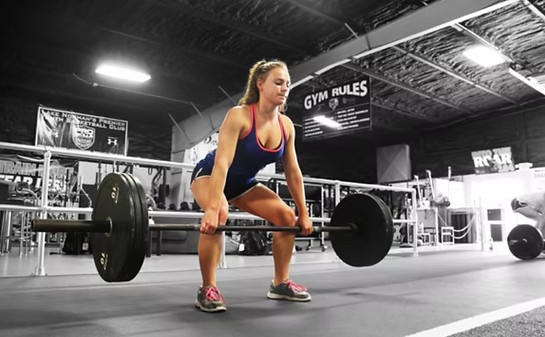
The phrase “Stimulate, don’t annihilate,” famously attributed to eight-time Mr. Olympia Lee Haney, says it best. The goal of training is to challenge the body enough to promote adaptation—not beat it into the ground.
And yet, the most common mistake I see in young lifters is training too long and too often. New lifters—especially kids—don’t need much volume to grow. The boys I see training with their dads are a prime example. Their bodies aren’t ready for adult-level workouts, and yet that’s precisely what they’re doing. It’s too much, too soon.
I often compare it to alcohol consumption. If you’ve never had a drink, it doesn’t take much to feel the effects. But the more frequently you drink, the more it takes to get that same buzz. Eventually, your tolerance is so high that you need a lot more to feel anything at all.
The same concept applies to strength training. When you’re new, you don’t need a high volume to grow. In fact, it’s the low volume that produces the best results. Two to three total-body workouts per week, with proper nutrition and recovery, can yield tremendous gains—especially for beginners.
Three days of strength training per week is the sweet spot for young athletes involved in seasonal sports. It’s also ideal for busy adults balancing work, family, and life. If time allows, a fourth day can be added—but it’s not essential.
For the vast majority of non-professional athletes, four strength sessions per week are sufficient to build the physique and performance that most people desire. A simple upper/lower split—training each muscle group twice per week—works wonders. A push/pull split is another effective option. Add two to three cardio sessions per week, and you’ve built a comprehensive, time-efficient plan.
Years ago, an older, wiser man once told me, “There’s more to life than having big muscles.” At the time, I was in my mid-teens, and those words went in one ear and out the other. But now, over four decades later, I realize it may have been some of the best advice I’ve ever received.
Don’t get me wrong—I still love training and plan to continue until the good Lord calls me home. But today, my training is smarter. It’s balanced with rest, recovery, and the time to enjoy life outside the gym.

Looking back at my teenage years, once I got my driver’s license, I trained four to six days a week in my pursuit of getting bigger and stronger. I made progress, sure—but I also painted myself into a corner. To continue progressing, I had to maintain that high training volume. It became unsustainable.
So, if you’re new to lifting—whether you’re 14 or 44—be patient. Start with two to three well-designed sessions per week. Give your body time to adapt, grow, and recover.
One of my favorite quotes from Precision Nutrition says it perfectly: “A training program is only as good as your body’s ability to recover from it.”
Do too much too soon, and you’ll burn out, stagnate, or even regress. You’ll desensitize your body to the very stimulus you’re chasing. And eventually, you’ll find yourself trapped—doing more and more just to stay in place.
That’s no way to live. And I say that as someone who’s been training for over 42 years.
Train smart. Be consistent. Recover well. And enjoy the journey.
 kellyamidonblog.com
Leave a comment