
VOLUME I – THE COURAGE TO BEGIN
Prologue – Andy Andrews: The Noticer
I first saw Andy speak on stage in Dallas back in the late 90s at a business convention. He was the keynote speaker for the night, and after walking on stage to a thunderous standing ovation, he launched into his prepared talk. A few moments later, someone from the audience screamed out, “Hey, Andy, tell us a story!” Andy paused, gathered himself, and then launched into the unforgettable tale of Joshua Lawrence Chamberlain from the Civil War. The room was spellbound and hung on his every word, and I’ve been following him to this day.

Every symphony needs a conductor, and for this first movement, that role belongs to Andy Andrews. Long before The Noticer or The Traveler’s Gift became best-sellers, Andy’s own story played out like the opening movement of redemption itself.
Andy was only a teenager when tragedy struck. Within months, he lost both parents, his mother to cancer and his father to a car accident. Overnight, his world collapsed. For years, he drifted, living under a pier on the Gulf Coast, surrounded by hopelessness and doubt. Yet in those long, lonely nights, something sacred began to take shape. He started reading everything he could get his hands on: biographies, history, Scripture, and wisdom literature. Piece by piece, he rebuilt his perspective and eventually his life.
Andy left college to pursue his first career as a comedian. It was a rough start; however, in time, he found himself working on cruise liners. The massive volume of work engaging diverse audiences helped him hone his craft into becoming one of the best speakers of our generation.

In time, while maintaining his unique sense of humor, he transitioned to more keynote speaking as well as working to become a published author. After all the struggles and trials from his youth, he stepped into this next season of life, armed with a message that would transform millions: perspective is the difference.
Andy teaches that sometimes the smallest shift in the ability to see life from a slightly higher angle can change everything. It’s not the storm itself that defines us but how we interpret what the storm reveals.
From those lessons came his Storms of Perfection books, collections of letters from world-class achievers describing the failures that shaped them. Those stories, written decades ago, inspired the heartbeat of this project. They remind us that behind every public triumph stands a private test.
Andy’s humor and humility made him a bridge between pain and purpose. His words found their way into locker rooms, boardrooms, and living rooms. He’s spoken to presidents, coached elite athletes, and counseled leaders, including our great U.S. Military, around the world. Yet, he remains the same Gulf Coast storyteller who learned to notice the good when life looked anything but good.
In many ways, Marching to Your Own Beat – Volume I begins exactly where Andy’s story leaves off, with the realization that wisdom doesn’t erase hardship; it transforms it. Every person who follows in these pages learned that lesson in their own language: through music, motion, faith, failure, or sheer will.
Andy’s life is proof that redemption often starts not with strength but with curiosity, with the decision to look again, to notice differently, and to believe that meaning hides even in the mess. His influence stands at the doorway of this collection, inviting us to step inside and listen for that rhythm of redemption still playing beneath the noise.
Lindsey Stirling — The Spark of Originality
I still remember the moment I first stumbled upon Lindsey Stirling’s version of Carol of the Bells. It was Christmas 2023, and I was blown away. The creativity, the movement, the energy, it all felt so fresh and alive. When I saw that her video had over 177 million views and that she had more than 14 million YouTube subscribers, I thought, How have I never heard of her before?

Fast-forward to October 2025, and the dots connected. I have quite an eclectic playlist at the gym during my personal workouts, including the bands I grew up with like Bon Jovi, Journey, Def Leppard, and my present-day Christian favorites like Hillsong, Jeremy Camp, and Casting Crowns. To round out the list, I listen to motivational videos featuring such greats as Les Brown, Zig Ziglar, Eric Thomas, and Jim Rohn.
They are masterpieces for building and fortifying a positive mindset, drawing on the wisdom of notable figures like Sylvester Stallone, Arnold Schwarzenegger, Will Smith, Steve Jobs, and Denzel Washington. For the most part, I listen through Bluetooth headphones, and I rarely watch the videos. But this past Monday morning, I looked up and made a fantastic discovery.
The clip featured a young Lindsey Stirling from many years ago. Fascinated, I investigated further. What a backstory! Years before she became an online sensation, Lindsey competed on America’s Got Talent. The judges criticized her mercilessly. Piers Morgan famously said her violin sounded like she was “strangling rats,” and Sharon Osborn told her she’d never fill a venue. A third judge said all her “movement” destroyed the music.
Most people would have quit right there.
But Lindsey didn’t quit. She walked off that stage humiliated yet determined. She built her own platform, blending violin, EDM, and dance into something uniquely her own. Today, she performs in packed arenas around the world.
Her videos have collectively been viewed over one billion times and counting, so it’s safe to say that her belief, passion, love, hard work, and dedication have proven those early judges wrong over time.
Lindsey reminds us that sometimes the world mocks what it doesn’t yet understand. When you march to your own beat, you risk being misunderstood, but that’s also how new rhythms are born.
Elvis Presley — The Rebel Who Redefined Music
Elvis Presley didn’t just sing songs; he shook culture. In the 1950s, television producers tried to cut him off at the waist because his movements were considered too scandalous. Critics said he was vulgar and wouldn’t last. But Elvis didn’t change. He stayed true to his rhythm and became one of the most influential entertainers of his generation.

From Truck-Driving to King
In 1954, after graduating from high school, Elvis worked as a truck driver for Crown Electric while pursuing his musical dreams. That summer, he auditioned for Eddie Bond, who bluntly told him: “Stick to driving a truck — you’ll never make it as a singer.”
Undeterred, Elvis continued performing and secured a slot at the Grand Ole Opry. His one-song performance didn’t resonate with the traditional audience, and backstage, Opry manager Jim Denny reportedly told him, “Go back to Memphis and drive a truck.”
Elvis relayed that comment to his bandmates, and the remark stung. It became a turning point, not of self-doubt, but renewed conviction. He later and defiantly left his day job and committed to music full-time, turning a harsh dismissal into fuel for his rise to rock n roll immortality.
My mom, now 79, still lights up when she hears his music. She’s loved his music for as long as I can remember, and doesn’t just hear Elvis, she hears freedom, joy, and courage. Elvis reminds us that sometimes dancing differently is the very thing that sets your soul free.
Walt Disney — The Dreamer with “No Imagination”
Before there was a Magic Kingdom, there was a man who got fired for lacking imagination. Walt Disney faced bankruptcy, betrayal, and rejection, yet he refused to stop dreaming.

As a kid, I remember sitting in front of the TV watching The Wonderful World of Disney every Sunday night. The lights would dim, the castle would appear, and the theme music would transport me to a magical place. It was one of my favorite childhood shows, and Disney’s story has always inspired me to never give up on my dreams.
Disney once said, “If you can dream it, you can do it.” He didn’t just build an empire; he built a reminder that imagination is God’s whisper, inviting us to create. And I believe that God never gives us a dream without equipping us with the means to see it to fulfillment.
.
Charles M. Schulz — The Cartoonist Who Never Quit
As a little boy, I had the good fortune to spend a lot of time with my grandparents on my Dad’s side. My Grandfather used to love to read the paper, and he would always pull out the comic section just for me. The Peanuts Gang was my childhood favorite and brings back sweet memories of my Grandfather.
Charles Monroe “Sparky” Schulz, the creator of Peanuts, faced repeated rejection before the world met Charlie Brown, Snoopy, and the rest of the gang. Schulz was Charlie Brown and a self-proclaimed loser. Nothing he pursued as a kid ever worked out, but he loved to draw.
And yet, his high school yearbook turned down his drawings. Walt Disney Studios said no. Newspapers weren’t interested in his early comic strip.

But Schulz kept drawing. He used his quiet perseverance to build something universal. When Peanuts finally launched, it appeared in just seven newspapers. By the time of his passing, his work had been published in more than 2,600 papers across 75 countries.
He once said, “A cartoonist is someone who never stops trying to be funny, even when the world isn’t laughing.” His legacy reminds us that faithfulness to your craft is its own kind of genius.
Zig Ziglar — Faith in Motion
The first time I ever heard Zig speak was on a cassette tape on my way back home to Dallas from my hometown in East Texas over thirty years ago. Zig said two things that literally caused me to pull off to the side of the road to take notes. He said, “You are what you are and where you are because of what has gone into your mind. You can change what you are and where you are by changing what goes into your mind.” He further said, “You can have everything in life you want, if you will just help enough other people get what they want.”
Those simple yet profound thoughts have remained fixed in my mind for all these years, influencing how I take 100% responsibility for continual personal growth and service to others. For a short period before Zig went to be with the Lord, we attended the same church where I would see him and his wife faithfully attending weekly, sitting down near the front of the auditorium. I will never forget how his influence has blessed and shaped my life.

Long before he filled arenas with laughter and motivation, Zig Ziglar was a poor boy from Yazoo City, Mississippi. He lost his father when he was five and grew up in a home where every nickel mattered.
He began his career as a cookware salesman, knocking on doors. What set him apart wasn’t technique; it was belief. He believed in people, in possibility, and in the power of faith. Zig’s mantra, “You can have everything in life you want if you’ll just help enough other people get what they want,” became a compass for millions.
Late in his career, Zig suffered a fall that resulted in short-term memory loss. For a professional speaker known for delivering powerful, life-changing messages, this could have marked the end of his career. But Zig wasn’t finished.

He still had the desire and the calling to serve others with his words. With the help of his daughter, Julie Ziglar, they developed a new way forward. Julie would join Zig on stage in a conversational, interview-style format. Her questions were intentionally crafted to tap into Zig’s well of wisdom and stories. This new dynamic allowed Zig to continue speaking even with memory loss by leaning on their relationship and her support. Zig did the best he could with what he had.
He embodied the spirit of Philippians 4:13: “I can do all things through Christ who strengthens me.”
His legacy isn’t just motivation; it’s ministry through optimism. Zig taught that attitude is a choice, gratitude is a habit, and faith is a muscle that grows stronger every time you use it. He marched to the beat of serving others, and that rhythm still echoes through generations of dreamers.
Fred Astaire — The Man Who Could Dance a Little
When studio executives reviewed Fred Astaire’s first screen test, they wrote:
“Can’t act. Can’t sing. Balding. Can dance a little.”
That small-minded summary became the understatement of the century. Astaire went on to redefine what dance could be on film, elegance fused with effortlessness. But behind that grace was precision born of pain: hours of rehearsal, bloody feet, a perfectionist drive that demanded retakes until each step looked like magic.
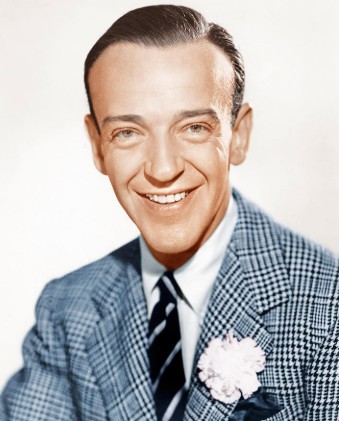
Astaire didn’t just entertain; he elevated movement into poetry. He proved that art doesn’t ask permission, it asks persistence.
When you’re told you “can dance a little,” dance anyway. Because sometimes a little is all God needs to start a masterpiece.
.
Frank Sinatra — Doing It His Way
Frank Sinatra faced his own ups and downs, career slumps, harsh critics, and reinventions, but he always came back stronger. His smooth defiance became his trademark, captured perfectly in his anthem My Way.
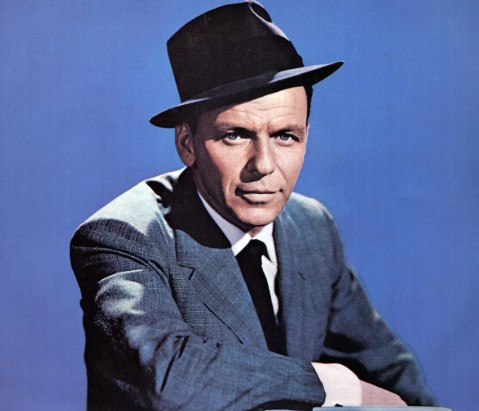
Sinatra once said, “The best revenge is massive success.” That line could summarize the entire journey of every person in this collection, from Lindsey Stirling to Walt Disney, from Charles Schulz to Zig Ziglar.
For me, Frank represents more than music. He represents my late friend Rene Nino, who loved Sinatra’s voice and lived with that same blend of confidence and grace. For a short season of my life, after graduating from college, Rene was a father figure to me. The love of golf was our bond, and I will never forget how he helped me get started with my career.
This story, in many ways, is for him and for everyone who ever dared to keep believing in their own rhythm.
.
Epilogue — March to Your Own Beat
If you’ve ever been told your dream is too strange, too small, or too far-fetched, you’re in good company.
Lindsey Stirling was told she’d never fill a venue.
Walt Disney was told he lacked imagination.
Charles Schulz’s cartoons were rejected again and again.
Elvis Presley was told to give up music and go back to driving a truck.
Fred Astaire’s first screen test said he could “dance a little.”
Even Zig Ziglar faced setbacks that could have silenced his calling, yet he chose faith and kept encouraging others.
And through it all, voices like Andy Andrews and Frank Sinatra remind us that redemption and rhythm often start the same way: with one bold decision to begin again.
Each of them turned doubt into destiny, setbacks into stepping-stones, and criticism into choreography. They remind us that when the world says, “you can’t,” heaven whispers, “you already are.”
So whatever your rhythm is, however offbeat it may sound, don’t mute it.
God doesn’t waste originality. The rhythm He gave you isn’t meant to blend in; it’s meant to stand out.
Keep marching to your own beat — and watch where it leads.
 kellyamidonblog.com
Leave a comment