
A few years ago, I earned Precision Nutrition’s certification in Sleep, Stress Management, and Recovery. At the time, I was secretly hoping it would help me solve a problem I’d been wrestling with ever since starting my second career as a fitness professional at Lifetime almost eight years ago.
Something about that transition pushed me over the edge. My sleep, which had always been steady, began to unravel. Night after night. Month after month. I had no idea how difficult that road would become.
So when PN released their course, I jumped in with two motives:
- To help myself.
- To better serve my clients.
The course delivered on both fronts. It improved my sleep, and it gave me a framework to help others. But one lesson from the very beginning lodged itself in my mind more deeply than anything else:
“A training program is only as good as your body’s ability to grow and recover from it.”
I immediately realized that the principle wasn’t limited to the weight room. It applies to every corner of life. Every input — physical, emotional, nutritional, environmental — is only as valuable as your ability to recover from it.
I didn’t know then how prophetic that statement would be for the next several years of my life.
The Five-Legged Stool and the Missing Metric
One of my foundational teaching tools — and one of the longest blogs I’ve ever written — is the idea that your health is a five-legged stool:
- Exercise (strength + cardio)
- Nutrition (food + supplements)
- Recovery (sleep, stress management, overall restoration)
- Medical Care (labs, diagnostics, preventive visits)
- Emotional Health (relationships, purpose, joy)
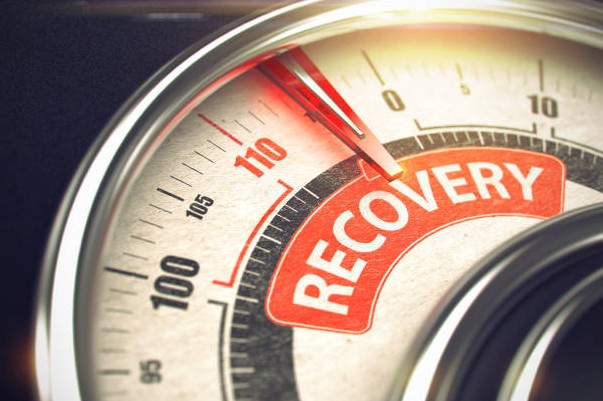
Recovery is one of the legs. I wrote about it. I taught it. I believed in it.
But I didn’t have a metric for it.
I was managing sleep hygiene, but I wasn’t truly measuring recovery capacity.
And here’s the embarrassing part:
For years, I actually was measuring recovery… I just couldn’t see it.
The First Wearable: Fitbit
Back in 2019, I bought my first Fitbit, a Charge 4 — not to track workouts, but to track sleep. Wearables were gaining in popularity, and I was desperate for answers. Fitbit provided a crude readiness-style score, but the tech wasn’t advanced. It looked at sleep quality, HRV, and overall activity. In my ignorance, I was not ready to accept that a device could or should dictate my training for any given day, so I didn’t rely on it for much more than the hours I slept.
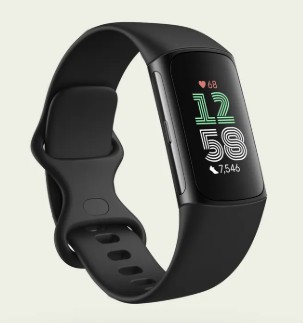
Still, it was my introduction to quantified recovery.
I kept wearing it through my early years at Lifetime, but it would be a long time before I recognized the significance of the readiness data it was sharing. While simple, I could have started my journey towards better managing my recovery years ago.
UltraHuman: The First Wake-Up Call
For Christmas 2024, one of my closest friends and clients, Wendi, gifted both of us UltraHuman Smart rings.
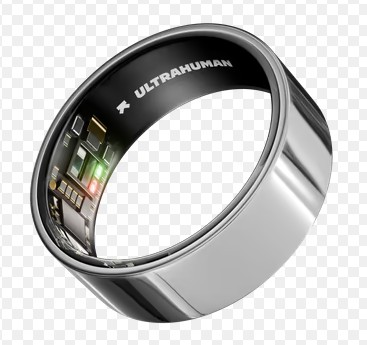
This device offered real data:
- Resting heart rate
- HRV
- Sleep quality
- Movement
- Temperature
- Stress load
And that stress score… it drove me crazy.
Day after day, UltraHuman told me I was chronically stressed. Even on Sundays — my quietest day of the week — I’d get a stress score that looked like I was fighting fires.
Emotionally, I felt calm.
Physiologically, my body was saying something very different.
That disconnect was my first major clue:
You don’t have to feel stressed for your body to be stressed.
But I didn’t fully accept it yet.
Oura: The Confirmation
By mid-2025, I switched to the Oura Ring, and it immediately became my preferred device. The sleep tracking was exceptional. The app presentation was clean. The insight felt more nuanced.
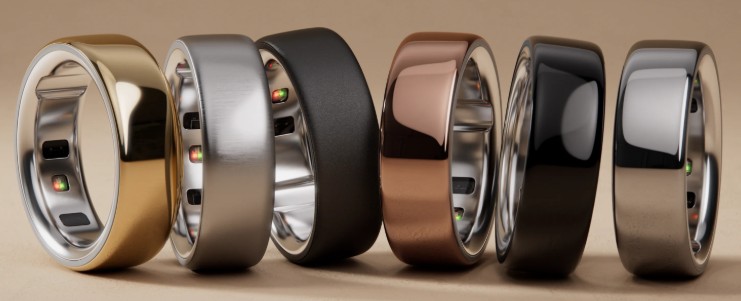
But Oura said the same thing UltraHuman said:
“Kelly, you’re jacked up.”
And again — not emotionally.
Physiologically.
It was undeniable.
Two different devices.
Same message.
Same daily stress pattern.
Oura also introduced me to concepts I had never honestly noticed before:
- Nighttime physiological load
- Breathing disturbances
- Temperature increases
- HRV suppression
- Recovery windows
- Cumulative stress over the day
It was the first time I understood that recovery is a measurable thing — not just a feeling.
But even then, I still didn’t have a way to act on the data.
The Heart Rate Accuracy Rabbit Hole
Over the summer, I relied on Oura for sleep and recovery, and I used my Fitbit for workout tracking. I liked Fitbit for its accuracy in strength training. But for cardio? It drove me nuts.
The numbers were too inconsistent. Different machines showed wildly different heart rates for the same perceived effort. I knew enough about my body to know the readings weren’t correct. Plus, and this is crazy, the wildest heart rate swings I would see would come from simply walking. It would show me at my normal walking heart rate of roughly 70 BPM, rising to more than double that in a matter of seconds. Physiologically, that’s not possible.
This launched a long research rabbit hole on heart-rate accuracy — and it led me to the truth:
The gold standard for measuring heart rate is a chest strap.
Every expert agrees — including Joel Jamieson, the creator of Morpheus below.
Watches, rings, and armbands use optical sensors (light).
Chest straps measure electrical activity (ECG).
Movement corrupts optical accuracy.
Movement doesn’t significantly affect a chest strap.
That was the first major blind spot I corrected.
Enter Morpheus — The Game-Changer
Right around this time, my Scosche armband broke. And by coincidence, my client Phil — who also follows Peter Attia, M.D., religiously — bought both of us Morpheus chest straps.

Peter uses Morpheus, and his gold standard in everything is excellence. For example, as a Formula 1 enthusiast, he has a home-based driving simulator. He may be one of the most deliberate individuals you will ever meet.
That was all I needed to hear. If Peter is using it, then I’m all in.
So I strapped it on.
Within a week, I realized what I had been missing all along:
Morpheus doesn’t just measure recovery…
It teaches you how to manage it.
Every morning, Morpheus asks you:
- How did you sleep?
- How sore are you?
- How do you feel?
- How long did you sleep?
Then it performs a 2.5-minute HRV-based recovery test.
And based on that score, Morpheus gives you:
- Your cardio heart rate training zones for today
- Your weekly cardio targets (delivered on Mondays)
- Adjustments based on fatigue
- Boundaries to keep you from overreaching
No other device does this.
It is the only system that closes the loop from:
measurement → interpretation → action.
And that was when everything clicked for me:
Recovery isn’t passive. Recovery is a skill.
The Gamification Effect
Morpheus has a built-in gamified structure.
You collect minutes in blue, green, and red zones.
Your weekly target adjusts to your capacity.
Your training becomes individualized — not theoretical.

Phil and I joke about it all the time:
We can’t wait to wake up and see our recovery score.
Not because it’s a number,
but because it tells us what our body can handle.
And for the first time in my life, I began to enjoy managing recovery.
Combining the Best of All Worlds
Here’s the truth:
I still use my Oura every night, but I now rely on Morpheus every morning and during my training.
They each do something the other cannot.
- Oura gives temperature, sleep stages, nighttime stress, and symptom tracking.
- Morpheus gives daily readiness, individualized zones, and actionable guidance.
Together?
They create a complete recovery dashboard.
You could do the same with:
- Apple Watch + Morpheus
- Garmin + Morpheus
- Whoop + Morpheus
But the takeaway is this:
Recovery is most powerful when you measure it AND manage it.
Sleep Hygiene: The Skill You Can’t Ignore
The basics still matter:
- Consistent bedtime and wake time
- Cool room
- Dark room
- Limited screens
- Caffeine timing
- Alcohol timing
- Fluid timing
- Meal size before bed
You have control over all of these.
And they add up.

When Wendi accidentally only slept four hours after a birthday dinner, her Morpheus recovery score tanked. One off — but it proves the point.
Sleep isn’t luck.
Sleep is a skill.
Breathwork: The Missing Piece I Overlooked
UltraHuman had recommended breathing protocols to reduce stress.
I saw them.
I ignored them.
I missed the forest for the trees — again.
It wasn’t until I started using Dr. Huberman’s NSDR protocols (10, 20, or 30 minutes depending on the day) that I finally understood:
Five minutes of intentional breathing can cut your physiological stress load in half.

And I’ve seen it in my Oura data — dramatically.
Days that used to show 5–7 hours of “high stress” now show 1–2 hours.
Not because my life changed.
Because my tools changed.
Because my skills changed.
So… Is Recovery a Skill?
Absolutely.
You can learn it.
You can train it.
You can measure it.
You can improve it.
And the more intentional you become — through sleep, breathwork, load management, heart-rate awareness, and understanding your physiology — the more capacity you build for everything else:
- Training
- Work
- Relationships
- Emotional health
- Longevity
Recovery isn’t rest.
Recovery isn’t luck.
Recovery isn’t passive.
Recovery is a skill.
And like any skill, it changes your life when you practice it.
Closing thoughts for my readers:
What part of your own recovery feels hardest for you right now? If you’d like to share, I’m always open to a real conversation. You can message me anytime.
 kellyamidonblog.com
Leave a comment