
Introduction – The Power of Second Chances
The final movement in this trilogy is not about winning.
It’s about rising again.
Redemption is the rhythm that plays after the storm. It’s quieter, deeper, and more meaningful than triumph. Every life here was reshaped by grace — a comeback story written through pain, humility, and faith.
These stories remind us that failure isn’t the end; it’s the beginning of wisdom.
When everything falls apart, you discover what’s unshakable inside you.
Andre Agassi — From Resentment to Redemption
Personal Reflection.
As a kid, I took tennis lessons for about a year before discovering golf — and that was the end of my tennis career. Still, I never lost my appreciation for the game. I’ve always been drawn to greatness in any arena, inspired by the athletes who perform at the highest levels of their craft. That’s what first connected me to Andre Agassi — not through the sport itself, but through a deep admiration for those who compete with passion and resilience.
At fifty-seven, I’m only two years older than Andre, and I remember his early days on tour coinciding with my own graduation from high school. It was impossible not to notice his rise to stardom — the charisma, the image, the power. He seemed larger than life. But then came the fall, and many were quick to write him off.
Yet Andre wasn’t finished. What makes his story unforgettable isn’t just that he reclaimed his place among the greats; it’s why he did. His comeback wasn’t fueled by pride or image — it was driven by purpose. He turned struggle into service, channeling the pain of his past into something that would uplift others.
That’s what makes me a lifelong fan — not the titles, not the fame, but the transformation. Andre Agassi’s redemption reminds me that success is never just about rising to the top, but about what you learn, who you become, and who you help along the way.
Andre Agassi’s story begins not with love, but with resistance. A gifted child holding a racket before he could read, he was driven by his father’s relentless expectations. Tennis became a prison disguised as a platform. Every victory built fame but deepened the emptiness inside. The boy who longed for freedom became a man enslaved by success.

By his early twenties, Agassi had ascended to the top of the tennis world. He turned professional at sixteen and, over the next decade, captured sixty career titles and eight Grand Slams, including every major — Wimbledon, the French Open, the U.S. Open, and the Australian Open — an achievement only a handful of players have ever reached. In 1995, he climbed to world No. 1, his charismatic presence and fierce baseline play electrifying crowds around the globe. He earned more than thirty-one million dollars in prize money and countless millions more in endorsements. But behind the bright lights and denim shorts was a man in quiet despair, wrestling with depression and the weight of an identity built entirely on performance.
In his autobiography Open, Agassi confessed that during the height of his fame, he turned to crystal meth to numb the pain. The fall that followed was devastating. By 1997, injuries and apathy had dragged his ranking down to No. 141 in the world. The man who once dominated center court was now questioning whether to walk away from the game entirely. Yet it was there, in the wreckage of his reputation, that redemption began to stir.

Agassi returned to the sport with a new spirit — not to prove himself, but to play with purpose. The comeback was extraordinary. In 1999, he completed one of tennis’s most remarkable turnarounds, winning both the French Open and the U.S. Open, reclaiming the No. 1 ranking, and completing the coveted Career Grand Slam. Over the next few years, he added three more Australian Open titles and re-established himself as a champion, not merely of talent, but of perseverance and grace.
But his true redemption extended far beyond the court. In Las Vegas, he founded the Andre Agassi College Preparatory Academy, offering under-resourced children the chance to receive the kind of education and guidance he never knew as a young prodigy. What began as a school became a legacy of service — a reminder that greatness is not about accumulation, but contribution.

Agassi’s story is proof that redemption is rarely a return to what was lost; it’s the discovery of something greater that was waiting all along. His comeback wasn’t just athletic — it was spiritual. The game he once hated became the instrument through which his heart learned to serve.
His legacy, now written in classrooms as much as in record books, reminds us that passion isn’t found in perfection; it’s forged in purpose. Andre Agassi’s redemption was not a return to glory, but a return to grace.
Kobe Bryant — Mamba Mentality and the Art of Reinvention
Personal Reflection
My introduction to Kobe Bryant is much like my connection to Andre Agassi: I never played basketball competitively. Sure, I shot hoops as a kid with my friends, but nothing formal — and, much like tennis, golf eventually drowned out my interest in anything that didn’t sharpen my own game.
Growing up, I was always a fan of excellence in sports — the NFL, Major League Baseball, tennis, or the NBA. Even though I rarely watched regular-season games, the playoffs and championships were different. Those were events you couldn’t miss, moments when greatness was on full display.
That’s how I first connected with Kobe. His work ethic was legendary, and his mindset — even as a teenager — was years beyond his age. I remember learning that, at just thirteen, he used summer league games not to dominate, but to deliberately play to his weaknesses so he could grow. Who does that? Only someone with extraordinary vision — someone more focused on becoming than winning.
Sadly, I didn’t fully discover Kobe’s greatness until after his tragic passing. Through countless hours of interviews and mindset videos on YouTube, I began to see the depth of his genius — his preparation, discipline, and sheer love of the process. Kobe Bryant embodied mastery not just in skill, but in mindset.
His life and legacy continue to remind me to leave no stone unturned in my own preparation — not just for work, but for life itself. Excellence is a daily choice, and life is a gift that can be taken away at any time.
Kobe’s legacy challenges me to live with purpose, prepare with passion, and treat every day as an opportunity to pursue greatness — because true excellence, like life, is never guaranteed, but always worth the pursuit.
Kobe Bryant’s story is one of relentless reinvention — a man who mastered not just the game of basketball, but the discipline of becoming. He called it the Mamba Mentality — the relentless pursuit of improvement, every day, in every way. To Kobe, greatness was not a destination; it was a decision renewed every morning before sunrise.

Drafted into the NBA straight out of high school at just seventeen, Kobe entered the league as a bold and untested prodigy. His early years were marked by flashes of brilliance and stretches of frustration — air balls in the playoffs, criticism from veterans, and questions about his maturity. But where others saw failure, he saw feedback. His obsession with mastery — film sessions at midnight, workouts before dawn — turned potential into precision.
Over two decades with the Los Angeles Lakers, he became one of the most decorated athletes in NBA history: five NBA championships, two Finals MVPs, eighteen All-Star selections, and an MVP award in 2008. He scored 33,643 career points, ranking among the top scorers of all time. Yet statistics alone cannot define Kobe Bryant. His greatness was measured not in numbers but in moments — and few moments captured his spirit like the night his Achilles tendon tore.

It was April 12, 2013. Late in a tight game against the Golden State Warriors, Kobe drove hard to the basket and crumpled to the floor. The diagnosis was instant: a torn Achilles — one of the most devastating injuries in sports. Most players would have been carried off, but not Kobe. Grimacing through the pain, he stood, walked to the free-throw line, and calmly sank both shots before walking off under his own power. It was the perfect symbol of the Mamba Mentality — courage, composure, and the refusal to let pain dictate the outcome.
When later asked how he managed to shoot those free throws, Kobe explained it with an unforgettable analogy. He said, “If you have a two-story house and it catches fire while your family is asleep upstairs, torn Achilles or not, you’re getting up those stairs. You’re going to save them.”
For Kobe, basketball was his burning house — and his teammates, his family. The love ran that deep. “When you love something that much,” he said, “you don’t think about the pain. You just do what needs to be done.”
Kobe’s comeback from that injury was as improbable as it was inspiring. He returned to play multiple seasons before retiring in 2016, ending his career with a 60-point farewell performance that felt more like a final symphony than a game. But what followed may have been his most significant act of all — the reinvention of Kobe Bryant.
After basketball, Kobe shifted from competitor to creator. Through Granity Studios, he became a storyteller, writing, producing, and inspiring the next generation through art and imagination. His animated short film Dear Basketball, adapted from his retirement letter, won an Academy Award in 2018 — making him the first professional athlete ever to win an Oscar. It wasn’t about accolades anymore; it was about meaning.

He poured his passion into mentoring young athletes, championing women’s basketball, and coaching his daughter Gianna’s youth team. The once-ruthless competitor had become a teacher, a visionary, and, above all, a devoted father. When Kobe, Gianna, and seven others tragically lost their lives in a helicopter crash in 2020, the world mourned not just an icon, but a man who had learned how to give his heart away.
Kobe Bryant’s story reminds us that legacy isn’t built on talent — it’s built on transformation. His journey moved from ambition to purpose, from achievement to influence. He showed the world that greatness begins when you decide to become better than your best — and never stop.
Les Brown — It’s Not Over Until You Win
Personal Reflection
Les Brown entered my life more than thirty years ago. When I first saw him speak, he was at the height of his career — confident, electrifying, and full of contagious energy. It wasn’t until later that I learned about the tremendous struggles he had faced as an adopted child growing up in Liberty City, Miami. Knowing where he came from made his message even more powerful.
Few speakers can rival Les Brown on stage. He is pure magic — equal parts inspiration and authenticity. Even though I first discovered him decades ago, it’s only in recent years, through the power of YouTube, that I’ve been able to revisit his timeless motivational wisdom. His voice, full of fire and faith, never fails to reignite something inside me.
I’ve always been a sponge for learning, and I discovered long ago the power of audio as a teacher. My journey began with cassette tapes, then CDs, and now — in the age of YouTube and streaming — I can fill my mind daily with the wisdom of people like Les. Personal growth is much like physical training: it requires consistency, effort, and focus.
That’s why I’ve made Les Brown a permanent part of my learning rotation. His messages remind me that inspiration isn’t something you listen to once — it’s something you live. You can’t give what you don’t have, and the more I grow, the more I’m able to serve others.
Les’s voice continues to echo through my journey, reminding me that growth is a daily choice and that redemption, just like excellence, begins with feeding your mind the right words — because what you put in determines what you pour out.
Les Brown’s story is living proof that no label can define the destiny God designs.
Born in the low-income Liberty City neighborhood of Miami and adopted at six weeks old by a single woman named Mamie Brown, Les’s beginning was marked by poverty and struggle. In elementary school, he was labeled “educably mentally retarded.” The words stung, but the wound became the birthplace of his calling.
One teacher — Leroy Washington — saw what others overlooked. When Les stammered through a classroom presentation and tried to excuse himself with, “I’m educably mentally retarded,” Washington stopped him mid-sentence. “Don’t you ever say that again,” he said. “Someone else’s opinion of you does not have to become your reality.”
That single sentence rewrote Les’s story.

He took those words and built an empire of encouragement around them. Les began working as a sanitation worker, dreaming of a microphone he didn’t yet have. Through sheer persistence, he talked his way into a local radio station, running errands until one day the on-air disc jockey got sick. Les seized the moment. His enthusiasm lit up the airwaves — and a star was born.
From the radio booth, he leapt into public service, becoming a state legislator in Ohio. But his deepest calling came not from politics, but from the pulpit of human potential. Les Brown found his ministry in motivation. He became one of the world’s most sought-after speakers — a man whose words carried both faith and fire, gospel and grit. When Les took the stage, it wasn’t a performance; it was a prophecy. He reminded audiences everywhere that they were built for more.
“You’ve got to be hungry!” he thundered, his signature phrase echoing through auditoriums around the world. But hunger, for Les, wasn’t about ambition — it was about belief. It was about refusing to starve spiritually while waiting for the world’s approval. He taught that the distance between where you are and where you want to be is measured not in miles, but in mindset.
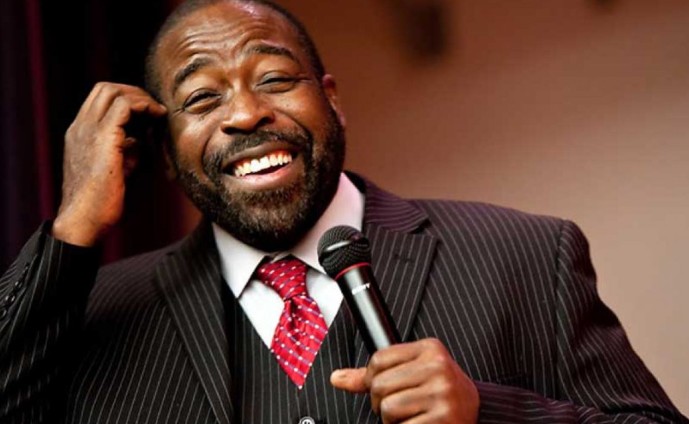
His own setbacks became sermons. Les faced business failures, health battles, and personal heartbreak, yet each valley only amplified his message. When he was diagnosed with cancer, he continued to speak with conviction, declaring that faith was greater than fear. He lived his own mantra — “It’s not over until you win.”
Les Brown’s legacy is not the number of stages he filled, but the number of souls he awakened. He proved that the human spirit can outgrow any label, any limitation, any past. His story fits perfectly in this final act of Redemption and Legacy — a man who turned pain into purpose and rejection into resurrection.
He fell. He rose. And he used his wounds to heal others. Les Brown’s life reminds us that no matter what the world calls you, God still calls you chosen. The story isn’t over until you decide it is — and with Him, it’s never too late for a new chapter.
Joseph — From the Pit to the Palace
Personal Reflection
I accepted Christ as my Savior at the age of eight, in 1976. A few years ago, my dad found my baptism certificate and mailed it to me. Today, it proudly sits on the bookshelf behind my desk — the same place where I film my videos, coach my clients, and create all of my content. It’s more than a keepsake; it’s a daily reminder of where my true foundation lies.
My faith has been the cornerstone of my life, and I’ve loved the stories of the Bible since I was a kid. Among them, the story of Joseph has always stood out. He remains one of my favorite biblical figures because of his unwavering faith and unshakable integrity. Despite every challenge — betrayal by his brothers, false accusation, imprisonment, and years of injustice — Joseph never lost his trust in God. His consistent standard of excellence continues to motivate me to be better every day.
The average person would have given in to the temptations Joseph faced, but he never did. He stayed faithful when it would’ve been easier to compromise. He lived counter to the culture around him and modeled what true character looks like under pressure. In time, God elevated him from the pit to a position of power second only to Pharaoh.
Joseph’s story proves an old-fashioned truth that’s just as relevant today as it was then: “It’s always right to do right, and it’s never right to do wrong.” His life reminds me that obedience, integrity, and faithfulness aren’t old values — they’re eternal ones.
And just like Joseph, every season of testing in our own lives can become the training ground for redemption — a reminder that God’s plan is always greater than our pain, and His timing always perfect.
The story of Joseph is the divine blueprint for redemption. Long before the cross, God revealed through Joseph how grace can turn tragedy into triumph.
Joseph was the favored son of Jacob, clothed in a coat of many colors — a symbol of love and calling. But that same favor provoked envy. His brothers, unable to bear his dreams of future greatness, conspired against him. They stripped him of his robe, threw him into a pit, and sold him into slavery. The dreamer became property. The boy who saw visions of destiny was now shackled in chains.

From there, Joseph’s path plunged deeper into darkness. In Egypt, he served faithfully in the house of Potiphar, rising to a position of trust — only to be falsely accused by Potiphar’s wife and cast into prison. Every rung he climbed seemed to collapse beneath him. Yet through it all, Joseph never surrendered to bitterness. He didn’t allow injustice to define his identity. Wherever he was placed — palace or prison — he served with excellence because he understood something vital: God’s favor isn’t confined to circumstance.
It was in that prison, forgotten by men, that God prepared him for promotion. When Pharaoh was tormented by dreams no one could interpret, Joseph was summoned from the dungeon. Standing before the most powerful ruler on earth, he gave credit not to his own wisdom but to God’s. The same faith that steadied him in slavery now elevated him to sovereignty. Overnight, the prisoner became Egypt’s prime minister. The boy in the pit became the man who would save nations.
Years later, when famine swept through the land, Joseph’s brothers came before him — desperate, broken, and unaware that the one they betrayed now held their fate in his hands. He could have retaliated. Instead, he wept. With compassion stronger than vengeance, he revealed himself and said,
“You intended to harm me, but God intended it for good — to accomplish what is now being done, the saving of many lives.” (Genesis 50:20)

That single sentence is the anthem of redemption. It transforms pain into purpose and loss into leadership.
Joseph’s life teaches that destiny is rarely delivered through comfort. The pit, the prison, and the palace were all part of God’s process. What looked like punishment was preparation. Each injustice was an invitation to trust God’s timing more deeply.
When the story ends, Joseph isn’t just restored — he’s refined. His legacy isn’t that he ruled Egypt, but that he forgave his brothers. He turned generational pain into a generational blessing. His faith reached further than his power, because he understood that God’s plan had been at work all along.
Joseph’s story reminds us that purpose often hides inside pain, and that redemption doesn’t erase the past — it redeems it. The pit may look like punishment, but in the hands of God, it’s always preparation for the palace.
Tiger Woods — The Master of Reinvention
Personal Reflection
Tiger Woods first entered my world during my senior year in college. I can still picture the moment vividly — sitting with my two best golfing buddies, watching him compete in his final U.S. Amateur. None of us had ever heard the name Tiger Woods before that day, but by the end of the broadcast, we were transfixed. I was hooked.
I remember when he turned professional later that fall in 1996, and I remember watching every single moment of his first Masters victory in 1997. When Tiger and his late father, Earl, embraced in the moments after that triumphant win, I broke down in tears. Something about that connection — the culmination of years of sacrifice, discipline, and love between a father and son — touched something deep within me.
From that point forward, I was all in. With very few exceptions, I watched every major he won, every record he broke. In fact, I can still recall exactly where I was during several of his most significant victories. His dominance wasn’t just impressive — it was inspiring.
But I also remember exactly where I was the day Tiger faced the world and admitted to his marital infidelities. As a lifelong fan, that moment was heartbreaking. It took time to process the disappointment. Yet, in the words of Jesus from Matthew 7:3-5, “Why do you look at the speck of sawdust in your brother’s eye and pay no attention to the plank in your own?” Who was I to judge him? We all stumble. We all fall short. And every one of us needs grace and a second chance.
As a fan, I never stopped believing he could rise again. I watched, hopeful, as he rebuilt his body and his life piece by piece. When he won the Tour Championship in 2018, it felt like a miracle — as if the impossible had suddenly become possible again. But when he slipped on his fifth green jacket in 2019, surrounded by his children and a world that had once written him off, it was something more. It wasn’t just a comeback. It was redemption.
That victory felt personal — not only for him, but for everyone who’s ever fallen and fought their way back. Tiger reminded me that failure isn’t final and that grace, when met with humility, can make even the hardest heart whole again.
In many ways, his journey mirrors the heartbeat of this entire volume — that the road from failure to redemption is never about perfection, but about perseverance, humility, and the grace to begin again.
Tiger Woods changed the game before he could legally rent a car. From the moment he turned professional in 1996, golf was never the same. His swing was poetry and precision, his focus absolute, his presence magnetic. Sponsors lined up, television ratings soared, and a sport once reserved for quiet galleries became a global phenomenon.
In April 1997, at just twenty-one, Tiger arrived at Augusta National for his first Masters as a professional. The press whispered doubts after he stumbled through the front nine over par. Some said he was in over his head playing alongside multiple major champion Nick Faldo. But on the back nine, everything changed. Tiger locked in, shot six under par, and three days later demolished the field by twelve strokes — the most significant margin of victory in Masters history. His total score of 270 shattered the record books and announced a new era. Golf hadn’t just found a new champion; it had found a revolution.
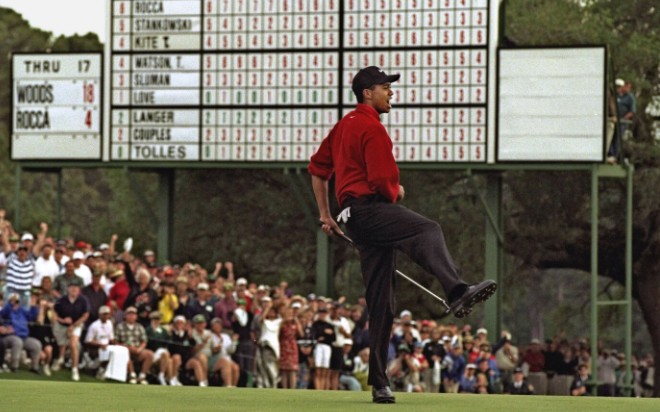
As an odd side note, the week before that historic win, Tiger had quietly shot a 59 with his close friend Mark O’Meara at their home course in Isleworth, Florida. Woods later said it was “the easiest 59 ever” — even parred two of the par 5s. O’Meara joked that he realized he was in trouble when he looked at the front-nine scorecard and saw how far behind he was. That friendly round became the seed of belief that would bloom at Augusta.
On Thursday of the Masters, when Tiger found himself struggling early, O’Meara noticed him sitting on a bench near the 15th tee, visibly frustrated. He gave his protégé a playful jab:
“Dude, what’s going on, man? You never play like this when we’re at home. Just pretend you’re playing me! You shoot 59, make birdies, make holes-in-one. Gimme a break.”
That bit of levity snapped Tiger back to himself. He went six under on the back nine that afternoon — a surge that put him within striking distance of the lead he would seize the next day. From that moment on, it was game over.
From the late 1990s to the early 2000s, Tiger became the world’s most dominant athlete. By his mid-thirties, he had captured fifteen majors and over eighty PGA Tour victories. But what set him apart wasn’t just the trophies — it was his ferocity, discipline, and drive for mastery. The standard was perfection … until the pain began.
At the 2008 U.S. Open at Torrey Pines, Tiger played on what doctors later revealed was a torn ACL and two stress fractures in his left leg. Every swing sent lightning through his body. Yet for four grueling days — and one playoff round — he refused to quit. Limping, grimacing, and gritting his teeth, he forced the championship into sudden death and drained the final putt to win. When he collapsed into his caddie’s arms, it wasn’t weakness — it was relief that the mission was complete. Victory on one leg.

But no one could script what came next. In 2009, a scandal engulfed him. The private sins of the world’s most disciplined athlete were laid bare. His marriage crumbled. Sponsors fled. Surgeries multiplied. Once invincible, he fell from world No. 1 to outside the top 1,000. The same cameras that once celebrated him now chronicled his collapse.
And yet, he did not vanish. He went quiet. He worked. He endured surgeries, rebuilt his swing, and faced the mirror. In the silence, Tiger rediscovered what made him love the game in the first place. He emerged not only rebuilt, but renewed.

In 2018, he won the Tour Championship — his first victory in five years. The crowds swarmed the fairway as if welcoming back a long-lost king. But his true resurrection came at the 2019 Masters. Twelve years after his last major, Tiger walked the same Augusta fairways not as a conqueror, but as a survivor. The cheers that once fueled dominance now celebrate redemption. As he tapped in the final putt and embraced his children, the entire world felt the weight of grace.
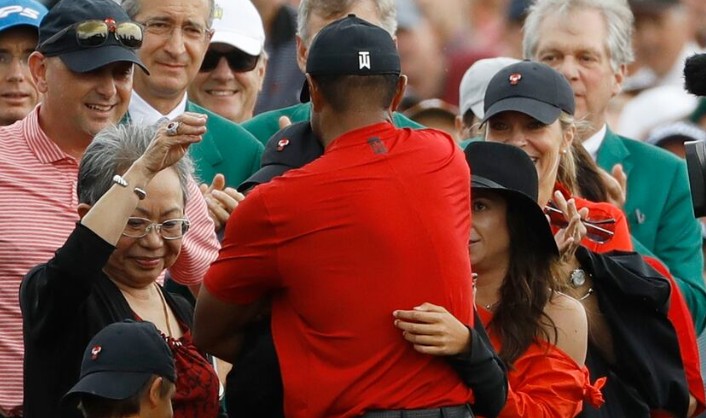
That win wasn’t about golf. It was about forgiveness, perseverance, and perspective. The cold, mechanical champion of old had become a softer, humbler man — one who smiled more easily, spoke more gently, and carried the quiet gratitude of a life restored.
Tiger Woods proved that failure isn’t fatal when faith, humility, and perseverance outlast pride. His story is the living definition of redemption — not the erasing of scars, but their transformation into testimony. He fell from the summit into the shadows of scandal, only to rise again into something higher than glory: grace.
Closing Reflection — The Rhythm of Redemption
Every story in this final volume carries the same heartbeat — the sound of a soul learning to rise again.
Andre Agassi discovered that the truest victory is service.
Kobe Bryant showed that purpose survives even the fiercest fire.
Les Brown taught that no label can silence God’s promise.
Joseph proved that what others intend for harm, Heaven intends for good.
And Tiger Woods reminded us that no fall is final when humility and hope still stand.
Redemption and Legacy is not about perfection — it’s about transformation.
It’s the quiet turning point where failure becomes fertilizer and pain becomes purpose.
The pit, the injury, the scandal, the silence — all of it becomes sacred ground when we choose to grow through it instead of running from it.
Each life in these pages sings the same refrain:
You are not defined by where you’ve been, but by what you become when grace meets grit.
As Les Brown often said, “If you fall down, fall down facing up — because if you can look up, you can get up.”
And when you do, keep marching, keep believing, and keep declaring, “It’s not over until I win.”
Because redemption doesn’t belong to the perfect — it belongs to the persistent.
It’s found in the hands that refuse to quit, the hearts that choose to forgive, and the faith that believes every ending can still become a beginning.
And so the Marching Trilogy ends not with applause, but with a whisper —
a call to every reader to rise, rebuild, and redeem.
Because the rhythm of redemption is the rhythm of life itself.
When you march to that beat — with faith, humility, and perseverance —
The music never truly ends.
 kellyamidonblog.com
Leave a comment