
I have been an early riser for my entire adult life. A huge part of that is my longstanding preference for strength training first thing in the morning. Even back in college, I would hit the gym right after my early morning classes.
Once I entered the workforce, that habit solidified. For nearly 20 years, I worked in outside sales in the commercial office furniture industry. To make that schedule work—and ensure I could get a solid workout in before being at a client’s office by 8:00 AM—I had to be in the gym by 4:45 AM. That meant waking up between 3:00 and 3:30 AM consistently.
For decades, I was in bed by 8:30 PM and up by 3:30 AM. My routine was concrete: lights on, coffee pot on, and Bible study. It was a hard anchor in my life.
The Culture Shock. In 2018, I left my sales career to become a fitness professional at Lifetime. It was a massive culture shock. Suddenly, my schedule shifted from early mornings to working from 11:00 AM until 8:00 PM.
I was winding down with clients at 8:00 PM—the time I used to be getting into bed. Even though I no longer needed to get up at 3:30 AM, my body resisted the change aggressively.
I started tracking my sleep in 2019 because I was suffering so badly. I would sleep well for the first two-thirds of the night, but then I’d wake up an hour or two before my alarm and be unable to fall back asleep. It haunted me.
The “Best Practice” Trap. I tried everything. I studied sleep hygiene extensively. I bought blue-light-blocking glasses, kept my bedroom at the “gold standard” of 67–68 degrees, and I avoided alcohol before bed. I knew all the rules:
- Consistency: Go to bed and wake up at the same time to set your circadian rhythm.
- Diet: No heavy meals or alcohol 2–3 hours before sleep to allow your core temperature to drop.
- Caffeine: Cut it off after lunch.
Despite doing everything “right,” I was still struggling. By May 2025, I was desperate enough to see a board-certified sleep doctor. He recommended Cognitive Behavioral Therapy for Insomnia (CBT-I) and advised me to get off the prescription sleep aid Doxepin, which I had been using with diminishing returns.
I tried the CBT course, but frankly, having already held certifications in sleep, stress management, and recovery from Precision Nutrition, it wasn’t teaching me anything I didn’t already know. I stopped the course halfway through.
The Chemical Fix: Cortisol and Coffee Around this time, I started consulting with Gemini to dig deeper into my specific situation. I had a hunch that went back to a concept I first heard during the 2020 lockdown: the relationship between caffeine and cortisol.
When you wake up, your cortisol levels naturally rise to help you get moving. Dumping caffeine on top of that naturally elevated cortisol is not ideal.
I asked Gemini a specific question that led to my “aha” moment: Is it possible that for the last 20-plus years, by waking up at 3:30 AM and immediately dumping coffee into my system alongside bright lights, I created a “hard anchor” that my body refuses to let go of?
Essentially, was I Pavlov’s dog? Had I conditioned my body so thoroughly that it was physically impossible to sleep past that old 3:30 AM wake-up time because my body was anticipating the caffeine hit?
We agreed that the best move was to break the association. Starting in December, I began whittling down my caffeine intake. By Christmas, I switched to full decaf.
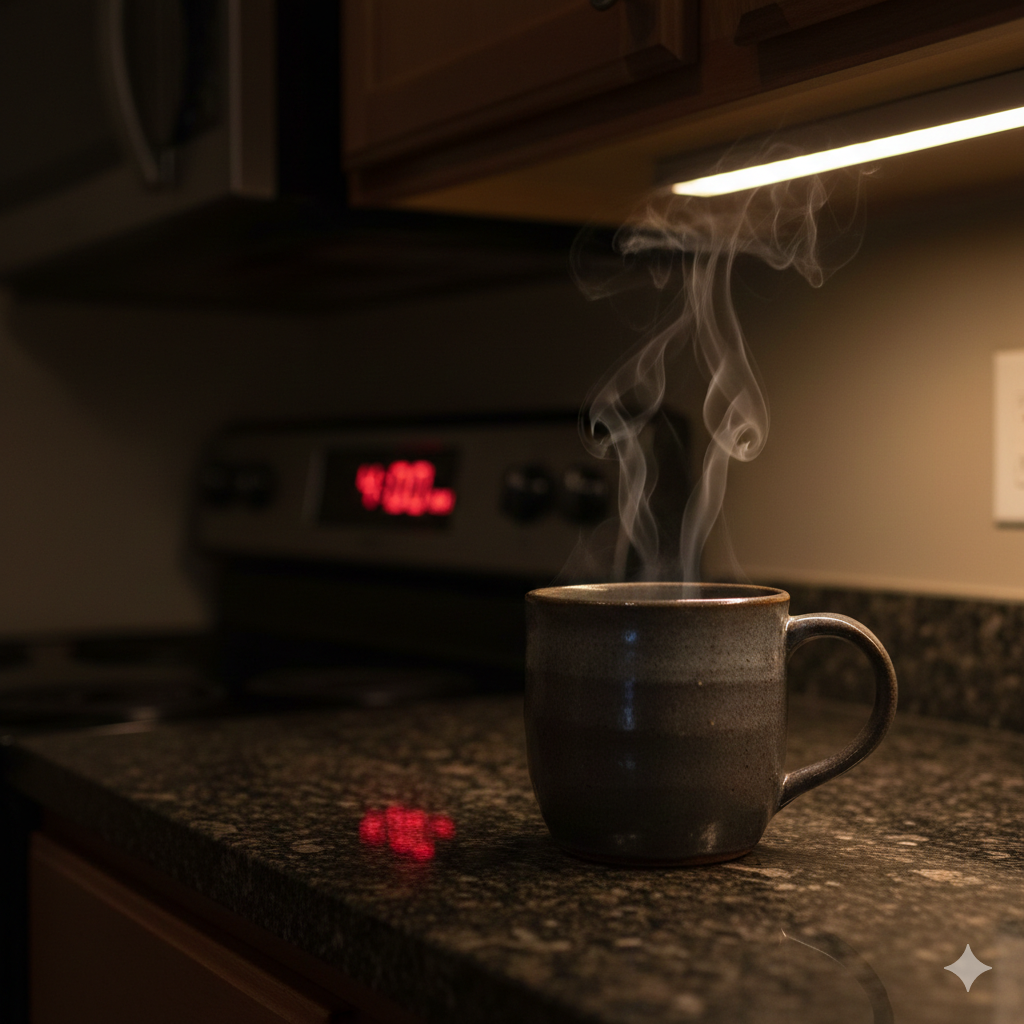
The Mental Fix: Calming the Mind. Fixing the caffeine loop was critical, but I realized I also had to address the mental loop.
My sleep latency (how fast I fall asleep) has always been rock solid—I’m out in 5 to 10 minutes. But for many of my clients, and occasionally for me in the middle of the night, the problem is the inability to calm the mind.
Calming the mind is a skill, not a genetic trait. It requires what Dale Carnegie, in his classic book How to Stop Worrying and Start Living, called living in “airtight compartments.” It’s the discipline of doing one thing at a time.
I learned a powerful visualization of this from my mentor, Darren Hardy, who told a story about interviewing the late Bob McNair, owner of the Houston Texans. Despite running an NFL franchise and multiple businesses, McNair’s desk was spotless. When asked how he stayed so calm, McNair explained that he viewed his life as a bookshelf. Every project was a “box.” When he worked on a project, he took that box down, opened it, did the work, and then—crucially—boxed it back up and put it away before picking up the next one.
He never had multiple boxes open at once.

Too many of us lie in bed with all the boxes open. We are ruminating at 10:30 PM about what we didn’t do today or what we have to do tomorrow. But as my mentors Jim Rohn and Zig Ziglar used to say: “When you are at work, be at work. When you are at the beach, be at the beach.” You cannot be in two places at once.
If you go to bed with “spinning plates”—unfinished business spinning in the air—they are going to crash, or they are going to jack up your sleep.
The solution I use is the Ivy Lee Method, combined with Jim Rohn’s advice to “End your day by planning the next.” Before you leave your work mode:
- Write down the top 6 priorities for tomorrow.
- Rank them in order of importance.
- The next morning, work on #1 until it is done. Do not touch #2 until #1 is finished.
By writing them down, you are taking the plates out of the air and setting them safely on the table. You can close the “work box” and put it on the shelf, knowing exactly where to pick it up tomorrow. This allows your brain to actually rest.

The Results: Combining removing early-morning caffeine with these mental boundaries has led to the most positive progress I have seen in eight years.
I haven’t had a drop of caffeinated coffee since Christmas. I experience zero withdrawal headaches, my gym performance hasn’t dipped, and I now delay my pre-workout caffeine until 5:30 AM (90 minutes after waking).
Most importantly, those 2:00 AM and 3:00 AM awakenings—where I used to hold on for dear life trying to force myself back to sleep—have largely vanished. I am consistently sleeping closer and closer to my 4:00 AM alarm.
It turns out that my body was just doing what I had trained it to do for a decade. It took breaking the caffeine loop and closing the mental boxes to finally convince it that it was okay to rest.
The Non-Negotiables (Logic vs. Emotion) As I mentioned earlier, I had to master the basics before I could find the deeper solution. In fitness and nutrition, we often say that you can’t out-train a bad diet. Similarly, you can’t “biohack” your way out of bad sleep hygiene.
Logically, we all know these rules. Emotionally, it is often hard to stick to them when the rest of life gets in the way. But you have to start here:
- Temperature: Keep your room cool (65–68 degrees).
- Light: Total darkness. No phones or screens 30-60 minutes before bed.
- Consistency: Wake up at the same time every day—even on weekends.
- Digestion: Stop eating and drinking alcohol 2-3 hours before bed.
- Stimulants: Cut caffeine by noon (or earlier, as I learned).
Change Requires Change
If you are looking at that list and thinking, “I know I should do that, but I just can’t seem to make it stick,” or if you are doing them all and still not sleeping, you are not alone.
Information is not the same as transformation. Sometimes, the issue isn’t knowing what to do; it’s navigating the behavioral changes required to actually do it.
I have spent 8 years solving this puzzle for myself, and I help my clients navigate these same behavioral hurdles every day.
1. Let’s Talk: If you are ready to fix your sleep, your health, or your fitness, but you’re stuck on the “how,” reach out to me via “Work with Kelly”. Let’s have a conversation about getting you unstuck.
2. Follow the Journey: I am going to be sharing more deeply about this process, including the specific tools I use for recovery and mindset. Please subscribe to my blog so you don’t miss the next post.
 kellyamidonblog.com
Leave a comment