
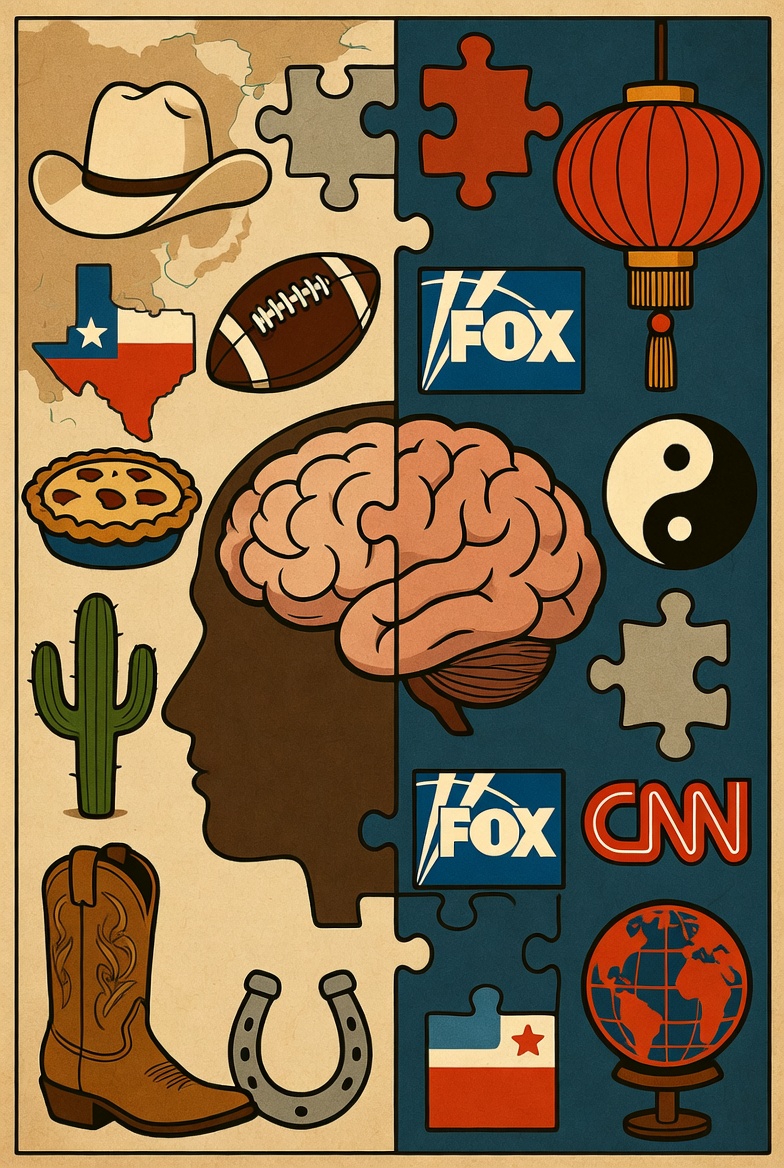
Have you ever stopped to think how much of what you believe is shaped by where you grew up, what you were taught, or the information you’ve been fed? As a kid in Texas, I naturally rooted for the Cowboys, loved hot dogs at Rangers games, and embraced the Lone Star State’s spirit. It felt as real and right as the ground beneath my feet. But imagine being born on a remote desert island, cut off from the world, and taught from birth that the Earth is flat. The sun rises on one side, sets on the other—simple, observable “proof.” You could live your whole life, even die, clinging to that belief. And you’d be dead wrong.

That’s the essence of a Darren Hardy talk that hit me hard: our beliefs are often shaped by our environment, not by objective truth. If you only watch Fox News, the world looks one way; switch to CNN or MSNBC, and it’s flipped. Growing up in a communist regime, your worldview shifts entirely. Now apply that to faith.
What if you’ve never been exposed to the full story of Jesus Christ? Like one of my best friends, a non-practicing Jew whose heritage is more cultural than spiritual—no holidays observed, no deep dive into Scripture. She’s one of the kindest, most loyal people I know, with a heart as big as Texas. But when it comes to eternity, I worry she’s basing her beliefs on incomplete info. As my pastor for over 20 years, Dr. Jack Graham of Prestonwood Baptist Church, puts it, “Eternity is a long time to be wrong.”
I grew up in church and accepted Christ as a boy. One of my grandfathers was a preacher, and my dad was a music minister, and that grounded, spirit-filled environment has shaped everything since. But lately, I’ve wrestled with this: Is it possible for good people to miss the truth simply because they haven’t encountered it? The Bible says Jesus is “the way, the truth, and the life—no one comes to the Father except through Him” (John 14:6). That’s exclusive, yes, but if it’s true, ignoring it has eternal stakes. So let’s explore why I believe it’s not just a nice story, but a verifiable reality.
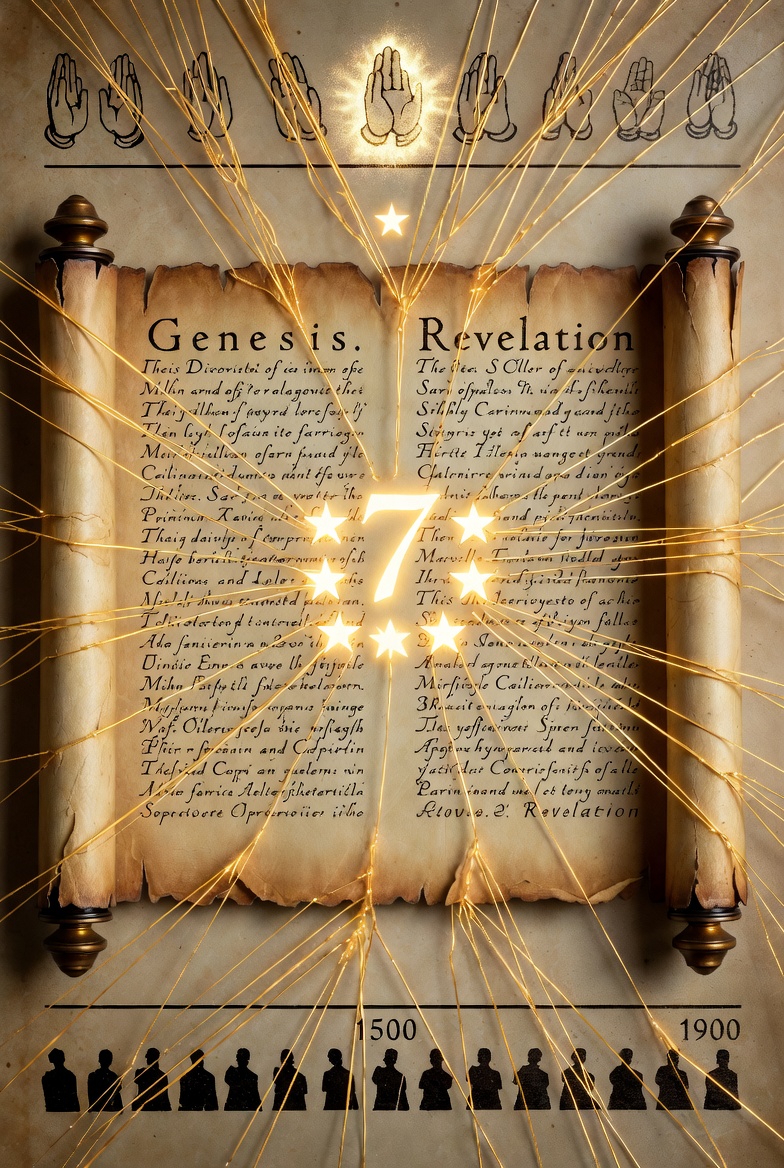
First, consider the Bible itself. Written over about 1,500 years by around 40 authors across three continents and in three languages, it shows astonishing consistency. Take prayers: From Moses in Genesis to Jesus in the Gospels to John in Revelation, they follow a clear pattern—adoration, confession, thanksgiving, supplication—often emphasizing humility before God. AI analysis (like Grok’s review of Scripture) highlights this uniformity, defying the odds for a book compiled over millennia.
Then there’s the number 7, symbolizing divine completion and perfection. It appears over 700 times: God creates in six days and rests on the seventh (Genesis 2:2-3); seven seals, trumpets, and bowls in Revelation; seven pairs of clean animals on Noah’s ark. This isn’t random—it’s a thread of divine order, from creation’s “full and complete world” to spiritual wholeness.
But is there hard evidence beyond patterns? Absolutely. Lee Strobel, a former atheist and investigative journalist, set out to debunk Christianity after his wife’s conversion. Instead, he found overwhelming proof in “The Case for Christ.” Through expert interviews, he confirmed four key facts about Jesus’ resurrection, accepted by most historians (even skeptics like Bart Ehrman): 1) Jesus died by crucifixion—medical evidence shows asphyxiation and a spear wound confirmed death; 2) He was buried in a tomb by Joseph of Arimathea; 3) The tomb was found empty by women followers (unlikely to fabricate, given their low status in ancient society); and 4) Disciples had real encounters with the risen Jesus, transforming them from fearful deserters to bold martyrs. Paul, writing just years after the events, lists over 500 witnesses in 1 Corinthians 15—many of whom were still alive to verify.
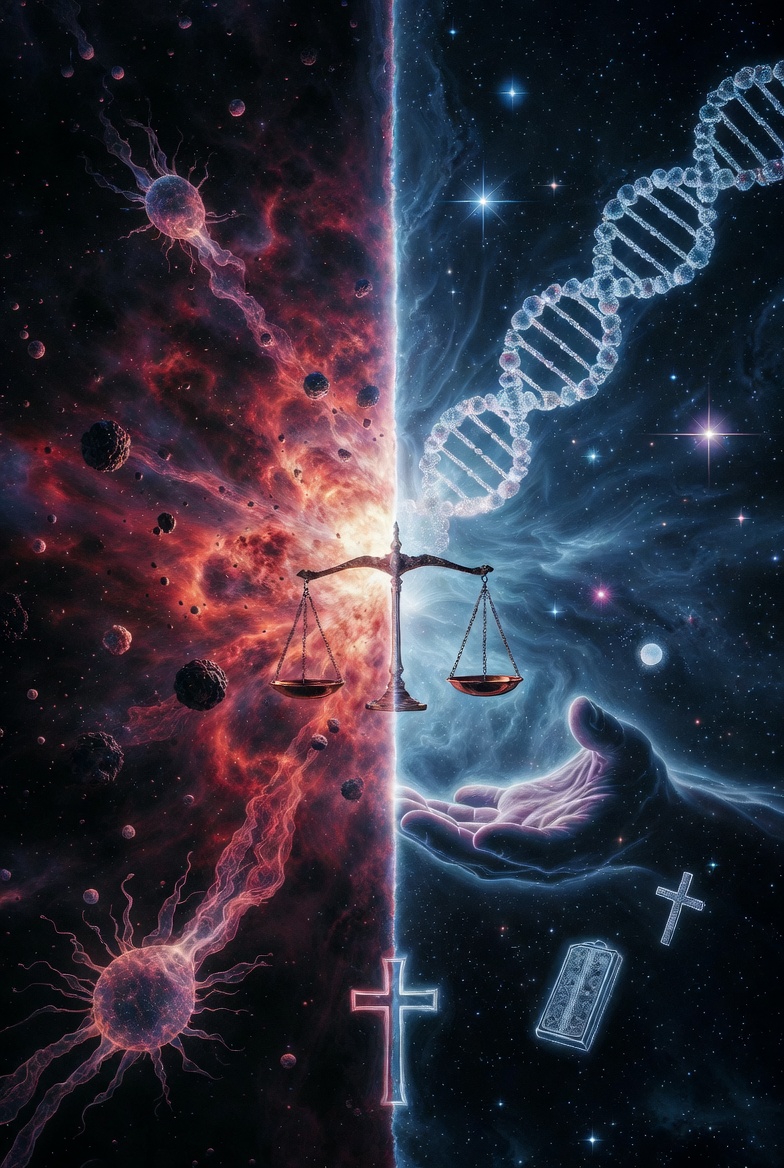
Strobel notes ancient manuscripts (thousands more than for other historical works) support these accounts, far outpacing alternatives like the Big Bang or evolution. Speaking of which, the fossil record lacks transitional forms expected in Darwin’s theory—instead, it shows sudden appearances of complex life, aligning with creation’s “kinds.” The universe’s fine-tuning (precise constants allowing life) screams design, not chaos. As Strobel and scholars like William Lane Craig argue, there are “volumes” more evidence for biblical creation than random evolution from amoebas.
Friends, if your beliefs stem from limited exposure—like my friend’s cultural Judaism or an islander’s flat Earth—you might be missing the truth. Jesus wasn’t just a man; history shows He was the Son of God, crucified, risen, and offering eternal life. Eternity is too long to risk being wrong. If this resonates, explore the Bible, talk to a pastor, or pray: “God, if You’re real, show me.” I’ve found peace in Christ—maybe you will too.
 kellyamidonblog.com
Leave a comment