
The inspiration for this post comes from one of my longtime mentors, Andy Andrews. He’s a New York Times bestselling author multiple times over and a keynote speaker. He’s consulted with the federal government, the military, corporate America, and the world of sports. When Nick Saban was still coaching, he would bring Andy in annually to talk to his teams. He’s just a very interesting guy with a unique perspective and takes on life.
I first saw Andy speak back in the late ’90s, and I’ve been following him for essentially the past 30 years. He once told a story about his two boys, who were roughly teenagers at the time. They were watching TV in their home in Gulf Shores, Alabama. Andy happened to pass through the room, stopped, and looked at what they were watching.
It wasn’t anything bad. And yet, when they looked up at him, they were concerned about the expression of disapproval on his face. They mumbled an excuse, and he acknowledged their comments. Then, without scolding them, he simply reminded them that they always have a choice.
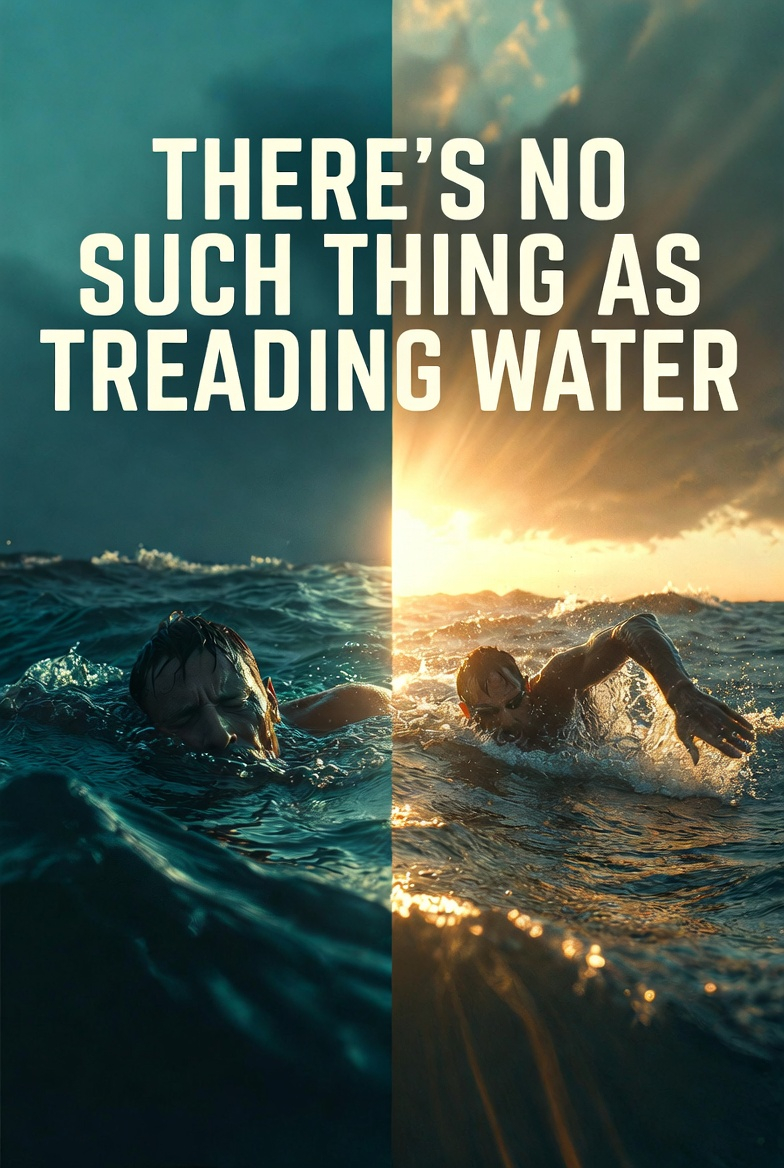
Every step you take in life—including the decisions you make, the information you take in, the people you spend time with, and the places that you “do life”—is the primary driver that makes you who you are. In each one of those scenarios, everything you do is moving you toward or further away from your goals. There is no in-between.
And his point about there being no in-between is simple: when you’re standing still, the world is still passing you by. That’s the foundation of the concept that there’s no such thing as treading water. Now, I absolutely believe in the idea of recovery, and I’ve written about it extensively over the past six months in various blog posts. There is something to be said for proactively not being productive.
The Power of Intentional Rest
Oddly enough, my first exposure to this concept came from one of my mentors, Darren Hardy. He teaches a productivity system called Insane Productivity, and an essential element for all high achievers is taking time to proactively rest and recover. Darren jokingly admits that he struggles with this idea; however, it is a critical element for success in any endeavor in life.
“The best work ethic requires a good rest ethic.” — Kevin Kelly

To Andy’s point about the boys, he wasn’t so much concerned about what they were watching as he was about them being clear and watching with an open mind, knowing full well the consequences.
I have a best friend who has a hard time enjoying downtime. I struggle in this area too, but she struggles more than I do. We are both high achievers, and we often forget how to have fun without feeling guilty. The idea of not being productive is so contrary to how we’re wired, so I’ve borrowed a little mind trick from Darren, who gamifies his downtime by being productive at being unproductive. For all you Type A’s out there who cannot stand not making progress, this is a great mental hack.
Strength, conditioning, and performance expert Joel Jamieson is one of the foremost experts in the world on recovery and the science of HRV. He teaches extensively about the vital need to manage recovery to perform optimally. But beyond that, there’s no such thing as treading water.
Again, everything you do in your life, every decision you make, is taking you toward your goals or moving you further from them. And outside of recovery, downtime, fun time, and social time—which everyone absolutely needs and requires for a happy, healthy life—there’s no room for wasting time.
Protecting Your Time Like the Valuable Asset It Is
Just this past week, I shared with my team at Lifetime a lesson I learned many years ago when I first started in sales in the commercial office furniture industry. My manager was brilliant, with a background in finance and a member of Mensa. She was a super-sharp lady who shared a valuable lesson with me that I’ve never forgotten. She said, “You work in a very dangerous environment. You are a sales rep working on straight commission. You have to cover your draw, and then you can make as much as you’re willing to work for. But make no mistake—it’s a commission job.”
She went on to explain that the support team at the dealership was paid a salary or an hourly wage and would be paid no matter what. We were all on the same team, but our pay structures were completely different. You could have all the water-cooler talk in the world, but at some point, that conversation starts working against you. She said you have to protect your time relentlessly because it’s the one thing in life we cannot get back.
That lesson just burned into my brain, and I shared it with my team because, as fitness professionals, we’re in the exact same scenario. We may be called fitness professionals, but we are salespeople first and foremost. We also work in a fitness country club with a largely hourly-based support team. Bottom line, we have to be friends with everyone in ops, at the front desk, in the café, and the kids’ club—but at the same time, we have to fiercely protect our time.
I’m either with a client, preparing to meet with one, or working on the front or back end to take care of my clients. Those three things are my top priorities. Anything else quickly becomes a waste of time and a disservice to my members and my family.
The Wheel of Life
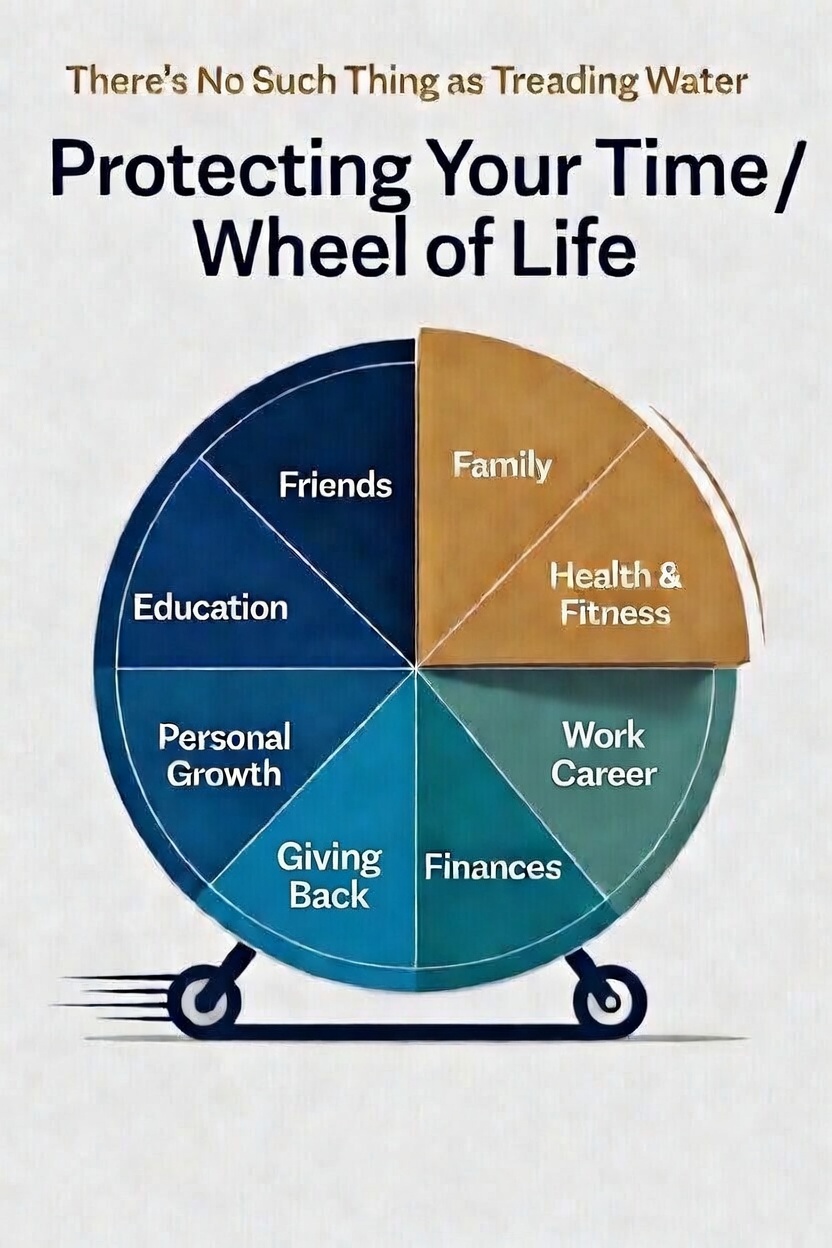
One of the things I learned from the late, great Zig Ziglar is the idea of using a wheel divided into sections to represent the different areas of life—family, work, fitness, savings, giving back, and etc. To keep the wheel of your life rolling smoothly, each area needs the appropriate attention. If you’re guilty of treading water in any one area, it creates a flat spot, and the whole wheel rolls with bumps.
This same principle applies powerfully to nutrition and training as well.
Nutrition: Lose days, Even days, Gain days
As a fitness professional and nutrition coach, the vast majority of my clients are seeking to either maintain or build quality muscle and drop body fat. One of the best analogies I ever learned comes from my mentor, Keith Klein. To drop body fat, you have to run in a slight caloric deficit. Keith taught that you have lose days, even days, and gain days. There is no other option.
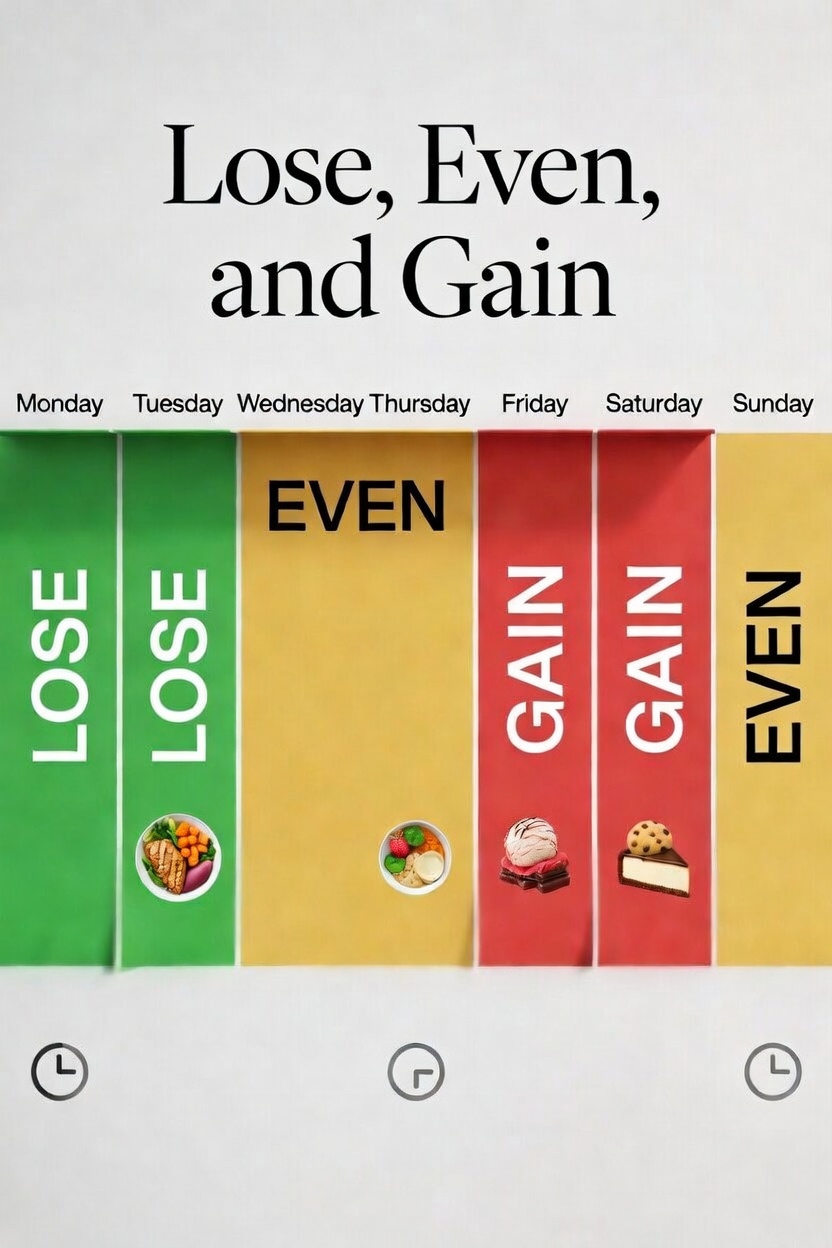
A lose day is when you stick to your plan and stay in your caloric deficit. An even day is when you eat just enough to climb out of your deficit—so you neither gain nor lose. A gain day is when you eat beyond maintenance and actually move backward.
Consider an example week: Monday and Tuesday are lose days. Great. But then Wednesday and Thursday become even days, followed by gain days on Friday and Saturday. You end the weekend on an even day and essentially spin your wheels with no progress for the entire week. It really can be as simple as that.
Please don’t think I’m preaching 100% perfection. You don’t need it to make progress, and chasing it will usually backfire. Just as you need downtime and recovery in other areas of life, you need some margin to enjoy your nutrition. Life is not meant to be lived on dry grilled chicken, steamed broccoli, and a plain baked potato. Ninety percent compliance is a great standard if you want to move the needle on your body composition, while leaving you ten percent margin to enjoy yourself.
You Can’t Afford to Miss Workouts
Another area I believe in strongly is making the most of your training time while you’re healthy, because you never know when injury or life will sideline you. This is especially critical for my senior clients.
After age 40 or 50, the aging process accelerates unless you’re consistently doing strength training and cardio. I published a blog on Thanksgiving of 2025 titled “You Can’t Afford to Miss Workouts” after seeing too many clients miss sessions for reasons their coach didn’t approve of.
When you’re younger, you have time on your side, but don’t wait too long—a life of physical neglect can end in disaster. I’ve lived this principle myself four times after surgeries on both knees, my right shoulder, and a hernia. Every single time, I got back into the gym as soon as possible.
A year or so ago, I worked with a client named Steve who had multiple tears in his rotator cuff requiring surgery. I modified his program to focus on his one good arm and his legs. He did great, followed through with PT, and is now back to 100%. I’m so proud of how he handled it.
I have another client, Phil, who is 70 and one of my best senior clients. He recently hurt his calf playing pickleball and had to wear a boot for a six weeks. A lot of people would have used that as an excuse to skip the gym, but not Phil. I adjusted his program to make it user-friendly, minimized walking and heavy plate loading, and told him we’d get through it. He didn’t miss a single workout. He even did cardio on the recumbent bike. His doctor was amazed at how well he healed.

I have another client, Larry, who needs both shoulders replaced. When he told me, I said we’d build a new program focused on his legs and one good arm to bridge the gap after his surgery while he goes through PT. His situation is no different than mine or Steve’s. I’m proud of the mindset he’s bringing into surgery, and we’ll hold him accountable just like we did Phil.
There’s something statistically significant that happens at age 75: if you experience extended downtime, the muscle strength and conditioning you lose can become impossible to regain. So I applaud Steve, Phil, and Larry. You can’t afford to let physical setbacks sideline you any longer than absolutely necessary.
Nutrition, Emotional Discipline, and the Sugar-Addict Story
Nutrition is the critical factor in changing body composition, and in my experience, many people struggle with it. I’m a dietary agnostic—I don’t camp in any one diet. Follow any sound plan faithfully, and you’ll make progress. The problem isn’t logic; it’s emotional discipline.
I am a recovering sugar addict. Cookies, ice cream, and cheesecake were my kryptonites, and they cost me dearly—my first marriage, a second engagement, business, and just about every area of my life. Eight years ago, I finally drew a line in the sand.

The turning point came when I realized that if I gave in to a craving, I wouldn’t stop at one scoop or one cookie. I’d eat a pint of ice cream and a dozen cookies, and then I’d have to live with the consequences. A food hangover is every bit as real as an alcohol hangover, but it can last a week. Once I fully connected the craving to the unavoidable aftermath, my overindulgence slowly ended. I haven’t had store-bought sweets in eight years.
I know this is a heavy topic. There’s a difference between a clinical eating disorder and disordered eating driven by emotion. Food cannot comfort you. It never fills an emotional void. If you ever feel out of control around food, the same mental shift that helped me—staying objective about the consequences—can help you make better choices consistently.
When dieting, all-or-nothing thinking is especially dangerous. Fall off the wagon once, and it’s easy to say “I’ve blown it” and go off the rails for the rest of the day. That guarantees a gain day. You don’t have to be perfect. Occasional treats are fine if you manage volume and frequency.
One of the best lessons I learned from Keith is “better bad choices.” Cut the serving size, choose a cleaner version, or reduce frequency. You can still enjoy ice cream or a steak—just be smart about it. And if a food is a true trigger for you, like sweets were for me, then abstinence may be the answer. Only you can decide.
Plan those occasional treats in advance—never at the end of a stressful day when you’re not thinking clearly. Stick to normal portions, enjoy the meal with people you love, and you’ll walk away guilt-free and still make progress. Life is not meant to be lived on plain grilled chicken and dry broccoli. If you know how to cook, you can make incredibly good-tasting food that is still healthy.
10X Thinking and Reinventing Yourself
Dr. Benjamin Hardy’s book 10X Is Easier Than 2X is one of my favorites. He teaches setting impossible goals no more than three years out, because anything longer is pointless in a world changing this fast. To hit 10X, you can’t just work harder—you have to think and operate completely differently.
Base your actions today on the person you will be in three years. This back-from-the-future thinking turbocharges the idea that there’s no such thing as treading water.

To close, I recently heard a prominent CEO say that if you’re not reinventing yourself every three years, you’re going to fall behind. Tread water for three years, and the world will have moved so far beyond you that you won’t recognize your surroundings. Just ask Blockbuster or Kodak.
I remember renting movies at Blockbuster every weekend in the ’90s and early 2000s. Netflix adapted to streaming technology. Blockbuster couldn’t let go of its old business model and got left in the dust.
Call to Action
If today’s message hit home for you, I want to leave you with one simple but powerful challenge:
Look at the wheel of your life right now. Where have you been treading water?
Remember—there is no neutral. You’re either moving toward your goals or moving further away from them. The world keeps moving whether we do or not.
Make the decision today to stop standing still.
If you want more straight-talk articles on fitness, nutrition, recovery, mindset, and high-performance living delivered straight to your inbox, I’d love to have you join me on this journey.
Subscribe to my blog above, and you’ll be the first to know every time a new post goes live.
You can also reach out to me directly via Work With Kelly.
Thanks for reading. Now go make today count.
 kellyamidonblog.com
Leave a comment