
I have always been extremely structured in my thought process, daily conduct, and overall approach to life. This trait has been both a blessing and a curse. On a humorous note, if my mom told me once, she told me 10,000 times when I was a kid: “You need to be more flexible.” And she was right in one sense. However, the truth is that my ability to live a structured and disciplined life has paid countless dividends over the years.
Case in point: on the very first day of Cost Accounting in college, my professor said, “You will either excel or struggle in this course depending on how you think. If you can view things in a structured manner, you will perform well. If not, you’re probably not going to enjoy this class.” By the end of the semester, I earned an A+. I crushed it. So much for being flexible.
If you were to poll coworkers from any of the companies I’ve worked for throughout my adult life, they would all describe me as structured in my approach. And now, in my role as a fitness professional at Lifetime, every client, member, and teammate would tell you the same thing. Whether it’s in my own workouts or in my coaching sessions, structure and discipline are constants in how I live and present myself each day.
I’ve also been blessed with numerous mentors in my life. The most recent one who first entered my world just over a year ago is Dr. Peter Attia. He’s a cancer surgeon by training, educated at Johns Hopkins, and now lives in Austin, Texas, with his wife Jill and their three children. While his medical background is rooted in oncology, his practice today focuses entirely on longevity. In fact, he is widely recognized as one of the foremost authorities on longevity in the United States.
Dr. Attia’s undergraduate degree was in engineering, and he sees the world through the structured lens of a mathematician. In this, we are kindred spirits. His work has made a profound impact on my life over the past year. One of his most significant influences on me has been the idea of using frameworks to teach and communicate complex concepts. Dr. Attia regularly uses frameworks with his clients, and thanks to him, I’ve adopted the same practice in my role as a fitness professional and nutrition coach.

In honor of Dr. Attia, I would like to share the following framework: the quality of your health is like a five-legged stool. The first leg is Exercise, the second is Nutrition, the third is Recovery (including sleep and stress management), the fourth is Regular Doctor Visits, and the fifth and final leg is Emotional Health.
If you fail to prioritize even one of these legs, your stool becomes unstable. Neglect a leg further, and the stool can tip over completely. The analogy to health is clear: neglect any dimension of your well-being and, sooner or later, your body will break down. And when it does, you may find yourself forced to rebuild reactively often with the help of medical professionals rather than proactively protecting yourself with daily discipline.
Author, speaker, and arguably America’s foremost business philosopher, the late Jim Rohn, once said: “We must all suffer from one of two pains: the pain of discipline or the pain of regret. The difference is that discipline weighs ounces while regret weighs tons.” When it comes to your health and every other area of your life, choose discipline.

The Five Legs Defined
• Exercise – the first and foundational leg.
• Nutrition – the second leg, providing essential fuel and balance.
• Recovery – the third leg, including sleep, stress management, and overall restoration.
• Regular Doctor Visits – the fourth leg, ensuring preventative care and medical guidance.
• Emotional Health – the fifth and final leg, focused on relationships, connection, and purpose.
Emotional health may seem obvious enough, but it’s also the newest addition to my framework. For years, I taught my clients using a four-legged stool analogy. But after reading Dr. Attia’s New York Times bestselling book Outlive, I was compelled to add the fifth leg. To paraphrase Dr. Attia: “You could have all the money, all the health, and all the physical capability in the world, but if you’re alone, or your relationships are broken, what’s the point?”
I couldn’t agree more.
Leg #1: Exercise
Starting with the exercise leg, I want to frame this in broad, general terms. Health is intensely individual, and while there’s no one-size-fits-all perfect plan for everyone, there are principles that apply universally. Think of this as a strong foundation to build from, one you can then fine-tune for your unique needs.
When it comes to health, two factors stand far above the rest in predicting longevity: exercise, where cardiovascular training ranks number one, and strength training ranks number two. Full stop, mic drop.
Your VO₂ max, the measure of your cardiovascular capacity, is the single strongest predictor of longevity. The science backing this claim is staggering, and it isn’t up for debate. What’s especially fascinating, particularly at my age, is the contrast between strength training and cardiovascular fitness. With strength training, progress comes quickly at first, but over time, gains become harder to achieve. With cardiovascular training, however, there’s virtually no ceiling, and you can keep improving for decades.
You have your biological or physical age, and then you have your training age. For example, I recently began working with Mark, a 66-year-old retired attorney. Biologically, he’s nine years older than me, but in terms of training age, he’s much younger. He ran in the past but never committed to consistent strength training until recently. That means his potential for growth in muscle and strength is tremendous.
By contrast, I’ve been lifting since I was 15, over 42 years now. My body has become so desensitized to weight training that adding new muscle is challenging. That can feel frustrating at times, but the upside is that decades of consistency have built a strong base to carry me into my golden years.
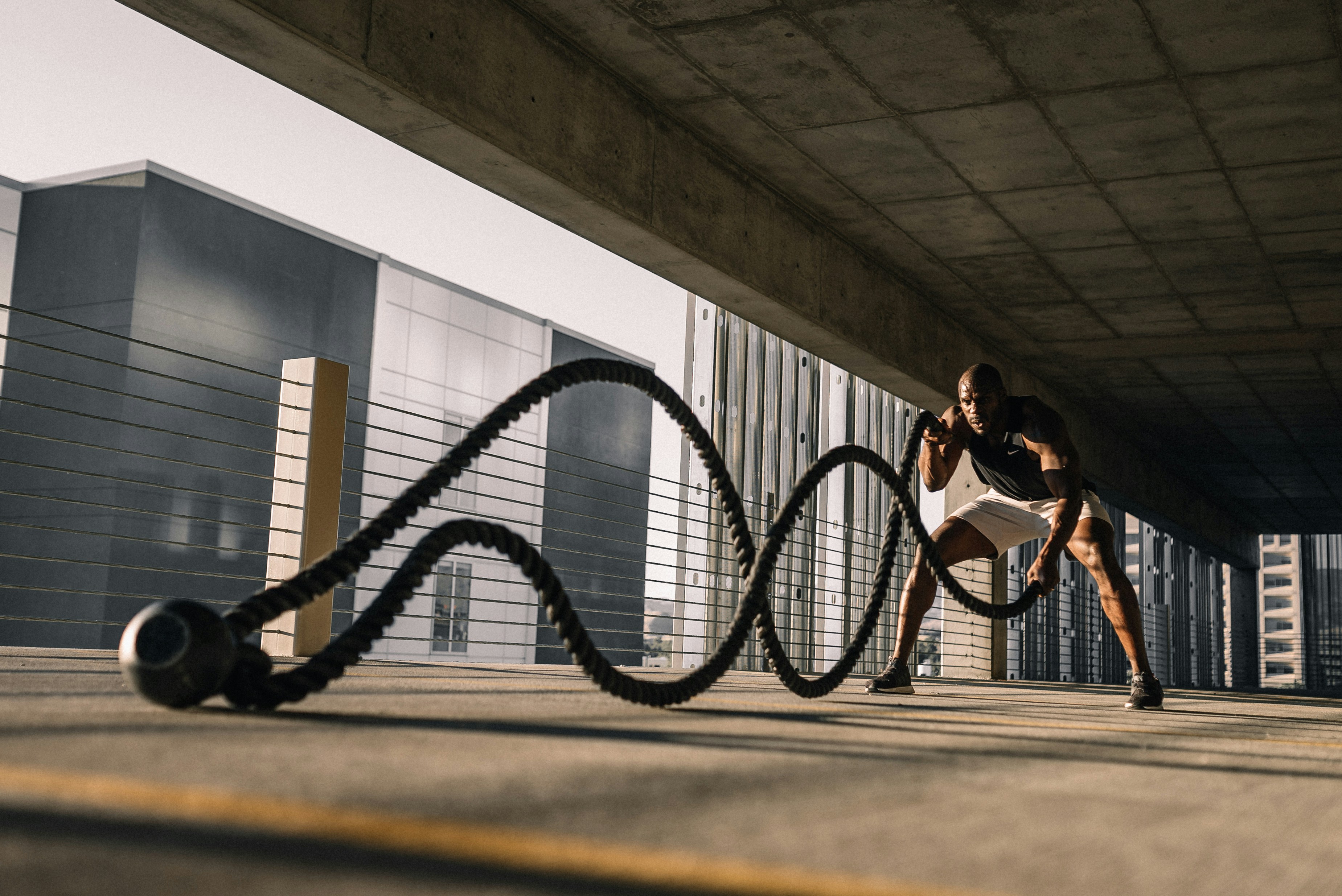
Cardiovascular health, on the other hand, has no upper limit. In Outlive, Dr. Attia tells the story of a Frenchman over 100 years old who competed in a cycling road race. Before the race, his VO₂ max was tested in the low 30s, remarkable at that age. Not only did he finish the race, but a year later, after training with two coaches, he improved both his VO₂ max and his race time. Stories like this remind us that cardiovascular capacity has virtually no ceiling.
When I sit down with a new client to design their training schedule, I always start by considering the time. How much can they realistically invest? From there, my general recommendation is straightforward: spend half the time lifting weights and the other half doing cardio. That ratio may shift if someone has a long history of strength training but little cardio or vice versa, but for most people, 50/50 is a solid starting point.
Cardio Basics
Dr. Attia breaks cardiovascular training into two primary categories: Zone 2 and VO₂ max training. The best endurance athletes in the world, including elite cyclists like four-time Tour De France winner Tadej Pogačar, spend 80–90% of their time in Zone 2, with the remaining 10–20% in high-intensity intervals. This blend builds both the base and the peak of the “aerobic pyramid.” Zone 2 broadens the base, while intervals sharpen the peak. This results in an overall more powerful aerobic engine.
Zone 2 isn’t the same as the number displayed on your smartwatch or treadmill. It’s defined as the highest steady-state effort you can maintain while keeping lactate below two millimoles. Practically, this means you’re mainly burning fat as fuel. Push harder, and you shift into sugar-burning, which isn’t sustainable for long. To determine your Zone 2, you can use the Maffetone Method (180 minus age, plus or minus 10 beats per minute) or the “Talk Test.” You can speak, but you really don’t want to, and certainly not in full, unbroken sentences.

VO₂ max intervals, on the other hand, are short bursts of all-out effort, typically lasting 3–8 minutes, with equal recovery time between them. These sessions are brutally hard but build the peak of your aerobic engine.
Strength Training Basics
Strength work depends on your weekly availability. At a minimum, two sessions per week are essential. For many, a total-body program twice per week provides the best return on investment. If you can train three times per week on non-consecutive days, a total-body split still works beautifully. For those who need flexibility, an upper/lower or push/pull split allows for training on consecutive days.
Busy clients often succeed with a minimalist approach: own your weekends with two strength days, add one midweek, and you’ve hit each muscle group three times every two weeks. For those with more time, lifting three to four times a week opens up numerous programming options. Over the years, I’ve come to believe there is no “best” split. Championship physiques have been built with every style imaginable. The magic isn’t in the split, it’s in the work.

Nine-time major winner and one of only six men to complete professional golf’s Grand Slam, Ben Hogan, said it best: he dug his game out of the dirt through countless hours of practice. While Hogan was obviously speaking about golf, the same truth applies here as well. Success requires hard work, and no one can do it for you. You have to put in the reps literally and figuratively.
Consistency is the ultimate key. Whether it’s cardio or strength training, consistency trumps perfection every single time. Select a frequency that fits your life and allows you to show up week after week. From there, balance is critical between lifting, cardio, and recovery.

For the senior population, especially, balance and stability work must not be overlooked. One of the most significant risks associated with aging is falling, and the statistics confirm just how dangerous a fall can be after the age of 55 or 60. That’s why folding balance and stability training into your weekly routine is a powerful investment in long-term health. The best part? It doesn’t require much time and can be easily integrated into your strength training sessions.
At the end of the day, it’s not about chasing the perfect program. It’s about consistent, smart effort, week after week. That is what builds longevity.
Leg #2: Nutrition
Nutrition is one of the most debated and confusing topics in health. I grew up in the 80s and started lifting at 15. My only sources of information at the time were bodybuilding magazines and books written by the icons of that era, like Arnold Schwarzenegger, Frank Zane, Tom Platz, Lee Labrada, and Lee Haney. Their advice shaped my early gym years, and I absorbed every word of it.
Back then, the fitness industry, government, and popular media all preached the benefits of low-fat diets. The universal message was simple: if it’s low-fat, it’s healthy. Unfortunately, that was some of the worst advice ever given. It gave people permission to eat unlimited amounts of ‘low-fat’ foods, many of which were packed with refined carbohydrates, such as pasta. I’m not against carbs or pasta; it’s a matter of portion control. But the food industry seized on the trend, flooding the market with low-fat and no-fat products. Many people assumed ‘low-fat’ meant ‘guilt-free,’ and their health suffered.
Fast forward 40 years, and the pendulum has swung the other way. Today, low-carb, high-fat diets dominate headlines, including the Atkins, Keto, and Carnivore diets. Add in the popularity of Intermittent Fasting, and with so much conflicting advice, it’s no wonder people sit across from me in consultations and say, ‘I don’t know what to eat, and I don’t know who to believe.’
They’re overweight, frustrated, and paralyzed by too much information. And honestly, who can blame them? Every diet sounds persuasive. That’s where my structured way of thinking and decades of experience allow me to cut through the noise and deliver the essentials of nutrition in a way people can follow.
Regardless of whether your goal is to build muscle, lose fat, or simply maintain, the foundation is the same: you must dial in your energy balance, which means how many calories you consume daily.

It doesn’t need to be complicated. Whether you track calories, macros, or portion sizes, you must consistently manage your intake. Most new clients come to me with little structure, relying on habits (some good, some poor) but mostly ‘flying by the seat of their pants.’ My job is to bring structure to their nutrition in the simplest way possible.
I rarely ask clients to count calories or log food in apps. While tools like MyFitnessPal and others can work for highly detail-oriented individuals, most won’t sustain that level of commitment in the long term. Instead, I often recommend something as simple as a spiral notebook from your local drugstore to track your daily nutrition.
I do the heavy lifting for my clients by determining their caloric intake and macros. All I ask of them is to follow the structure and portions I give them, and a journal is a simple tool we can use for tracking and accountability. This method worked for me when I last competed in 1999, long before apps existed, and it continues to work today.

The second pillar of nutrition is protein. If you Google ‘how much protein do I need daily,’ you’ll get endless answers. The truth is, there’s no magic macro ratio or one-size-fits-all diet. But here’s a reliable starting point: multiply bodyweight by 0.75–1.0 grams per pound.
In more than seven years of coaching, I’ve only had one client eating too much protein. Everyone else has been consuming too little. Without enough protein, you can’t maximize muscle repair and growth, recovery, or fat loss.
Protein also needs to be spread across meals to maximize muscle protein synthesis (MPS). This process peaks when you hit a threshold of 2.5–3 grams of leucine per meal, typically reached with:
• 25–30g of protein for women (30g+ for older or highly active women).
• 30–40g of protein for men (closer to 40g for larger or heavily training men).
This is why three meals a day often falls short; it’s hard to hit daily protein targets while also managing hunger. Four to five meals per day work far better for most people.
I typically recommend a minimum of four meals daily: breakfast, lunch, an afternoon snack, and dinner. This helps distribute protein intake and manage hunger more effectively.

For example, if someone eats lunch at 11:30 and doesn’t eat dinner until 7:30, that’s an 8-hour gap. Hunger inevitably leads to poor choices. Adding an afternoon snack that includes protein, carbs, and healthy fats helps bridge the gap and prevent evening cravings.
In my own schedule, I’m up by 4:00 a.m. After coffee and my morning workout, I have a post-workout shake around 7:30–8:00. My first solid meal is around 10:00, followed by lunch at 1:00, another shake around 4:00, and dinner at 7:00. Five meals a day fit my lifestyle, prevent hunger swings, and ensure I consistently hit my protein targets.
Once protein is in place, carbs and fats can be adjusted based on genetics, lifestyle, and activity level. Some individuals thrive on higher carbohydrates, while others prefer higher fats. Endurance athletes logging high weekly training volume will obviously require more carbs than someone who is sedentary, mainly outside of workouts.
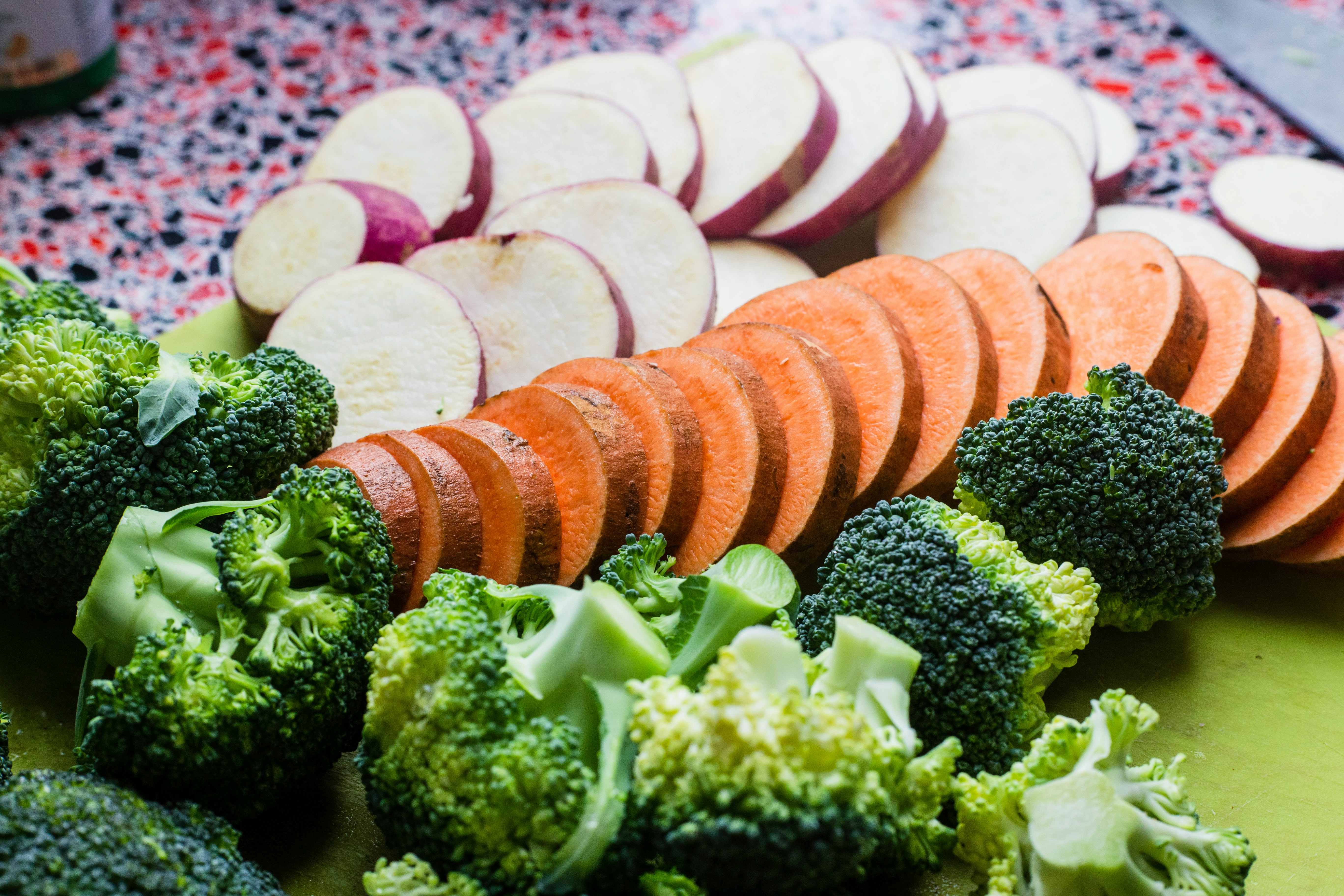
Personally, in the 1980s and 1990s, I adhered to a very low-fat diet (15–20% of calories) and maintained a lean physique. Today, my fat intake is closer to 30% with staples like olive oil, walnuts, flaxseed, and avocados, and I’m just as lean, while feeling more satisfied and hormonally balanced. My current macro split is roughly one-third protein, one-third carbs, and one-third fat, and according to my bloodwork, I’ve never been healthier.
I always teach clients to build their nutrition house on a solid foundation of whole foods first. But even with the best diet, gaps remain. Our soils are nutrient-depleted, stress is at an all-time high, and most people’s food intake is far from optimal. That’s where supplements come in, not as a replacement for good nutrition, but as reinforcements to cover the gaps.
And here’s the key: quality matters. A cheap, synthetic supplement often passes right through your body unused. As the saying goes, ‘The most expensive supplement is the one your body doesn’t absorb.’
Multivitamins — Life today places enormous demands on your body. Stress, processed food, and poor soil quality mean that even people who ‘eat well’ often fall short on essential vitamins and minerals. A multivitamin acts as nutritional insurance, filling the gaps you can’t realistically cover through food alone.
The difference between average products and quality formulas is night and day. Many store brands rely on cheaper, less bioavailable forms of nutrients, the kind your body struggles to absorb. For example:
• B12: Cheap forms use cyanocobalamin, while quality formulas use methylcobalamin or acetylcobalamin.
• Folate (B9): Many products use folic acid, while superior brands use 5-MTHF.
I recommend formulas with an AM/PM split, featuring energizing nutrients in the morning and recovery-supporting nutrients at night. This approach syncs with your body’s natural rhythms.
Fish Oil (Omega-3s) — Fish oil is a game-changer. The omega-3 fatty acids EPA and DHA reduce inflammation, support heart and brain health, improve joint mobility, and even benefit skin and hair. Plant-based fats like walnuts and flax are excellent, but they don’t provide the same bioactive omega-3s as fish oil.
Here again, quality matters. Many bargain brands use the ethyl ester (EE) form of omega-3s, which are harder for the body to absorb. High-quality brands use the triglyceride (TG) form, which your body absorbs much more efficiently. And sourcing matters, I recommend fish oil from small species, such as anchovies, which are less likely to accumulate toxins.
Digestive Enzymes — As we age, stress, injuries, and digestive disorders can all impair our body’s ability to break down food efficiently. The result? Gas, bloating, and poor nutrient absorption. Adding digestive enzymes helps you get more from the food you’re already eating. Think of them as nutrient unlockers, ensuring that protein, carbs, and fats are properly broken down and absorbed.
Vitamin D3 + K2 — Roughly half the population is deficient in Vitamin D, which plays a critical role in immunity, blood sugar regulation, bone health, and cardiovascular function. But Vitamin D works best when paired with Vitamin K2, which directs calcium into bones and teeth (where it belongs) and away from arteries (where it can cause harm). A high-quality D3 + K2 combo is one of the most powerful and affordable ways to support long-term health.
Magnesium — About 75% of adults in the U.S. don’t get enough magnesium. That deficiency can manifest as muscle cramps, fatigue, poor sleep, or even irregular blood sugar levels. Magnesium is essential for over 300 enzymatic reactions in the body, impacting the heart, brain, muscles, bones, and metabolism.
Cheaper products often use poorly absorbed forms, such as magnesium oxide, which can lead to reduced effectiveness. Quality products use forms like glycinate or citrate, which are much more effective.
Probiotics — Gut health is central to everything from weight management to immunity to mood. Your gut microbiome is like an internal ecosystem, and stress, processed foods, and antibiotics can disrupt its balance. A high-quality probiotic helps restore this balance, supporting digestion, nutrient absorption, and immune defense. Because stress directly affects gut health via the gut-brain axis, probiotics play a role not just in physical health but also in emotional well-being.
Greens Supplements — Even with the best intentions, most people fall short on their vegetable intake. A quality greens powder can help fill the gap, providing concentrated sources of antioxidants, fiber, digestive enzymes, prebiotics, and probiotics.
I started taking Life Greens in January 2020, just before the pandemic, as a way to bolster my immune system. I’ve never stopped. Beyond immune defense, green powders help cover the nutritional bases on days when fresh produce intake falls short.
Protein Powder — Finally, there’s protein powder, not as a crutch, but as a tool. It’s often challenging to consistently meet protein goals with whole foods alone, especially for individuals with busy schedules. Shakes provide a convenient way to bridge the gap. Today’s whey and plant-based powders are far superior in taste and digestibility compared to those of decades past. They’re versatile too, not just for shakes, but for adding protein to oatmeal, Greek yogurt, pancakes, or even baked goods.
For me, coaching clients throughout the afternoon, sipping on a shake between sessions, is far more practical than eating solid food. It keeps my nutrition on track without disrupting my work.
Supplements are not magic bullets. However, when used wisely, they can be powerful allies in filling nutritional gaps, enhancing recovery, and promoting long-term health. Always start with a balanced diet, then supplement with high-quality nutrition to elevate your nutrition from adequate to optimal.
Leg #3: Recovery
Sleep, Stress Management, and Overall Recovery
I’ve struggled with sleep over the years. Before I started working as a fitness professional, I knew that quality sleep mattered, but I didn’t fully grasp the damaging effects of consistently getting too little. If I had a short night and felt lousy the next day, it didn’t take a rocket scientist to connect the dots, but I still underestimated the deeper, cumulative harm.
In this leg, I’ll start with what should be considered the gold standard for sleep. Then I’ll outline the measurable downsides of short sleep and close with practical best practices for optimizing your sleep. From there, we’ll transition into stress and broader recovery.
The Case For Sleep
For most people, seven to nine hours per night is the target. That’s a wide range and depends on the individual, but if you’re regularly getting less than seven hours of quality sleep, you’re doing measurable damage to your body.

I’ve spoken with countless people who wear sub‑seven‑hour nights like a badge of honor. I often hear, “I get by just fine on six hours.” My question back is: Do you want to get by or do you want to thrive? Those are two very different states of being.
What Short Sleep Does to Your Body
Short sleep shows up in biomarkers. Here are a few well‑established examples:
Cardiovascular risk: Chronically short sleep increases your risk of heart disease.
Metabolic dysfunction: It pushes you toward insulin resistance and, ultimately, Type 2 Diabetes.
Cognitive decline: It’s linked with a higher risk of all forms of dementia.
A Closer Look at Insulin Resistance
On one of Dr. Attia’s podcasts, he described an experiment with people who ordinarily slept approximately 7 hours per night. They were restricted to 4 hours per night for two weeks, and their blood work took a significant turn for the worse, especially in their ability to dispose of blood glucose. Losing that ability is an early step toward insulin resistance and, eventually, Type 2 Diabetes.
Your body primarily stores glucose (after carbohydrates are broken down) in your muscles and liver. Depending on your metabolic health, you live somewhere on a spectrum from insulin sensitive to insulin resistant. When you’re insulin sensitive, your muscles and liver soak up glucose like a sponge. When you’re insulin resistant, they don’t, and blood sugar rises, prompting more and more insulin in a vicious cycle. A steady dose of sleep loss shoves you toward the wrong end of that spectrum.
Dementia Risk That Hits Close to Home
The link between short sleep and dementia, including Alzheimer’s, Parkinson’s, and Lewy body dementia, is real and sobering. Alzheimer’s took my sweet grandmother. One of my best college buddies’ dad died from Parkinson’s, and I currently work with clients who live with it. This is more than academic for me; it’s personal motivation to protect my sleep.
Best Practices for Great Sleep
These are simple, high‑leverage habits you control.
1) Keep a Consistent Schedule
Wake time: Consistency here anchors your circadian rhythm. If your wake time is all over the map, your internal 24‑hour clock never stabilizes.
Bedtime: Aim for consistency as well, but understand sleep pressure. After a great night’s sleep, your sleep pressure starts near zero. As the day wears on, it builds. By your usual bedtime, you should feel drowsy and heavy; that’s sleep pressure working for you. Combine that with consistent bed and wake times, and you will maximize your production of melatonin, so it’s ready at night when you are.
2) Dim the Evening
Limit bright light at night. Use lamps instead of overhead lights and minimize blue-heavy light from screens.
Devices: Phones, tablets, TVs, and computers emit blue light that stimulates the brain and suppresses the production of melatonin.
Built‑in filters: On Apple devices, enable Night Shift (Settings → Display & Brightness). My non-Apple laptop has a blue-light setting that I enable nightly.
Blue-light glasses: I wear a non-prescription pair from Eight Sleep (approximately $15), even with software filters, glasses help, especially for TV.
3) Choose Calm Wind‑Downs
Evening activities are personal. I can work on content creation, or watch TV right up to my set bedtime and fall asleep in under 10 minutes. That’s me. You’ll need to experiment. What you watch/read matters: a horror film is very different from reading something calming or journaling gratitude.
4) Cool Your Cave
Most people sleep better with the thermostat at 66–68°F. A drop in core body temperature is a key factor in sleep. Cooler bedrooms help that drop happen.
5) Time Caffeine, Alcohol, and Food
Caffeine: Depending on dose and sensitivity, cut it after lunch or shortly afterwards, depending on your standard bedtime. It can linger 6–8 hours (or more) in your system and degrade sleep quality even if you fall asleep quickly.
Alcohol: It may help you nod off, but it fractures sleep architecture. Sleep cycles last roughly 90 minutes and alternate between Deep, Light, and REM sleep, with more deep sleep occurring early in the night and more REM sleep occurring later. Alcohol disrupts those proportions and produces more fragmented, less restorative sleep.
Food: Big meals close to bed ask your body to digest, which is heat‑producing, when your core temperature needs to cool to achieve optimal sleep. Aim to finish the last meal 2–3 hours before bed. Apply similar logic to alcohol and be sensible with quantity and timing.
“Sleep Opportunity” (Simple but Profound)
Trackers make it evident that time in bed does not automatically equal time asleep. Bathroom trips, tossing and turning, and nighttime phone checks all chip away at it. If your goal is 7 hours of sleep and you typically lose an average of 30 minutes per night, then your sleep opportunity should be 7.5 hours in bed.
There’s an old saying: If you can’t measure it, you can’t improve it. You don’t have to track everything forever, but blending subjective feel with objective data is powerful.
Stress: More Than a Feeling
I bought my first Fitbit in 2019 to track sleep. Later, I used it for workouts and heart‑rate‑based cardio (thanks to Dr. Attia’s influence). The real game-changer came in early 2025 with my Oura Ring.

Before Oura, I assumed stress mainly was mental. Either you feel stressed or you don’t. Oura showed me otherwise: physiological stress can be sky‑high even when you feel calm.
Here are the objective stress indicators my ring measures:
1. Resting Heart Rate (RHR): Elevated RHR can reflect illness, overtraining, poor recovery, or other strain.
2. Heart Rate Variability (HRV): Lower HRV often signals higher stress load; higher HRV suggests better recovery and resilience.
3. Respiratory Rate: An Elevated rate can hint at fatigue, illness, or recovery strain.
4. Skin Temperature Deviation: Departures from your baseline can indicate immune response, inflammation, or hormonal shifts.
5. Movement & Rest Patterns: Daytime restlessness or nighttime tossing increases perceived stress load.
6. Sleep Quality Indicators: Poor efficiency, less deep sleep, or irregular timing all elevate stress scores.
7. Daytime Activity Strain: High physical load without adequate recovery increases physiological stress—even if you enjoy the activity.
A Sunday That Didn’t Feel Stressful
On August 10, 2025, I trained a favorite client early, went to church, talked with family, grocery‑shopped, and worked on a blog post. That evening, I relaxed with a movie. It felt like the most relaxed day of the week, and yet my stress score was the highest. Why? I was still recovering from a recent surgery on August 4th. My RHR and HRV had not returned to baseline. Those objective signs indicated that my body was still under stress, regardless of how I felt.
When it comes to emotional stress, the usual suspects, finances, family, and health can keep minds spinning, especially at night. Many people struggle to fall asleep or wake up in the night with their minds racing.
Dale Carnegie, in his (1948) classic, How to Stop Worrying and Start Living, offered timeless wisdom: live in day‑tight compartments. You can’t rewrite yesterday or live out tomorrow in advance. At 2 a.m., the “right now” is sleep. Easier said than done, but it’s a skill you can acquire, practice, and master.
If you struggle with sleep and/or stress, consider a smart ring. Fitbit and Apple Watches are great, but I give smart rings the edge for integrating activity, sleep, stress, and recovery into a clear picture. If you’re not gathering objective recovery data, you’re flying by feel alone.
Recovery: The Missing Leg
About three years ago, I completed Precision Nutrition’s Sleep, Stress Management, and Recovery course initially to solve my own sleep issues and, professionally, to better serve clients. The course opened with a line that changed how I program training:
A training program is only as good as your body’s ability to recover, adapt, and grow from it.
That idea scales beyond the gym. Any activity, work, recreation, or family time is only as good as your body’s capacity to recover from it.

I often use a checkbook analogy with clients. If you write a check for more than you have in your account, it bounces. Likewise, if you chronically overdraw your body with long work hours, intense training, busy family schedules, and constant projects, especially on top of inadequate sleep, something will break.
You get 168 hours per week. If 7–9 hours per night aren’t in the budget, you’re courting a wreck and need to plan recovery like an appointment. If your calendar shows no downtime, you’re out of balance, and your body will eventually suffer the consequences.
Personally, I block weekend recovery time, including movies, time with friends and family, and low‑stimulus rest. Everyone needs it. Audit your inputs: How many hours at work? Training? Projects? Recreation? Build a balanced load your body can actually sustain.
Bottom Line
Protect sleep. Measure what matters, respect stress, both emotional and physiological. And plan recovery with the same intention you bring to training. That’s how you thrive, not just get by.
Leg #4: Regular Doctor Visits
Just two days ago, I had an eye-opening conversation with one of my best clients, a man in his early 30s. He admitted he hadn’t seen a doctor in years. No annual physical. No blood work. Nothing.
I couldn’t help but challenge him: “You mean you’re not even getting a physical once a year?” His answer: “No.”
That’s playing with fire. The way you look, feel, and perform on the outside is not a guarantee of what’s happening inside. You might feel fine, but without looking under the hood, you have no idea what might be silently brewing.
This philosophy is heavily influenced by Dr. Attia, whose background as a cancer surgeon makes him passionate about prevention. His stance is clear: annual physicals should be the foundation of your healthcare.

From there, your needs may require additional visits. In my own case, I take testosterone and thyroid medication due to naturally low levels. These conditions require regular blood work to ensure my levels remain optimal. Without testing, we never would have known I had low testosterone, low thyroid function, or mild anemia.
None of these issues is life-threatening compared to what Attia calls the “Four Horsemen”: Heart Disease, Cancer, Dementia, and Metabolic Disease, but they’re not risk-free either. And without regular checkups, they would have gone unnoticed.
Dr. Attia firmly believes no man should die from prostate or colon cancer, and no woman from breast or colon cancer, because the screenings are so straightforward.
Notice I didn’t say easy. There’s nothing pleasant about prepping for a colonoscopy, but it beats the alternative. Early detection saves lives. Cancers caught early are highly treatable. Once they metastasize, survival odds plummet.
Attia’s personal standard? A colonoscopy every three years, alternating with a Cologuard test in between, effectively screens for colon cancer annually. That’s the mindset of a cancer surgeon: prevention first.
Embarrassingly, I put off my first colonoscopy until December 2024 at age 56. Why? Fear of the prep. Honestly, that was foolish. Thankfully, the results were mostly good. One polyp was found and removed; it was benign. But because my bowel prep wasn’t ideal, my doctor scheduled a follow-up just six months later.

As I’m writing this, my procedure is only five days away. I’m not excited about it, but it’s the right thing to do. I can practically hear Dr. Attia’s voice in my head, pushing me to stay disciplined. His influence has been like a life coach, one who doesn’t accept excuses.
Another strong influence in my life is Keith Klein, my longtime mentor and now retired clinical nutritionist from Houston, TX. Over the course of his career, Keith has worked with both everyday people and some of the world’s most elite athletes, and he has been guiding me since 1991.
Keith shared a story with me a couple of years ago, when I interviewed him for my podcast, that drove home the importance of proactive screening. Beginning in his mid-40s, he scheduled colonoscopies every five years. His doctor thought it was excessive, but Keith persisted.
At age 60, during his fourth colonoscopy, a polyp was discovered and removed. It turned out to be precancerous. Had he waited, the outcome could have been far worse. His insistence on early, regular screening likely saved his life.
That story was the spark I needed to stop procrastinating and schedule my own colonoscopy, finally. Don’t gamble with your health. Annual physicals and proactive screenings are non-negotiable. Whether it’s heart disease, cancer, or metabolic conditions, the earlier issues are caught, the more treatable they are.
You wouldn’t ignore the warning lights on your car’s dashboard. Don’t ignore your body’s need for regular checkups. Prevention is always easier and far less costly than reaction.
Leg #5: Emotional Health
For the final leg on emotional health, I want to share a personal story.
Dr. Attia’s stance is clear: you can have all the money, health, fame, and accolades in the world, but if you don’t have emotional health grounded in loving, supportive, and genuine relationships with family and friends, you truly have nothing.

I’m reminded of Mark 8:36: “What does it profit a man to gain the whole world, but to lose his soul?” To me, this verse asks: What’s the point of achieving everything the world offers if your relationships are fractured? Who wants to live that way?
A personal example of this truth comes from my mom and my grandmother. Their relationship was strained for the last 20 years of my grandmother’s life. They deeply loved each other, but they didn’t understand or value each other’s love languages (from Gary Chapman’s book The Five Love Languages). Without that understanding, their interactions often created more pain than connection.
Over time, things deteriorated to the point where weeks or even months would pass without them speaking to each other. The saddest part? Many holiday seasons were spent apart. Family dinners where the three of us sat at the same table were the rare exception rather than the rule.
I stayed close to my grandmother until her passing on August 31, 2024, but it broke my heart to watch my mom and grandmother never find peace together.
Life is too short for that.

And here’s the humbling part: I can’t point fingers. I know I have relationships in my own life that aren’t where they should be. The responsibility is mine. None of us is promised tomorrow or even the next five minutes.
James 4:13–16 reminds us:
“Now listen, you who say, ‘Today or tomorrow we will go to this or that city, spend a year there, carry on business and make money.’ Why, you do not even know what will happen tomorrow. What is your life? You are a mist that appears for a little while and then vanishes.”
That truth challenges me daily. If you have fractured relationships, don’t wait. Don’t waste years you’ll never get back. Pick up the phone today. Take the first step. Tomorrow may not come.
Conclusion
A five-legged stool is unusual, and that’s the point. It takes more thought, more craftsmanship, and more balance to build. So does your health.

It’s easy to overemphasize one area. Maybe you’re in the gym six days a week, but you never see your doctor. Perhaps you eat clean but run yourself ragged with no recovery. Or maybe your physical routine is rock-solid while your relationships are falling apart.
The truth is simple: you can’t stand steady if even one leg is weak. And if two or more fail, the stool will eventually collapse.
What I hope you take away is this:
• Exercise isn’t optional; it’s the strongest predictor of longevity.
• Nutrition is your daily vote for health or decline.
• Recovery is the hidden gear that makes all your effort count.
• Medical care helps catch what you can’t see coming.
• Emotional health gives everything else a reason to matter.
Neglect any of them long enough, and you’ll spend far more time and energy repairing damage than it would have taken to maintain strength in the first place.
So take inventory today: Which leg needs attention? Where do you need to shore up? And then act — not “when life slows down,” but now. Life won’t slow down. The clock won’t wait. And your health can’t stand on hope alone.
Build your stool strong. Keep it balanced. And you’ll live not just longer but better.
 kellyamidonblog.com
Leave a comment