
I started writing about nutrition publicly back in 2015. One of my very first blog posts was titled You Don’t Have to Be Perfect, and even then, I was trying to communicate a lesson that took me many years to fully learn myself: perfection is not only unnecessary when it comes to nutrition—it can actually be harmful.
I speak from experience.

I’ve always been disciplined by nature. I started lifting weights at 15 years old, long before the internet or social media existed. Back then, the only sources of information were books and bodybuilding magazines. I studied them religiously. I believed—without anyone to tell me otherwise—that if I wanted to look like the men on those magazine covers, I had to train relentlessly and eat perfectly.
So I built my own nutrition plans. I tweaked them constantly based on what I read and how my body responded. And early on, I adopted an all‑or‑nothing mindset: I was either “on” or “off.” Most of the year, I stayed on. But holidays were a different story.
Anyone who has been there knows what I’m talking about. Family gatherings. Abundant food. Social pressure. “It’s not going to hurt you—just enjoy a piece.” When you finally give in after months of restriction, one bite turns into four more. And over time, that cycle led me to a very unhealthy relationship with food.
I didn’t understand then that the problem wasn’t discipline—it was faulty thinking. I didn’t know that eating well 80–90% of the time is not failure; it’s sustainability. Had I had a coach to help me see that earlier, I could have saved myself a lot of unnecessary struggle.
Influences That Shaped My Coaching
Fast forward a few decades. I never imagined that lifting weights as a teenager would eventually lead me to become a full‑time trainer and nutrition coach, but here we are.
Two major influences have shaped how I coach today.

The first is Keith Klein, a now-retired clinical nutritionist from Houston who worked with clients ranging from everyday clients to elite professional athletes for over 40 years. I became his client in 1991 and remain friends with him to this day. Keith has been quietly shaping my thinking for decades.
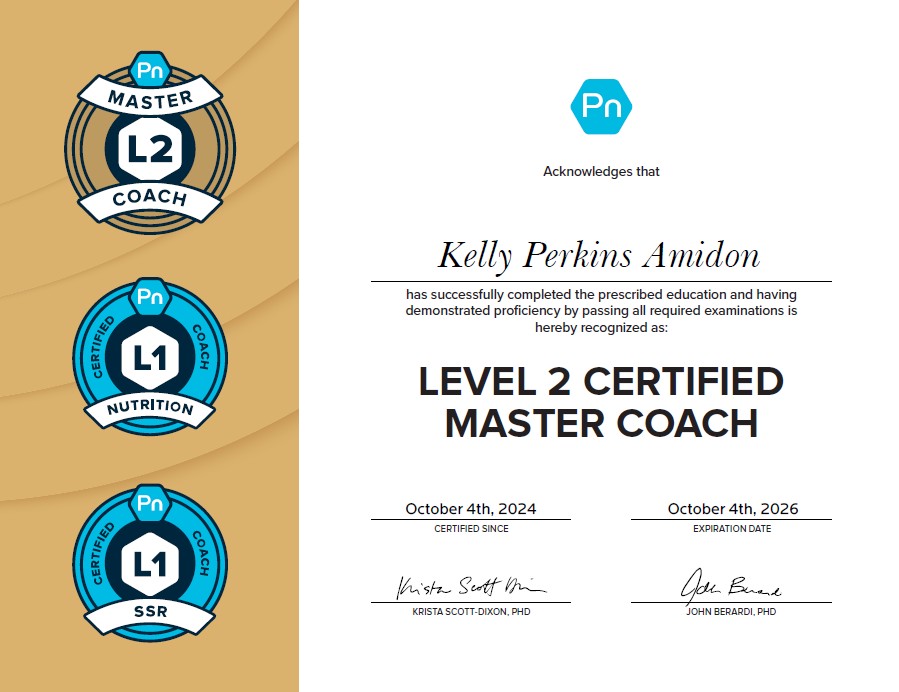
The second is Precision Nutrition, where I’ve earned multiple certifications. They are the largest nutrition coaching organization in the world and have profoundly influenced how I think about behavior change, habits, and long‑term success.
But over time, I’ve also embraced the wisdom of Bruce Lee:
“Absorb what is useful, discard what is not, add what is uniquely your own.”

By blending what I learned from Keith, Precision Nutrition, and nearly eight years of full‑time coaching experience, I came to a clear conclusion: the best approach for most people lies between two extremes.
On one end are rigid, must‑follow meal plans. On the other hand, there is a purely habit‑based approach with no structure.
Neither, by itself, serves most people well.
Why Extremes Don’t Work
Precision Nutrition classifies clients into three levels. Level One applies to the vast majority of people and focuses on foundational behaviors, such as eating enough protein, vegetables, and healthy fats; smart carbohydrates; sleeping well; managing stress; and exercising consistently.
Levels Two and Three are reserved for specific, short‑term goals—athletic competitions, physique contests, or acting roles that require extreme discipline for a defined period of time. These levels were never meant to be lived at long term.
I know this firsthand, because I spent much of my adult life trying to live there. And while it produced results on the outside, it came at a cost.
Perfectionism is exhausting. It’s antisocial. And for many people, it eventually backfires.
This is where the concept of 90/10 compliance changed everything for me.
If you eat five meals per day, seven days a week, that’s 35 meals. Ninety percent compliance allows for three to four flexible meals per week—meals where you live life. Not cheat meals, but treat meals.
Language matters. “Cheat” implies failure. “Treat” implies intention and reward.
One of the best lessons Keith taught me was this: plan those meals in advance. Don’t decide in the middle of a stressful day when your willpower is depleted. Enjoy them with friends or a spouse. Eat normal portions. Then move on—without guilt.
Flexibility doesn’t derail progress. Lack of structure does.
What the Data Actually Shows
Precision Nutrition has shown that people make progress across multiple health metrics—even with imperfect compliance. In fact, the most significant long‑term success often comes from consistency, not perfection.

but you must take action.
The goal isn’t to find the “perfect” percentage. The goal is outcome‑based decision making: apply a strategy, measure results, and adjust.
This is where coaching matters.
Why I Stopped Selling Meal Plans
Early in my career, I sold meal plans—often without enough coaching attached. Looking back, that wasn’t wisdom; it was inexperience.
A meal plan without coaching is, for most people, a dead end.
What people need isn’t just information—they need help applying it.
Habits are powerful, but habits without structure leave people guessing. Telling someone to eat 150 grams of protein per day without explaining how to do that in real life isn’t helpful.
Do you eat that in one meal? Four meals? What counts as protein? Does timing matter?
Structure provides clarity. Habits provide sustainability.
This is why I now coach nutrition through a structured, habit‑based framework tailored to the individual. We decide how many meals make sense, what foods fit their life, their preferences, their schedule—and we adjust over time.
Not cookie‑cutter. Not rigid. Not vague.
Freedom Comes From Structure
One of my mentors, Darren Hardy, once used jazz music as an analogy. To the untrained ear, jazz sounds chaotic—but beneath it lies a strong structure that allows for freedom and creativity.
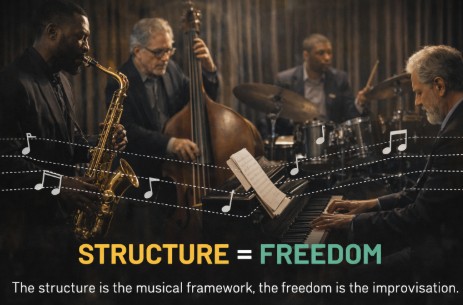
Nutrition works the same way.
You can have excellent habits, but without structure—just like driving without traffic signals—chaos ensues.
Sleep is a perfect example. If it were as simple as “get seven to eight hours,” we wouldn’t spend billions each year on sleep aids.
Structure matters.
Health Is Not an On‑Off Switch
One of the most damaging ideas in fitness is the belief that you’re either “on the plan” or “off the wagon.”
Health doesn’t work that way.
Your relationship with your body is more like that of a parent with a child or a loved one. There are seasons of closeness and distance—but the relationship never ends.
Dr. Peter Attia says it simply: don’t miss twice. Miss a workout? Don’t miss two. Have a bad meal? Don’t repeat it.
Progress comes from continuity, not perfection.
What I Do Instead
Today, my coaching focuses on helping people build strong foundations:
- Exercise (strength and cardio)
- Nutrition (food and supplements)
- Sleep, stress management, and overall recovery
- Medical oversight (regular trips to your doctor to check under the hood)
- Emotional well‑being and relationships
Think of health as a five‑legged stool. Remove one leg, and stability suffers.
I no longer sell meal plans.
I coach people.
And that distinction makes all the difference.
Closing Call to Action
If this resonates with you, and you’re tired of starting over with another meal plan, this may be a better path.
My work today focuses on coaching, not just telling you what to eat. That means helping you build habits and giving you enough structure to apply them in real life—based on your goals, your schedule, and your season of life.
If you’d like support with nutrition, sleep, recovery, stress, or exercise—and want a thoughtful, individualized approach—I’d be honored to help.
You can learn more about working with me, either in person or virtually, by visiting “Work With Kelly” or reaching out directly.
You don’t need another plan.
You need a process—and someone in your corner.
 kellyamidonblog.com
Leave a comment