
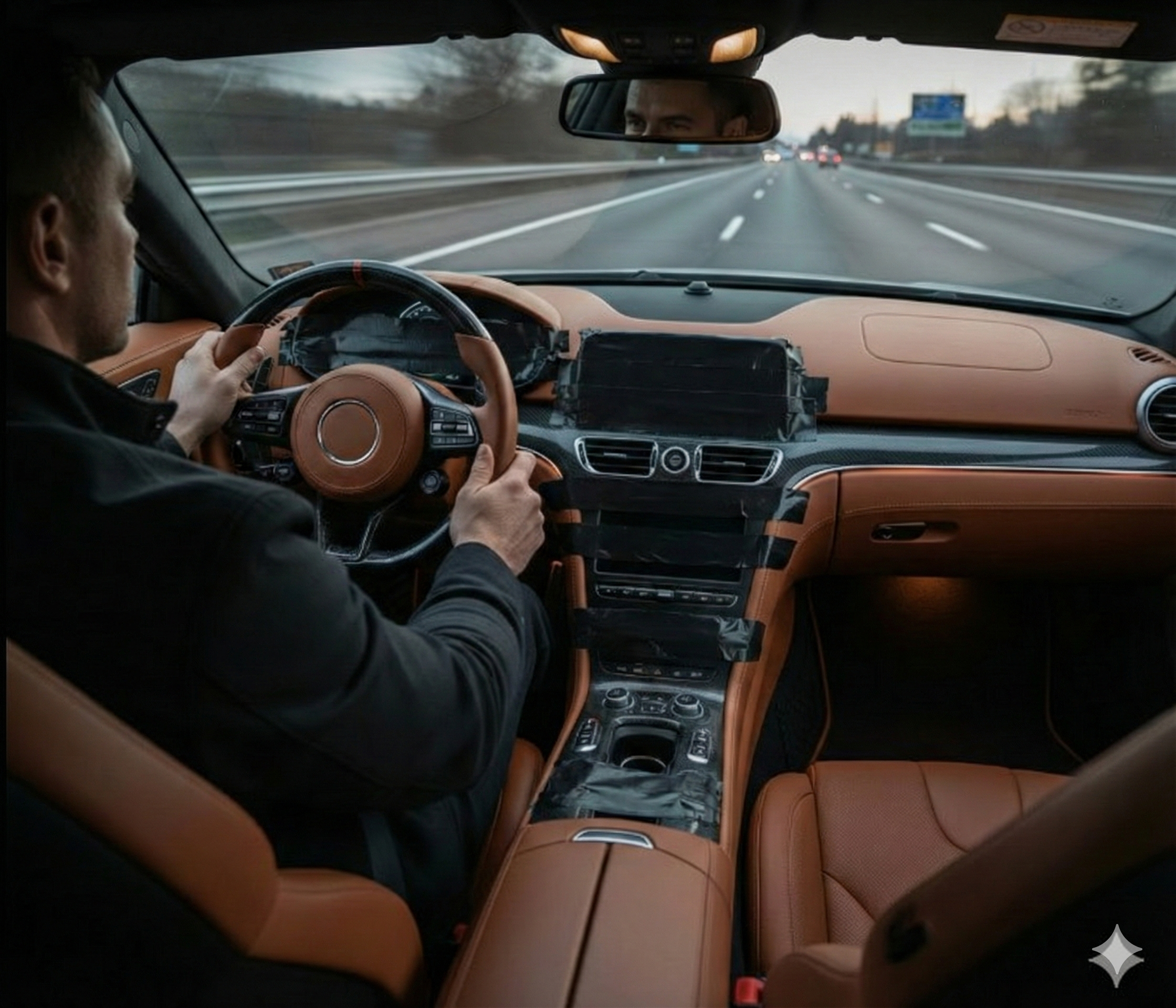
The concept is simple and visual: If you own a high-end sports car—a Ferrari F80 or a Porsche 911—you would never dream of driving it without a dashboard. Without a dashboard, you would have no idea of your speed, RPM, whether the check engine light was on, or whether the engine was overheating. You would, essentially, be driving blind.
That is the perfect analogy for how I, and so many others, used to approach training.
The Culture of Brute Force
My earliest influences were steeped in a culture where recovery was never a consideration. From Sylvester Stallone’s mantra in Rocky of “no pain, no pain, no pain,” to the bodybuilding world’s gospel of “no pain, no gain” espoused by figures like Arnold Schwarzenegger, the message was clear: brute effort, brute force, all out, no matter what.
Whether you were recovered or not, you didn’t miss workouts. That was the culture I grew up in, and it defined my training for decades. The closest I ever came to managing recovery was doing “light days” and “heavy days,” but my dominant influence remained high-intensity, “go big or go home” methods.
You cannot run an engine at full tilt all day, every day, and expect it not to break down.
The Quest for a “Dashboard”
For the longest time, the technology simply didn’t exist to measure recovery easily. However, in today’s world of high-tech wearables, it’s never been easier to manage and optimize your performance. And in the last few years, I’ve been on a journey to find the right dashboard for my body.
My first foray was with the Fitbit Charge 4 in 2019, primarily for sleep tracking. I upgraded to the 5th- and 6th-generation models; however, I found all of them erratic in the data provided. From wildly inconsistent heart rate readings to occasionally accusing me of being asleep at 6 pm while I was actually on the fitness floor at my gym with a client, I started looking at other options in late 2024.
Given the advanced features offered by smart rings, I began exploring my options and narrowed them down to the Oura Gen 4 and the Ultrahuman Ring Air. From my research, I found that Oura is more focused on general health and wellness, while Ultrahuman is geared toward exercise enthusiasts. The tiebreaker that pushed me towards the Ultrahuman was the lack of a monthly subscription that Oura requires. It’s only $6-$7 per month, but at the time, it was enough to tip the scales.
I started my journey with the Ultrahuman in January of 2025, and by May of the same year, I jumped ship and purchased an Oura. My biggest challenge with the Ultrahuman was the inconsistent heart rate tracking and the loss of connection during workouts. The Oura was a significant improvement; the heart rate data was consistent, and it tracked sleep, stress, skin temperature, and a host of other vital metrics. Most importantly, it opened my eyes to the concepts of Heart Rate Variability (HRV) and a readiness score.
But the true game-changer was the Morpheus Heart Rate Training System, which I adopted in October 2025.
A Tale of Two Dashboards: The “Big Four” vs. Morpheus
I want to make a very clear, objective distinction here. This is not about throwing other wearables under the bus. I believe in a blended approach.
The “Big Four”—Apple Watch, Garmin, Oura, and Whoop—are fantastic devices. They provide invaluable data that Morpheus lacks, specifically on sleep tracking and lifestyle stress. For instance, Oura tracks skin temperature and respiratory rate, which are excellent indicators of overall health. In fact, when I had a stomach bug on my birthday back in January, my Oura knew I was sick before I did—my body temperature, respiratory rate, and heart rate were all elevated, triggering a “major signs” warning.
However, when it comes to a training recovery score, Morpheus is in a league of its own for two reasons:
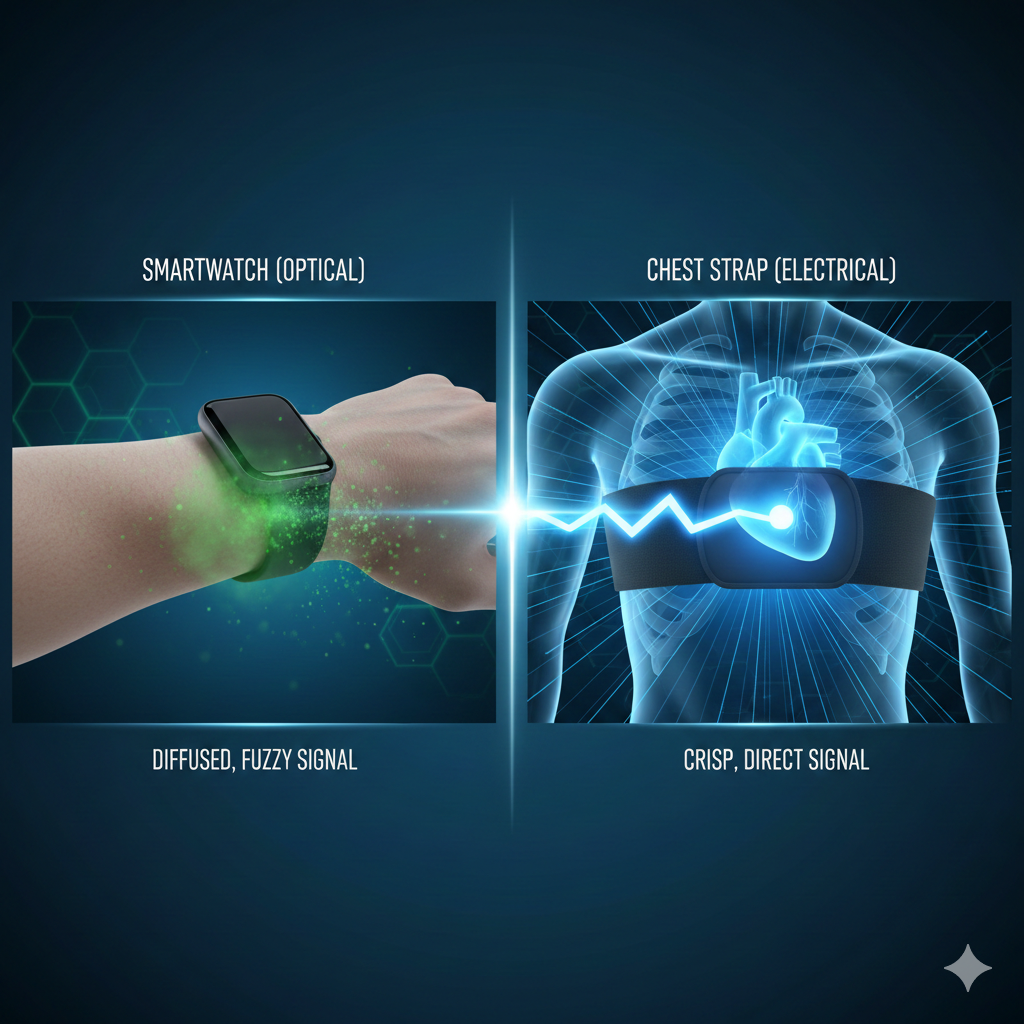
- Accuracy of Measurement: Morpheus uses a chest strap to measure the electrical impulse of your heart. Most wrist or finger-based wearables use optical sensors (light) to read blood flow through the skin. For pure HRV accuracy, the electrical signal of a chest strap is far superior and less prone to “motion artifacts” than a watch or ring.
- Consistency of Context: I take my Morpheus test at the exact same moment every morning: right when I wake up, sitting in front of my coffee maker. It is a controlled, consistent snapshot. In contrast, many wearables calculate readiness based on random data collection over the last 24 hours or during sleep, which can be influenced by various uncontrolled factors.
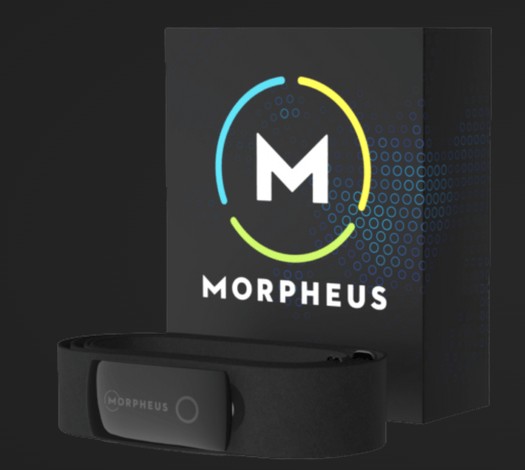
If you want to track your sleep and daily stress, use an Apple Watch, a Garmin, an Oura, or a Whoop. But if you want to know exactly how hard to push your body in the gym today, you need Morpheus.
The Critical Distinction: Subjective Suggestions vs. Concrete Data
Here is where the rubber meets the road. Most wearables offer passive data; Morpheus offers active regulation.
Take the Oura Ring, for example. It might wake you up with a message that says, “You slept great last night, and your readiness score is optimal. Why don’t you try something new today?” While friendly, that is at best subjective advice. It leaves the interpretation entirely up to you. What does “something new” mean? How hard should I push? It doesn’t say.
Morpheus works differently. It operates on a strict Monday-through-Sunday training week. Every Monday morning, based on your Recovery score and HRV trends, it sets specific cardio targets for the week ahead.
But it goes a step further: it dynamically regulates your heart-rate zones every day.
If I wake up with a low recovery score, Morpheus lowers my heart-rate zones. My “Zone 2” ceiling might drop from 140 bpm to 130 bpm. It puts a governor on my engine, forcing me to slow down to hit the target. If I’m highly recovered, it raises the ceiling, clearing me to push harder.
This isn’t a suggestion; it is concrete, actionable data that dictates exactly how to train that day to match your physiology.
Learning the Hard Way
I didn’t listen to the dashboard at first. In November 2025, after the “fall back” time change disrupted my sleep for the first few nights, I woke up Monday morning to a 39% Red Recovery score and proceeded to hammer my legs, pushing my recovery depth further down to an abysmal 25%. And yet, I still didn’t get it.
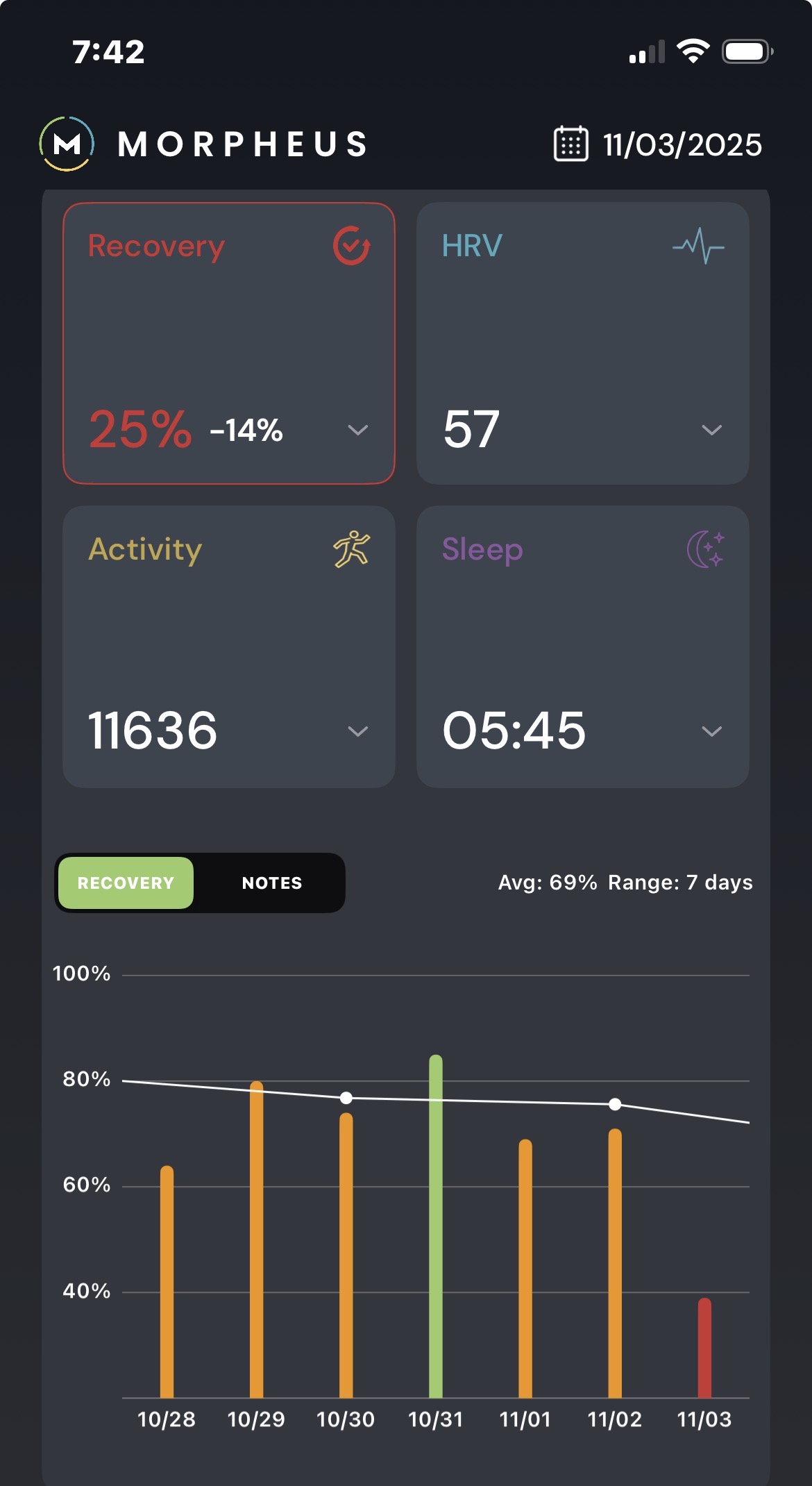
On Tuesday morning, I woke up to a 56% Bronze Recovery score, which was somewhat of an improvement from the day before; however, I was still desperately underrecovered.
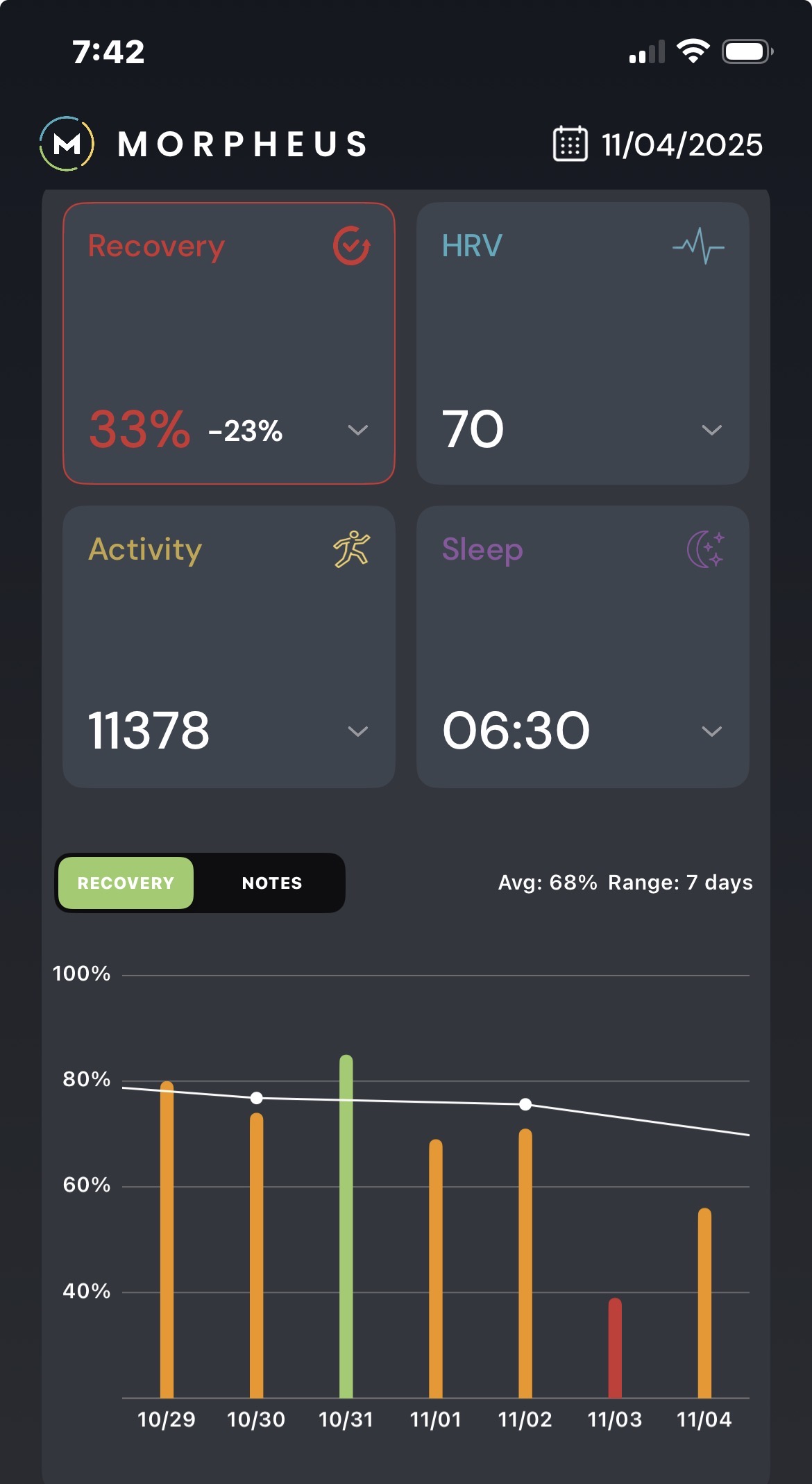
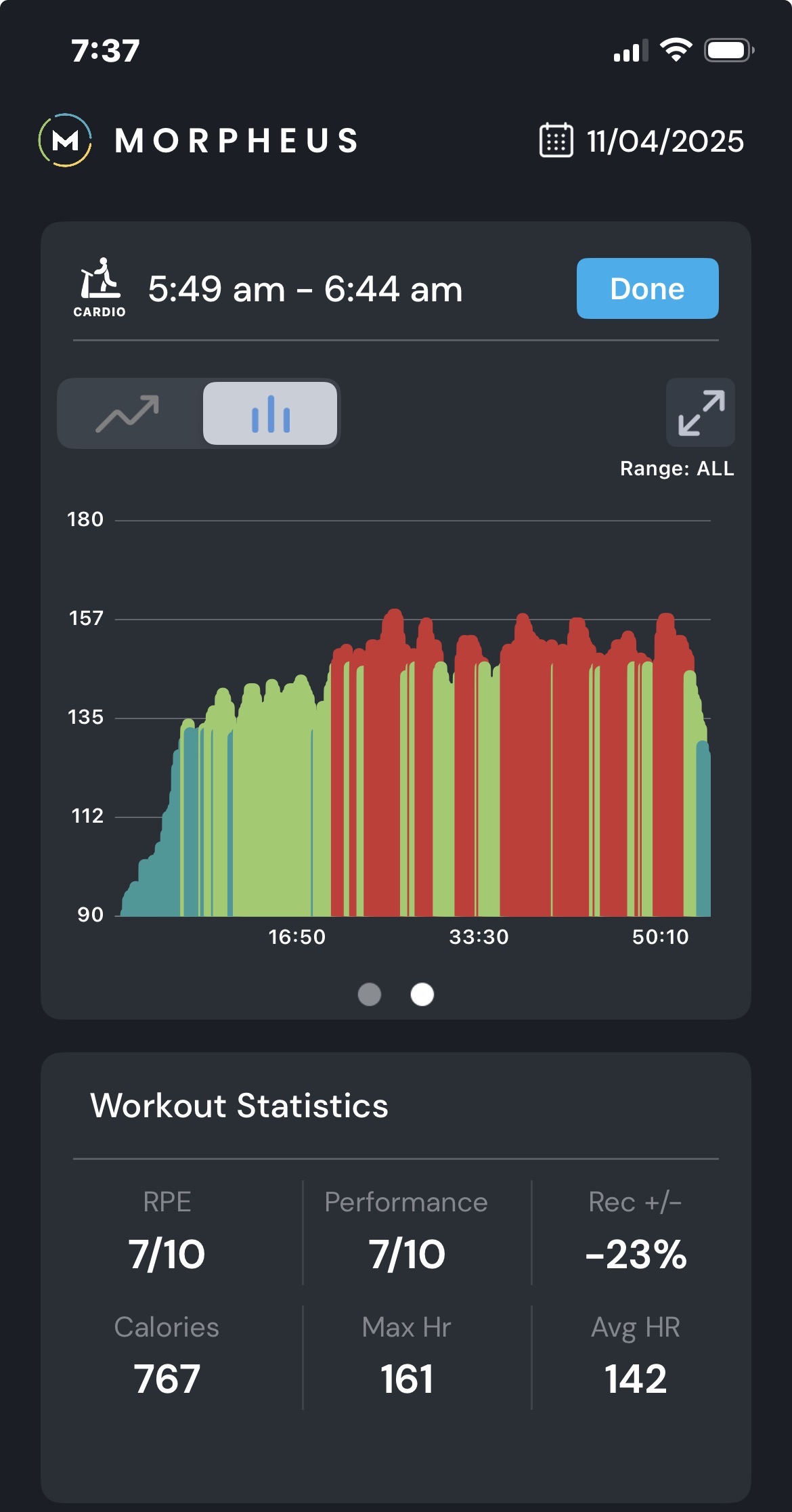
Old habits die hard. Ignoring the data, I proceeded with an intense cardio workout, spending roughly half the time in the “Red” overload zone. The result? That single workout caused my recovery score to drop by another 23%, bringing my net score for the day to 33%. That was the moment the light bulb clicked.
I was training too hard for what my body could handle.
Gamifying Recovery: The “Cool Burner” Strategy
Now, I treat recovery like a game. My client Phil, who gifted me with my Morpheus device, and I are like kids with new toys; we can’t wait to check our scores in the morning. By the way, Phil is 70, and he’s one of my hardest-working and most consistent clients, regardless of age.
One of my biggest revelations has been managing the Autonomic Nervous System—balancing the “Sympathetic” (fight-or-flight) with the “Parasympathetic” (rest-and-digest).
Imagine you are a pot of boiling water sitting on a high burner all day due to work stress and training. You need to move that pot to a cool burner so it can simmer down.
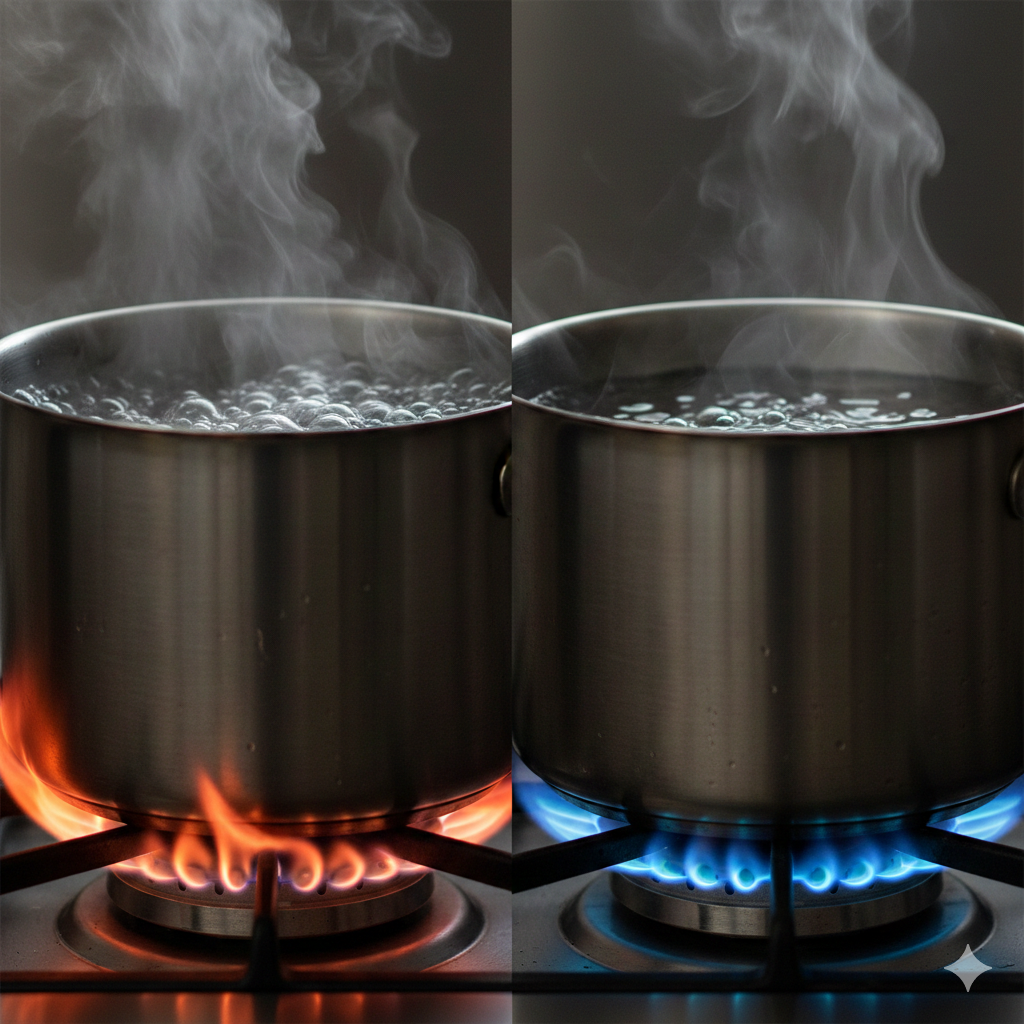
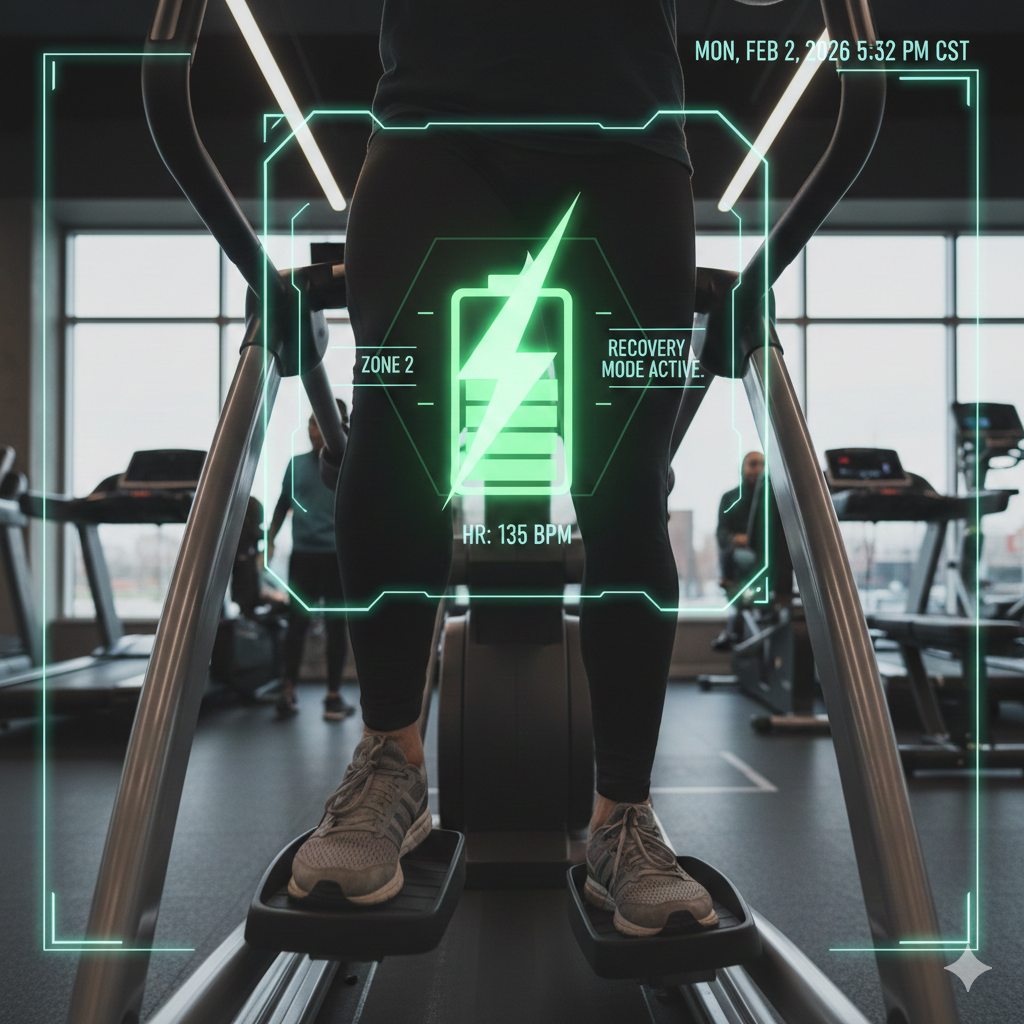
I have implemented a new protocol to do exactly that. After strength training—which is high-stress—I immediately hop on the elliptical for 10–15 minutes of “Zone 2” (Blue zone) recovery cardio. This isn’t about burning more calories; it’s about shifting my body out of that sympathetic fight-or-flight mode and kickstarting the recovery process before I even leave the gym.
The Results
The data speaks for itself. In my first workout using this new method, despite a heavy lifting session that dropped my recovery score by 4%, the 15 minutes of cool-down cardio immediately added 2% back to my score.
Overall, my average recovery score over the last 90 days is now just over 80%, and my sleep has improved to over 6.5 hours a night.
If you are training without this data, you are driving a sports car with the dashboard covered up. You might feel fast, but you won’t know the engine is overheating until smoke starts pouring out from under the hood. Don’t drive blind.
Ready to Stop Driving Blind?
If you are tired of guessing with your health or feeling burned out despite your best efforts, it is time to install a dashboard. You wouldn’t treat a Ferrari this way; don’t treat your body that way.
1. Stay in the Driver’s Seat: Subscribe to this blog for weekly insights on how to train smarter, recover better, and optimize your performance without burning out the engine.
2. Get a Co-Pilot: If you are a high-performer looking for a data-driven approach to your health, let’s talk via “Work with Kelly.” I am currently accepting applicants for my 12-Week Executive Program. We integrate tools like Morpheus alongside your sleep tracker to build a custom roadmap for your unique physiology.
Reach out today, and let’s get your engine running efficiently.
 kellyamidonblog.com
Leave a comment