
We’ve all been there: You start the day strong—crushing your workout, eating clean, knocking out focused work. By mid-afternoon, though? Decisions feel harder. Temptations sneak in. By evening, you’re running on fumes and wondering where all that morning discipline went.
Is this just how willpower works—a finite daily battery that drains as the hours tick by? Or is it more about what we believe about our own capacity?
This question comes up often in coaching conversations, and it’s one that pits two compelling ideas against each other. On one side is the popular “limited resource” view. On the other is the idea that your beliefs about willpower can shape how much you actually have.

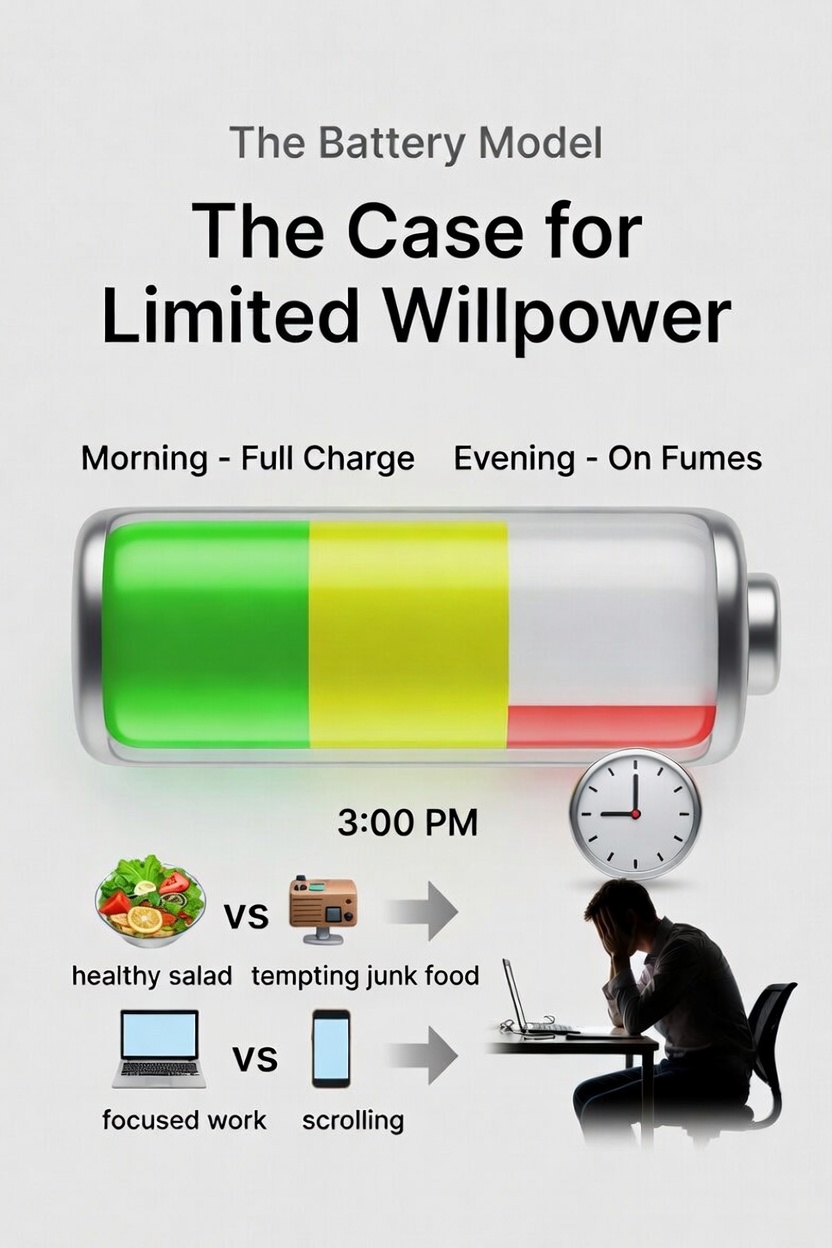
The Case for Limited Willpower: The Battery Model
Many successful people and productivity experts describe willpower like a rechargeable battery with a daily limit. Darren Hardy, author of The Compound Effect, is a strong proponent of this perspective. He teaches that you wake up with a full charge, but every decision, act of focus, or resistance to temptation burns through it. By mid-afternoon, you’re often on fumes; by evening, you’re spent.
This idea resonates because it matches how many of us feel. It also draws from the classic “ego depletion” theory in psychology, which suggests self-control works like a muscle that fatigues with use. The practical takeaway? Don’t rely solely on raw willpower for big changes. Instead, build smart habits, routines, and environments that reduce the number of decisions you need to make when your tank is low.
It’s empowering in its own way: it explains why we struggle later in the day and encourages us to be strategic rather than just tough it out.
The Counter View: Willpower and Belief
Others push back, arguing that willpower isn’t inherently limited—it only feels that way if you believe it is.
This perspective gained traction through research by psychologists Veronika Job, Carol Dweck, and Gregory Walton. In key studies (starting around 2010), they found that people who hold a “limited” theory of willpower (e.g., “After a mentally taxing activity, I need to rest to recharge”) tend to show the expected drop-off in performance after exerting self-control. But people who hold a “non-limited” theory (e.g., “After working hard, I often feel energized for more challenges”) don’t experience the same depletion. They continue to perform well across demanding tasks.
Even more interesting: researchers could shift people’s beliefs experimentally, and the results followed. Those who saw willpower as more renewable showed better self-regulation in daily life—less procrastination, greater persistence under stress, and improved outcomes, such as higher grades during busy periods.
Precision Nutrition coaches (and similar evidence-based programs) often lean into this. They acknowledge the older “finite resource” idea but highlight that reframing willpower as something that can build or sustain itself—rather than strictly drain—leads to better real-world results for habit change, nutrition, and fitness goals.
A Powerful Real-Life Example: The Cliff Young Story
One of the most inspiring illustrations of this belief effect comes from an unlikely hero: Cliff Young, a 61-year-old Australian sheep farmer.
In 1983, Cliff entered the grueling Sydney to Melbourne Ultramarathon—a 544-mile (875 km) race that typically took elite athletes 6–7 days to complete. He showed up in overalls and work boots, while the pros wore fancy gear and had support crews. Race officials nearly didn’t let him start, worried the old farmer might have a heart attack.
The race began. The young athletes blasted ahead with a standard strategy: run hard for about 16–18 hours, then stop for solid sleep and recovery. Cliff? He didn’t know the “rules.” No one had told him he was supposed to stop and rest each night. Drawing from years of running across his ranch to round up sheep before storms—often with little to no sleep—he just kept going in his now-famous shuffling gait.

While the elites slept, Cliff shuffled on. He took the lead on the first night and never lost it. He finished in 5 days, 15 hours, and 4 minutes—shattering the previous record by nearly two days and beating the next finisher by about 10 hours.
As Jack Canfield often shares in his retellings, Cliff succeeded largely because of what he didn’t believe. The others believed they had to rest on a certain schedule. Cliff believed the race simply required starting and finishing. His lack of that limiting belief let him keep going when others stopped.
(It’s not just mindset—Cliff’s lifetime of real endurance helped too—but the story beautifully shows how beliefs can override “common knowledge” about our limits.)
So… Which Is It?
The science here isn’t black-and-white. The original ego depletion studies have faced replication challenges and a broader “replication crisis” in psychology, with some large-scale efforts failing to find strong effects. Proponents argue the phenomenon is real, but more about conservation and motivation than a literal empty tank. Critics note that mental fatigue is real, but its causes (sleep, nutrition, attention, expectations) are complex.
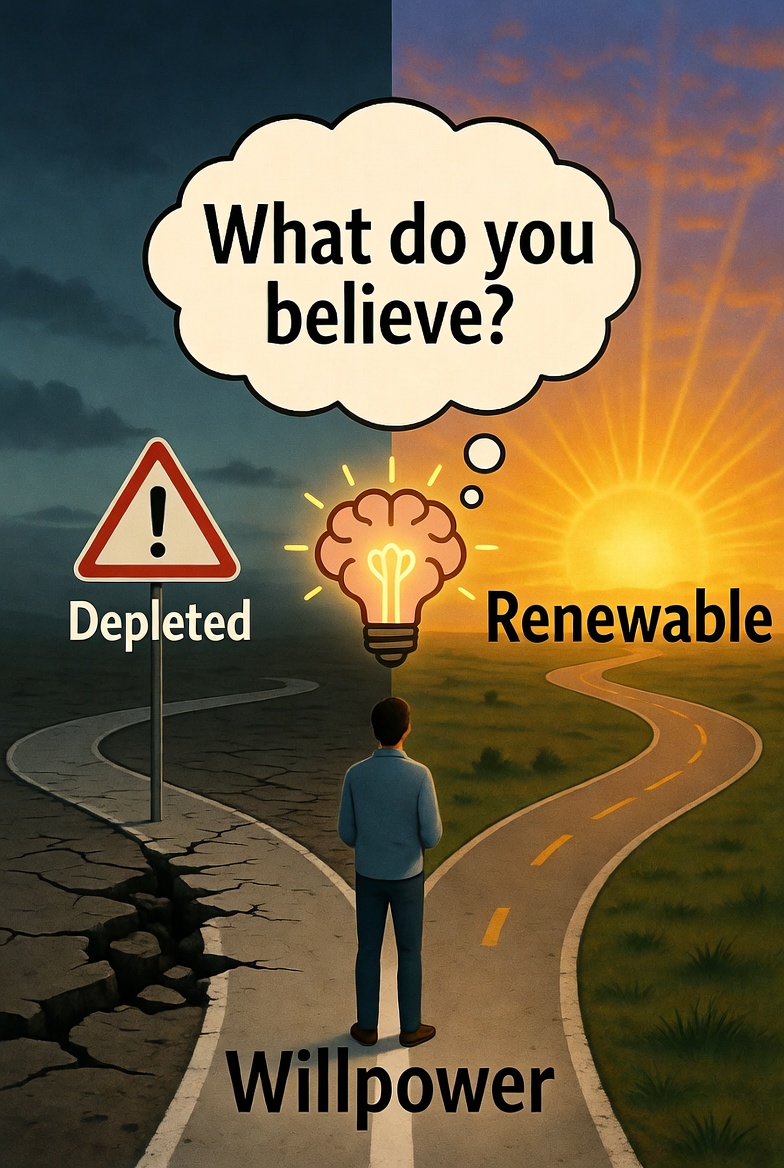
What seems consistent, though, is that your belief about willpower often becomes part of the equation. Believing it’s strictly limited can create a self-fulfilling prophecy where you expect to crash and therefore do. Believing it’s more renewable (or at least less fragile than a daily battery) can help you push through afternoon slumps and build greater consistency.
At the same time, even strong believers in the non-limited view don’t claim that willpower is literally infinite. Extreme fatigue, chronic stress, or poor basics like sleep will still catch up with anyone. And smart systems—habits, environments, and clear “why-power”—still matter more than brute force.
What Do You Believe?
Here’s the beautiful part: the research and stories suggest that what you choose to believe can influence your reality.
You might side more with Darren Hardy’s practical battery wisdom and focus on building routines that protect your energy. Or you might lean toward the mindset research and Cliff Young’s example, training yourself to see willpower as something that can sustain or even energize you when it counts.
Or—like many people—you might blend both: respect the feeling of depletion while consciously adopting a more empowering belief and smarter strategies.

What matters most is testing it in your own life. Try reframing a tough afternoon task as “energizing” rather than draining, and see how it feels. Track your results over a couple of weeks.
Ultimately, the choice is yours. Your belief about willpower may not determine everything—but it could determine more than you think.
What’s your take? Do you see willpower as a limited daily resource, or as something heavily shaped by mindset? Drop a comment below—I’d love to hear how this plays out in your own goals and habits.


Leave a comment