
From roughly 1992 to about 2000, I was involved with the old Amway business. I never made much money, but it introduced me to the world of personal development, and for that, I will be forever grateful. One of the leaders of my organization, Kenny Stuart, gave a talk once titled “3 is not 20,” and it was a hilarious story. The implication was that when you start in a network marketing company, you go out and sponsor a bunch of people, with 20 being a great target. With that large a group, you’re going to find a handful who are ready to run, and then you help them go out and sponsor their 20 people.
The power you’re leveraging is the rule of large numbers. By finding at least 20 people, you’re going to find a handful who are serious about building their business and are ready to run, and that’s where you devote most of your energy. Then you just keep duplicating that process. With that strategy, you can develop some really large organizations with potentially thousands of people. The inverse is going out and sponsoring only a few, and then just beating those people to death, trying to get them to sponsor their few.
It’s not to say that you still can’t develop an organization, but it’s going to take a lot longer, because if none of your few is ready to follow in your footsteps, then you’re stuck. And they may incubate for six months or more before being ready to run, if ever. So in the meantime, if they’re all you have, then your business is truly stalled.
Kenny further shared that people would complain that their business was not growing. And he would ask, “How many people have you sponsored?” Their answer would be only a few. And he would gently remind them that they still had some work to do, and that by finding 20 or more, they would inevitably find some runners ready to duplicate their efforts, and then they would be off to the races.

It’s been over twenty-five years since I was involved in that organization, but I’ve never forgotten that story. And I think one of the reasons is, of all things, school zones. I’m a very structured person, and I believe everything has a certain order. To echo the wisdom of the great Ben Franklin, “There’s a place for everything, and everything has its place.” In my mind, this extends to obeying the speed limit within reason, but in school zones, anything over 20 is not 20.
How long is a school zone? A few hundred yards? And to think that some people can’t slow down and go 20 for a minute or so to get through a school zone. Are you kidding me? I will honk at people in a heartbeat if they’re blazing through a school zone. There’s just something about the implication of people thinking the laws of society don’t apply to them that wears me out. And since I have one to two school zones between me and my work, depending on my route, I’m reminded of the little “3 is not 20” story almost daily.
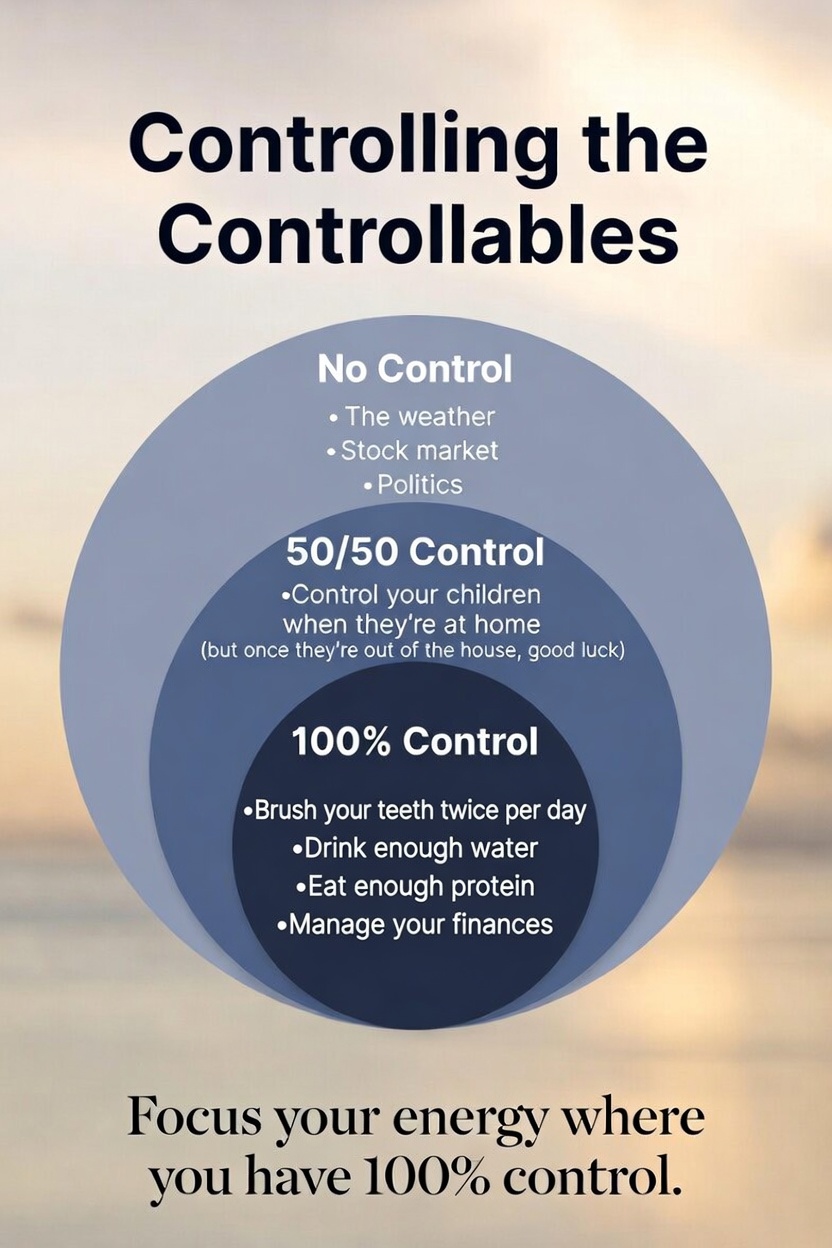
So what’s the parallel to today? I learned the idea of controlling the controllables from Precision Nutrition, where I have multiple certifications, and it’s a concept I regularly share with my clients.
You start with three concentric circles: a small, a medium, and a large. In the smallest circle, you have 100% control, and this is where you want to maximize your energy and focus. You are king or queen in this circle, so make the most of it. In the second circle, it’s 50/50—roughly half the time you have control, and in the other half, not so much. Pick your battles here and guard your emotions, because half the time things will not go your way. And finally, in the largest outer circle, you’ve got no shot, and to allow circumstances in this circle to steal your joy is silly.
For example, you can choose to brush your teeth twice per day or not. The same goes for drinking enough water, eating enough protein, having a solid sleep ritual, or managing your finances. For the second circle, you can control your children when they’re at home to a point, but once they’re out of the house, good luck with that. You can only hope that all the love, support, and wisdom you’ve poured into them will help them make great choices. And finally, in the outer circle, can you say the weather, stock market, or politics? Again, you’ve got no shot, so don’t allow yourself to be bogged down unnecessarily.
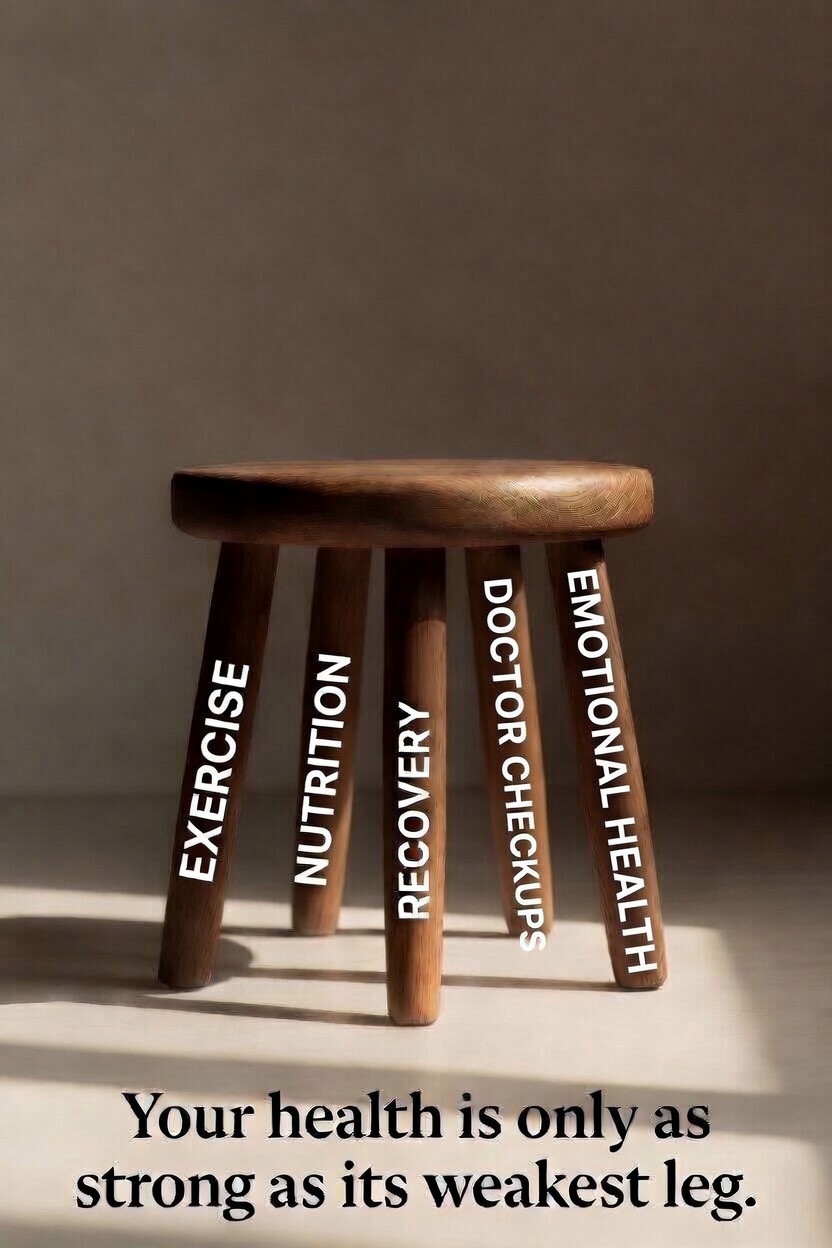
As a fitness professional and nutrition coach, I preach to my clients constantly to control the controllables. And the framework I use is that your health is a five-legged stool, where you have a ton of control over making smart choices to maximize your health and well-being. The key to the stool analogy is that if one leg is fractionally short, the stool will wobble. If one or more legs are seriously compromised, the stool will fall over. The connection to your health should be obvious: if you fail to proactively prioritize all the areas that make up optimal health, you will be forced to reactively put yourself back together when your health fails.
And while genetics plays a meaningful role in aging and longevity at roughly 20–55% of the variation in human lifespan, depending on the study and how you define “intrinsic” aging, it is not completely deterministic. Lifestyle choices—including exercise, first and foremost, followed by nutrition, sleep, stress management, and relationships—account for the rest and are the primary levers most people can pull to dramatically improve their healthspan and lifespan.
Snapshot of your health is a five-legged stool:
Leg 1 – Exercise, including strength training and cardio
Leg 2 – Nutrition, including food and supplements
Leg 3 – Recovery, including sleep, stress management, and overall recovery
Leg 4 – Regular doctor checkups
Leg 5 – Emotional well-being
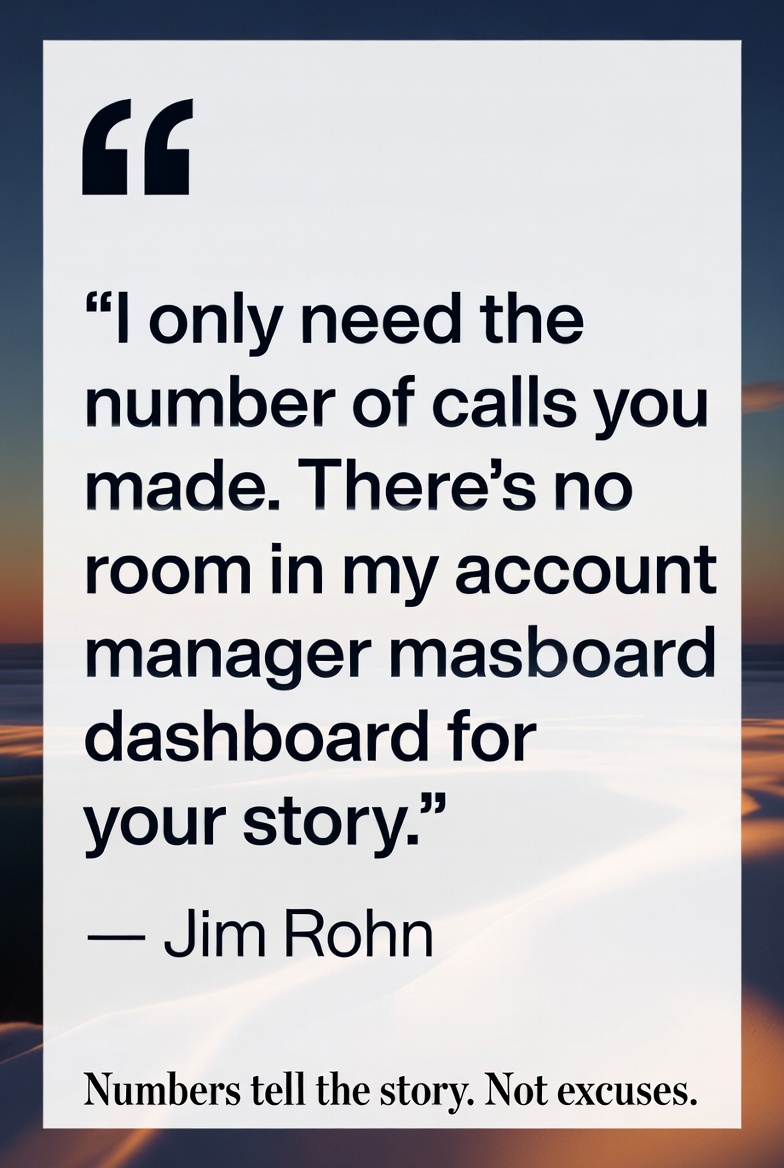
Managing your health on a daily basis should be simple and straightforward, not drawn out or overly complicated. As a coach, one of the most powerful roles I play with my clients is that of an accountability partner. And when I think about all the conversations I’ve had with my clients—asking them about eating enough protein, for example—I’m reminded of a humorous story from the great Jim Rohn, who was considered America’s foremost business philosopher.
The story was about a sales manager meeting with one of his account managers, who had been tasked with making a certain number of sales calls the week prior. When the sales manager asked, “So how did it go last week?” the account manager immediately launched into an elaborate account of his performance. The manager quickly stopped him and said, “Hold on and wait just a minute, I only need the number of calls you made. There’s no room in my account manager dashboard for your story. If you simply give me the number of calls, I will know the story without any further explanation from you.”
Jim’s example is hilarious to me and provides a perfect framework for my five-legged stool. Just like Kenny taught that 3 is not 20, Jim Rohn made clear there’s no room for stories—only performance. So let’s go through each leg in more detail.
Leg 1 – Exercise
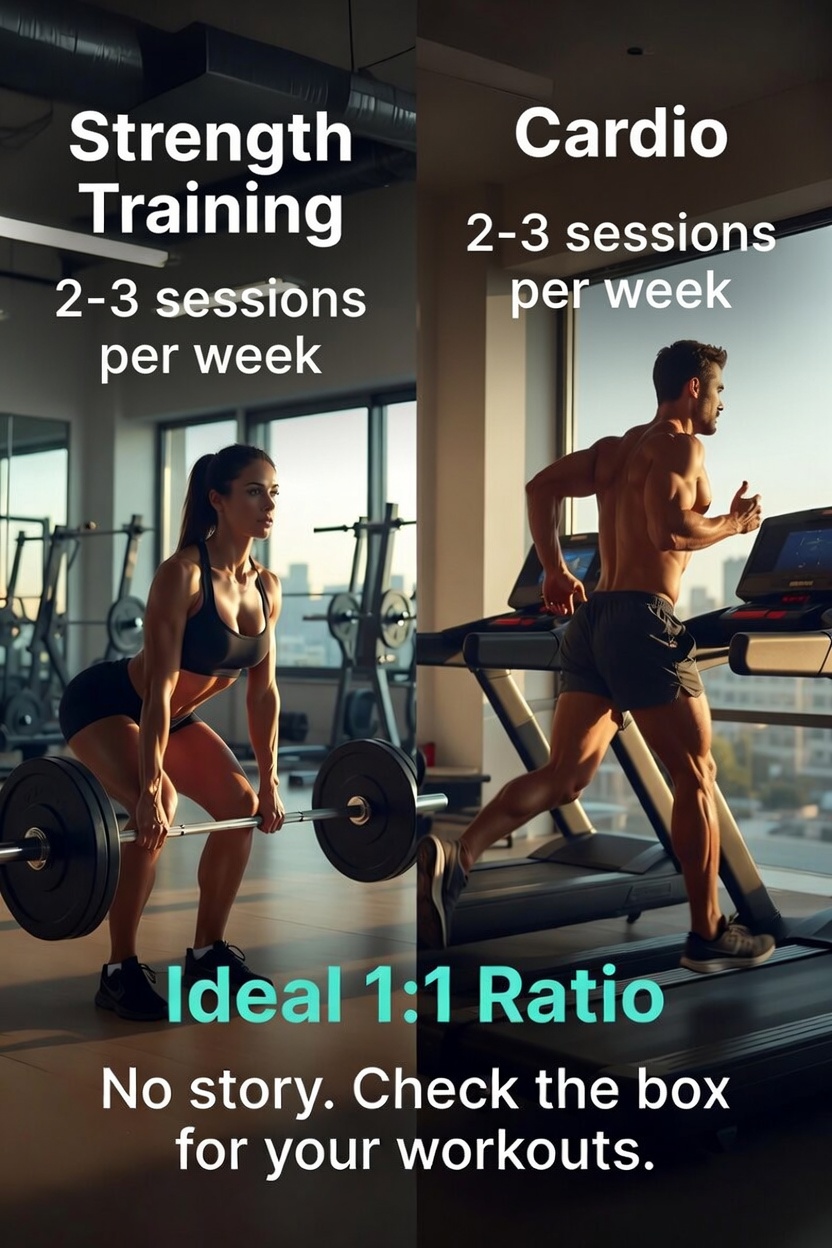
The foundation includes strength and cardiovascular training. For the average adult with a busy life, including work and family, two 30-60-minute total-body strength sessions per week are a great start. Three would be better, but two will allow you to make progress. Anything less, and you’re simply not going to get enough training stimulus to make a difference.
As a general recommendation, a 1:1 ratio of strength training to cardio is ideal. This means two to three 30-60-minute cardio sessions per week. Now, given your weekly training goals, are you getting in your workouts? There’s no in between. There’s no story. You’re either checking the box for your training sessions or not, and for the most part, you have a ton of control over whether you succeed or fail. Anything less than two strength and cardio sessions is not the goal.
Leg 2 – Food & Supplements
Thanks to the influence of Precision Nutrition, where I have multiple certifications, I have adopted a dietary-agnostic position. This means I don’t fall into any one particular dietary camp or believe that there’s one diet that rules them all. I’ve seen people be successful with different plans, and I believe there’s room for personal preference beyond lifestyle and genetic factors.
There are, however, certain fundamentals that I teach my clients. Whole foods should, by far, provide the foundation rather than relying on processed crap. Cooking more at home, rather than eating out all the time, will make it much easier to achieve and maintain optimal body composition.
But if I had to name the two most important elements to good nutrition, the first would be maintaining the optimal energy balance for your goals. If you’re seeking to improve your body composition by dropping body fat, you have to live in a caloric deficit for a period of time. Full stop. There’s no escaping that.
The second key element is protein intake. You have to get enough protein every day, which requires specific intent. In the past eight years of conducting countless nutrition consultations, I’ve still only met one guy who was taking in too much protein—and it was ridiculous. Everyone else has been upside down, and a big part of the problem is a lack of awareness of how much protein is needed. After all, how do you hit a target you don’t have or are not even aware of?
But once you have the awareness, you have a basis and opportunity to make a change. So if someone tells me they want to lose 20 pounds and I give them a plan—including a caloric target and a specific daily protein amount—then they have a choice. They can either follow what I give them or not follow it. There is no in between. There is no story.
Actually, the scale tells the story, much like Jim’s little sales scenario. When my clients weigh each week using the InBody scale at our gym, which gives overall weight, muscle mass, and body fat percentage, there’s generally no story required. The number tells the story, for better or worse, most of the time.
Energy balance works in three ways: a caloric deficit to lose fat, a caloric surplus to gain muscle, or matching maintenance to stay the same. When it comes to protein, if you average all the recommendations online, you’ll land around 1 gram per pound of ideal body weight. In my experience, most people eat less than this.
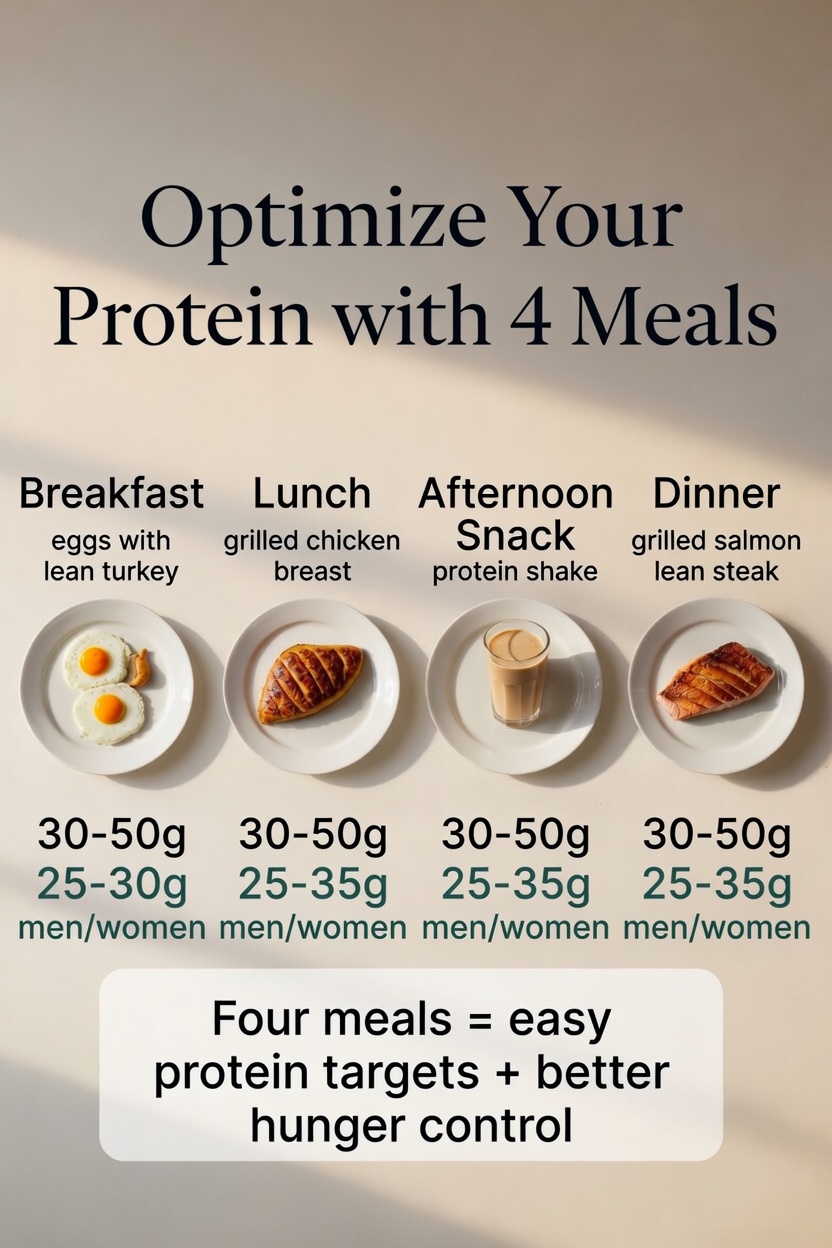
Now, regardless of your daily protein target, are you hitting it? It’s a yes or no. There’s no in between. I believe that to optimize protein intake—even for my smallest female clients, who weigh as little as 110 pounds—you should eat four meals per day: breakfast, lunch, an afternoon snack, and dinner. This manages hunger and makes hitting your protein numbers far more practical. For most people, 25–35 grams per meal for women and 30–50 grams per meal for men is the sweet spot.
When it comes to supplements, I keep it simple. Most people will benefit from a good multivitamin and fish oil. Consider them insurance to fill the gaps where you’re not getting what you need from your food. Beyond those, a good greens supplement, probiotic, creatine, and digestive enzymes will cover most of your bases. For bonus points, a targeted sleep stack as needed could be helpful.
So, are you achieving your optimal energy balance and protein intake? Are you taking any form of supplements? It’s either yes or no. There is no room for a story. Anything less than your daily targets is not the goal.
Leg 3 – Recovery
Under the recovery leg, we have three different things to consider: sleep, stress management, and overall recovery. I always knew sleep was important, but that understanding went to a whole new level after reading Why We Sleep by Matt Walker, PhD.
So, back to the theme of this blog, 3 is not 20. You’re either getting enough sleep, or you’re not. There is no in between. There is no story.
According to Matt, you need 7-9 hours per night for optimal health. Anything less than 7 hours is considered sleep deprivation, and its effects are measurable on brain function, physical health, mortality risk, immune function, cognition, mood, metabolism, and more.
If you’re not getting 7+ hours per night, you are sleep-deprived. I hear people all the time say they can get by on less. My response is always, “Do you want to get by, or do you want to thrive?” Matt stresses you can’t reliably train yourself to need less without paying a biological price.
If you struggle with sleep and don’t wear a good sleep tracker, this could be a great investment. My personal recommendations, from least to most expensive, are:
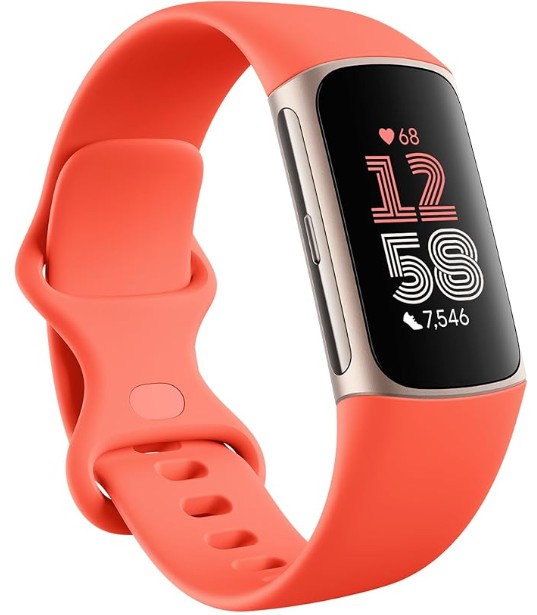


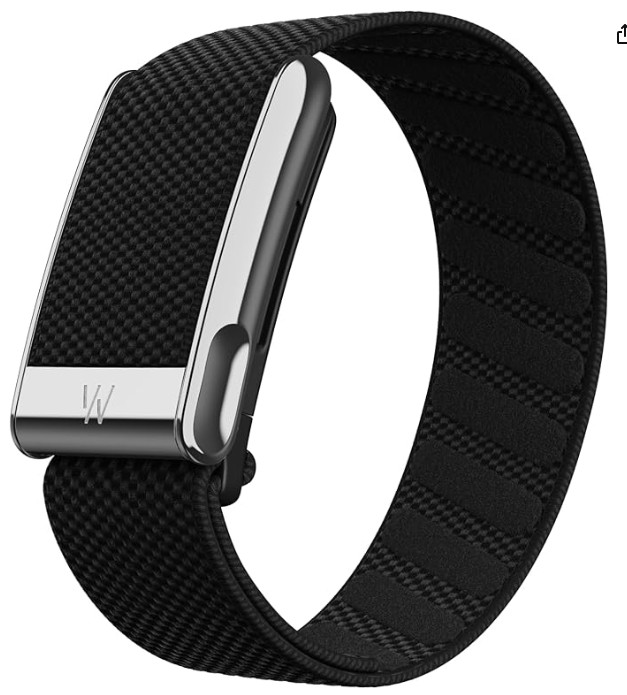

I personally wear an Oura for its advanced health metrics. You want a tracker that shows sleep opportunity (time in bed), net sleep, and sleep architecture (deep, light, and REM).
Beyond duration, you also need to consider deep and REM sleep. REM helps integrate memories, fosters creative insights, and processes emotional experiences. Deep sleep is when the brain’s glymphatic system—the nightly “cleanup crew”—flushes out metabolic waste, including proteins linked to Alzheimer’s.
Getting enough quality sleep is also tied directly to metabolic health. Short sleep drives insulin resistance, elevates cortisol, promotes fat storage, and increases cravings. Even if you’re eating well and exercising, chronic sleep deprivation can stall fat loss.
When it comes to stress management, my Oura ring was a wake-up call. I’ve been wearing it for close to a year now, and one of the screens within the app on my phone that I frequent is my stress score. When I say stress, I’m not talking about purely emotional stress. Oura tracks your heart rate, HRV, motion, and temperature throughout the day. And while not all stress is bad, some can come from very positive sources; ultimately, your body can only handle so much. Therefore, it’s essential to build time in your schedule for relaxing and recovery.
And this goes beyond sleep. Strategically planning periods of downtime, even if only for a short time, can yield positive health benefits. Taking a short walk (minus your phone) to unplug from the electronic matrix, or practicing various breathing exercises such as the following, can be very helpful.
Box breathing (4-4-4-4): Inhale 4s, hold 4s, exhale 4s, hold 4s. Great for focus and steady stress control (popular with Navy SEALs).
4-7-8 breathing: Inhale 4s (nose), hold 7s, exhale 8s (mouth). Excellent for winding down or anxiety.
Before I started wearing my Oura ring, I didn’t realize how much stress my body was under on a daily basis. I work in a commercial gym with super high energy, tons of people, loud music, and high activity, all day long. I typically start by 8:00 in the morning and go till 5:30 to 6:30 at night. So, for me to break up the day into two halves, and get out of the club for an hour, ideally two, go home, have lunch, do a little creative work, a little meal prep, just to break up the day, really helps.
I love the analogy of your body compared to a high-performance sports car. A Porsche 911 Turbo is built for speed, and yet if you constantly redline the engine, you’ll destroy your car. Your body works the same way, and it’s capable of performing astonishing feats both physically and cognitively, and yet, if you don’t manage stress and optimize your recovery, you will burn out.
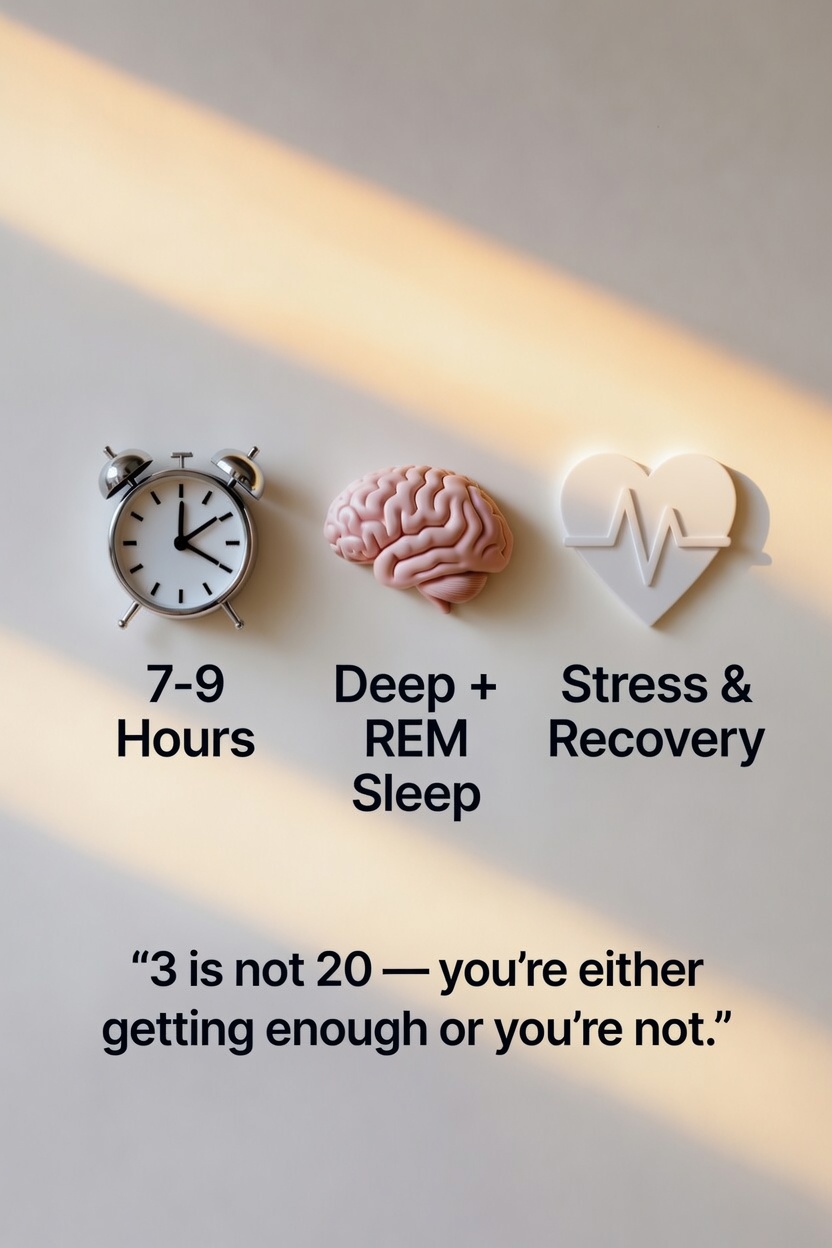
For overall recovery, HRV measures how well your body handles stress from all sources and recovers from it. Oura also gives a daily Readiness/Recovery score made up of resting heart rate, HRV, body temperature, sleep metrics, and previous day activity. So, are you managing your overall recovery? Without a fitness tracker, you’re shooting in the dark. And regardless of whether you own one, you still need to plan for recovery. It’s a yes or a no. There is no story.
Leg 4 – Regular Doctor visits
The next leg is going to see your doctor for regular checkups, with your annual physical being the bare minimum. I take testosterone and have low thyroid, so I get extra blood work roughly once every quarter. Once you’re past 45 to 50, colonoscopies, mammograms, and prostate exams become mission-critical.
Either you have your doctors, or you don’t. You’re either seeing them on a regular basis, or you’re not. There is no in between. You’re either doing the required checkups to maintain your health, or you’re not. There’s no story—just like your car requires regular maintenance, your body does too.
Leg 5 – Emotional Health
My initial framework was a four-legged model. Then, a couple of years ago, thanks to Peter Attia, MD, in his book Outlive, I added a fifth leg on emotional health.
And to Peter’s point, you could be crushing it in the first four legs, but if you don’t have quality relationships in your life—with family, with friends you do life with—what’s the point? I mean, really, what’s the point?
That one hit me hard because, at the time of writing this, there are relationships in my life that are somewhat fractured and need healing. For the last 25 years or so, I’ve adopted the mindset of accepting 100% responsibility: I am where I am in life because of the choices and decisions I’ve made. If there’s any area I don’t like, it’s up to me to change it.
For the record, I’ve taken steps to mend one relationship and have plans to spend time with two other important family members, since it’s been too long since my last visit, and that’s completely on me. The action I’ve taken feels good, and I trust that everything will work out for the best.
So, back to the theme of our post. If you look at all of the relationships with your family and friends, and consider the health of each, do you have any work to do? You have a choice. You can take steps to improve it, or leave it as is. For my part, if the relationships are important to you, I suggest you not wait and make those calls as soon as possible, before it’s too late.
One of my favorite verses from the Bible is this:
“Now listen, you who say, ‘Today or tomorrow we will go to this or that city, spend a year there, carry on business and make money.’ Why, you do not even know what will happen tomorrow. What is your life? You are a mist that appears for a little while and then vanishes. Instead, you ought to say, ‘If it is the Lord’s will, we will live and do this or that.’”
James 4:13-15
Shifting gears slightly, there are two verses in Proverbs that say we’re not meant to do life alone.
“Whoever isolates himself seeks his own desire; he breaks out against all sound judgment.”
Proverbs 18:1
“As iron sharpens iron, so one person sharpens another.”
Proverbs 27:17
We are designed to be social. We are designed to do life with other people. And if you find yourself without a lot of friends, or maybe few to no friends, what are you gonna do about it?
I have a best friend who desperately wants a significant other. She has a great life, but her social life is the missing piece. I challenged her: if she wants her social life to be different, she has to adjust her schedule to give herself the opportunity to actually meet someone. Change requires change.
So, if you don’t have enough friends in your life, you might consider being more friendly. You might also consider taking part in activities where you can actually meet new people. And so, again, one last time, and given the theme of this blog, you can either choose to take those steps and put that social event on your calendar—or not. You have a choice. There is no in between. Change requires change, and 3 is not 20.
Just like Kenny taught all those years ago, and just like Jim Rohn made crystal clear with his sales story, there’s simply no room for stories—only the numbers, the actions, and the results. Control what you can control, hit your targets for each of your five legs, and watch your health (and your life) take off.
Ready to Strengthen All Five Legs of Your Health?
Control what you can control. There’s no story — only results.
If you’re tired of spinning your wheels and ready to finally make real, lasting progress, I’d love to help you build the strongest, healthiest version of yourself.
Two simple ways to get started:
Get Personalized 1:1 Coaching – Click Work With Kelly to create a custom plan for your exact goals, lifestyle, and schedule.
Subscribe to my Blog (above) – Get every new post delivered straight to your inbox so you never miss practical, no-fluff advice.
Best of luck in your journey.


Leave a Reply