
Most people who show up at the gym are working out. They lift weights, do cardio, maybe follow a program for a few months or years. They feel good in the moment. The scale moves a little. They look a bit better in the mirror.
But here’s the quiet truth that very few people confront: Are you training in a way that protects the life you actually want to live decades from now?
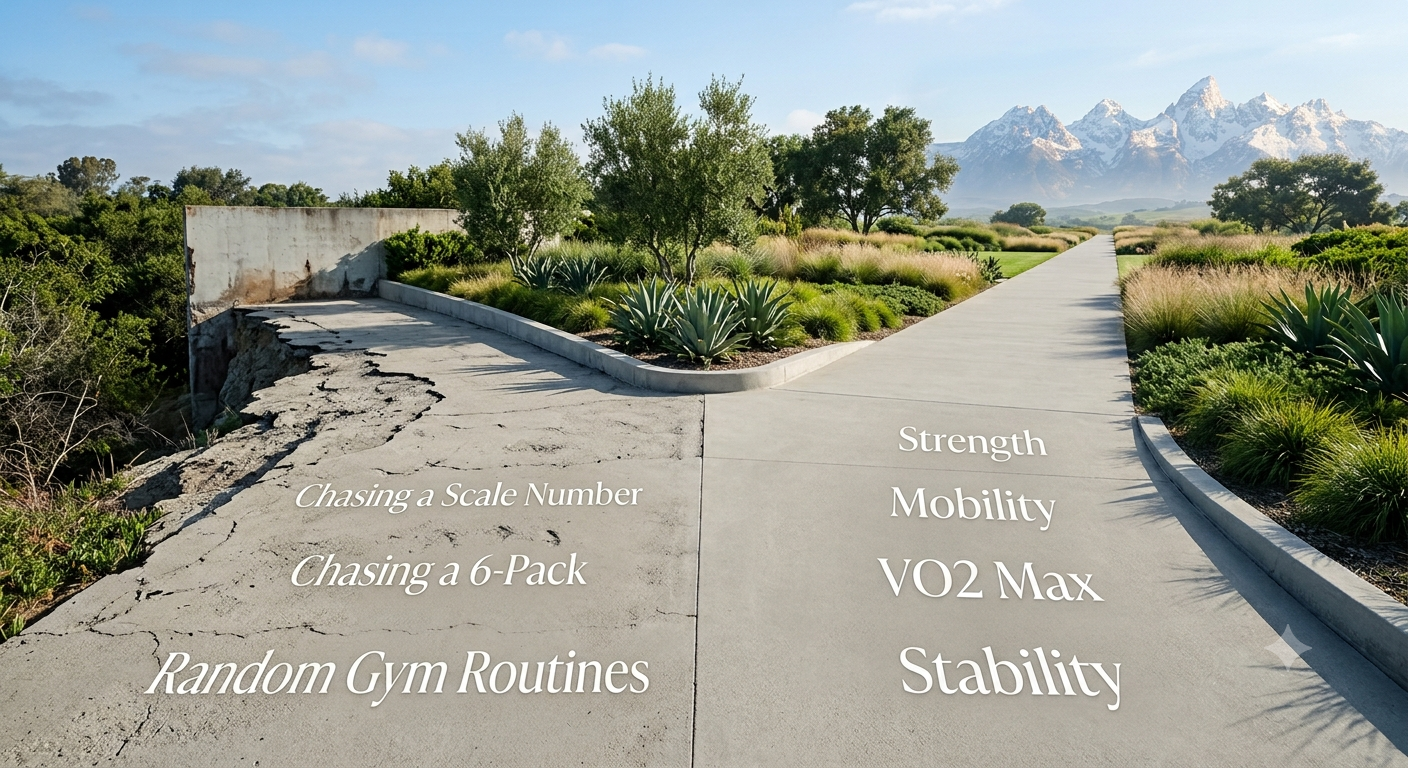
I’m not talking about looking good for your high school reunion. I’m talking about the real stuff — carrying your own groceries at 80, getting up off the floor after playing with your kids or grandkids, hiking a trail without help, traveling independently, climbing stairs, or simply maintaining the independence and dignity that make life worth living.
This is the difference between working out and training for life.
The Centenarian Decathlon: Training with Purpose
Dr. Peter Attia popularized the idea of the Centenarian Decathlon — a personal list of 10+ physical tasks you want to be able to perform comfortably in your “marginal decade,” the last ten years and final chapter of life.
It’s not about becoming an Olympic athlete at 95. It’s about choosing the activities that matter most to you and then training backward from there.
Examples of common Centenarian Decathlon events include:
- Getting up off the floor with minimal support
- Driving unassisted to the grocery store and back, including carrying your own groceries
- Traveling independently, including lifting a suitcase into an overhead bin
- Hiking a hilly trail
- Climbing several flights of stairs
- Maintaining balance while standing on one leg
- Playing actively with children or grandchildren
- Playing 9 holes of golf without a cart
- And for my buddy Phil, standing in a boat for hours fishing in Northern Arkansas

The beauty of this approach is that it makes training deeply personal and meaningful. Instead of chasing the next PR or six-pack, you’re building the physical capacity for the life you want to keep living.
The Cost of Inconsistency: You Can’t Afford to Miss Training
One of the hardest lessons I’ve learned — both personally and through clients — is that health interruptions are inevitable. Surgeries, injuries, illnesses, or life events can sideline you for weeks. Since publishing a blog last Thanksgiving on this very topic, I’ve seen it repeatedly: knee replacements, shoulder surgeries, cataract procedures, and more. In every single case, training stopped for a period. And in every case, I encouraged my clients to get back into the gym as safely and quickly as possible once cleared by their doctors.
The reality is sobering. After roughly 10–14 days of inactivity, you start losing muscle, strength, cardiovascular capacity, and more. For those over 75, regaining what’s lost becomes essentially impossible. Even before that, the slow creep begins earlier than most realize.
And please don’t make the mistake of thinking this post is directed at only seniors. After age 30, if you’re not doing regular strength training (minimum two full-body sessions per week, 30–45 minutes each), you lose an average of about five pounds of muscle every decade. From 30 to 50, that’s a meaningful chunk. From 30 to 80? It’s a massive loss. Your muscles are the engines that move you, stabilize you, balance you, and keep your metabolism humming. Without them, everything cascades: reduced mobility, higher injury risk, slower metabolism, and less resilience when life inevitably throws challenges your way.
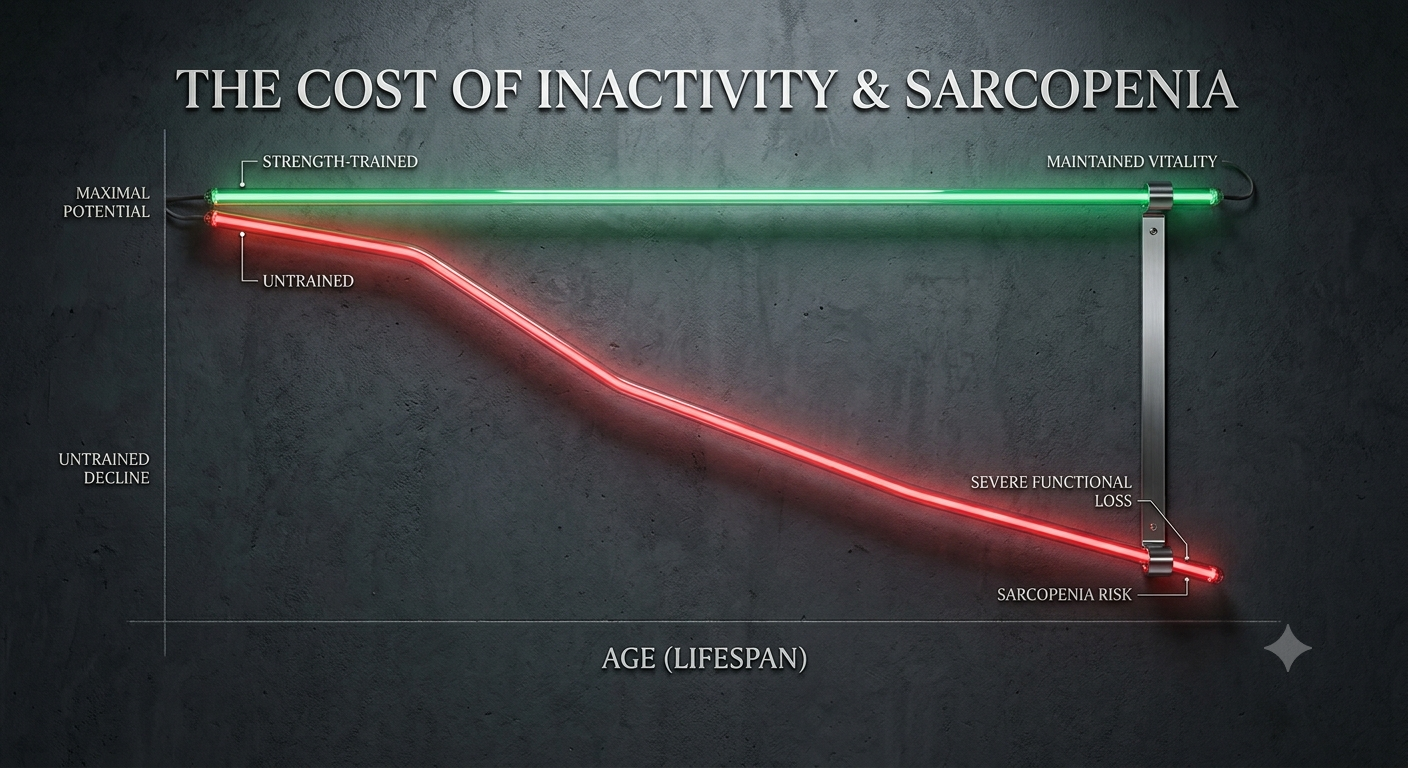
There is no substitute for strength training. Yoga, walking, or Pilates are valuable, but they do not replace the need for progressive resistance work. The good news? This applies equally whether you’re 32 or 62. The 30- or 40-something-year-old who feels bulletproof today is building (or losing) the foundation for the next decades. The sooner you start, the longer runway you have.
You can’t change the past, but today is always the best day to begin. Consistency when you’re healthy compounds powerfully — and protects you when you’re not.
Backcasting: Start from the End
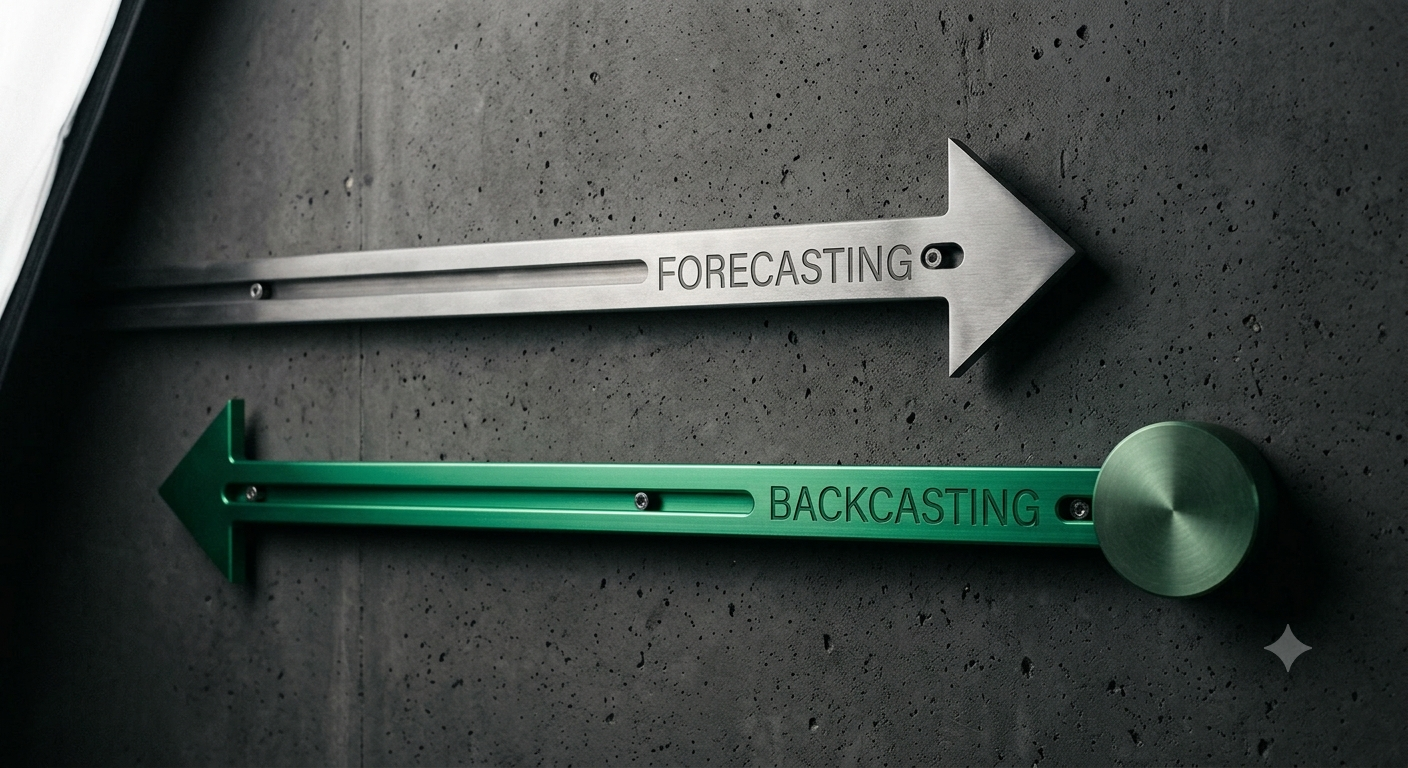
Most people train forward from today. They set short-term goals and hope things work out later. This is a short-sighted approach, limited by whatever time, money, or energy you happen to have in the present moment. For many, it leads to massive underachievement—especially if you are waiting around for inspiration.
Let me be clear: motivation is a trap. Forget about motivation. Every single day, you execute tasks you don’t necessarily feel like doing. You don’t do them because you’re inspired; you do them out of discipline, commitment, and a sense of responsibility. Apply that exact same executive logic to your health and fitness journey, and you will crush every goal you pursue.
Backcasting completely flips the script. Instead of guessing forward, you first define the exact physical capabilities you want to possess at 80, 90, or even 100. Then, leveraging precise physiological metrics and data-driven planning, you work backward to determine exactly what strength, mobility, stability, power, and cardiovascular fitness you need today—and in the coming decades—to make that future a certainty.
Think of it like a glider plane being towed into the sky by a powered aircraft. The higher that plane pulls the glider before releasing it, the longer, smoother, and farther its glide path back to earth. Your physical body operates on the exact same trajectory. The more absolute strength, muscle mass, and cardiovascular capacity you build today before age inevitably starts to pull you down, the longer, more independent, and more fulfilled your golden years will be.
Climb high, baby! Climb high!

A 30-year-old who starts backcasting now has an incredibly long runway to build capacity and resilience. A 50- or 60-year-old still has tremendous opportunity — the body responds remarkably well to purposeful training at any age. The key is to start with clarity rather than guessing.
This is the foundation of what I call Training for Life.
Why a Proper Assessment Changes Everything
You can’t train effectively for something you haven’t measured. Generic workouts often miss the specific gaps that will matter most later in life.
That’s why I’ve developed a focused Training for Life Assessment that gives you a clear baseline across the qualities that matter most for long-term function and independence. It’s relevant whether you’re 28 or 68 — the sooner you know where you stand, the more powerfully you can steer your future.
Here’s what the assessment includes and why each piece matters:
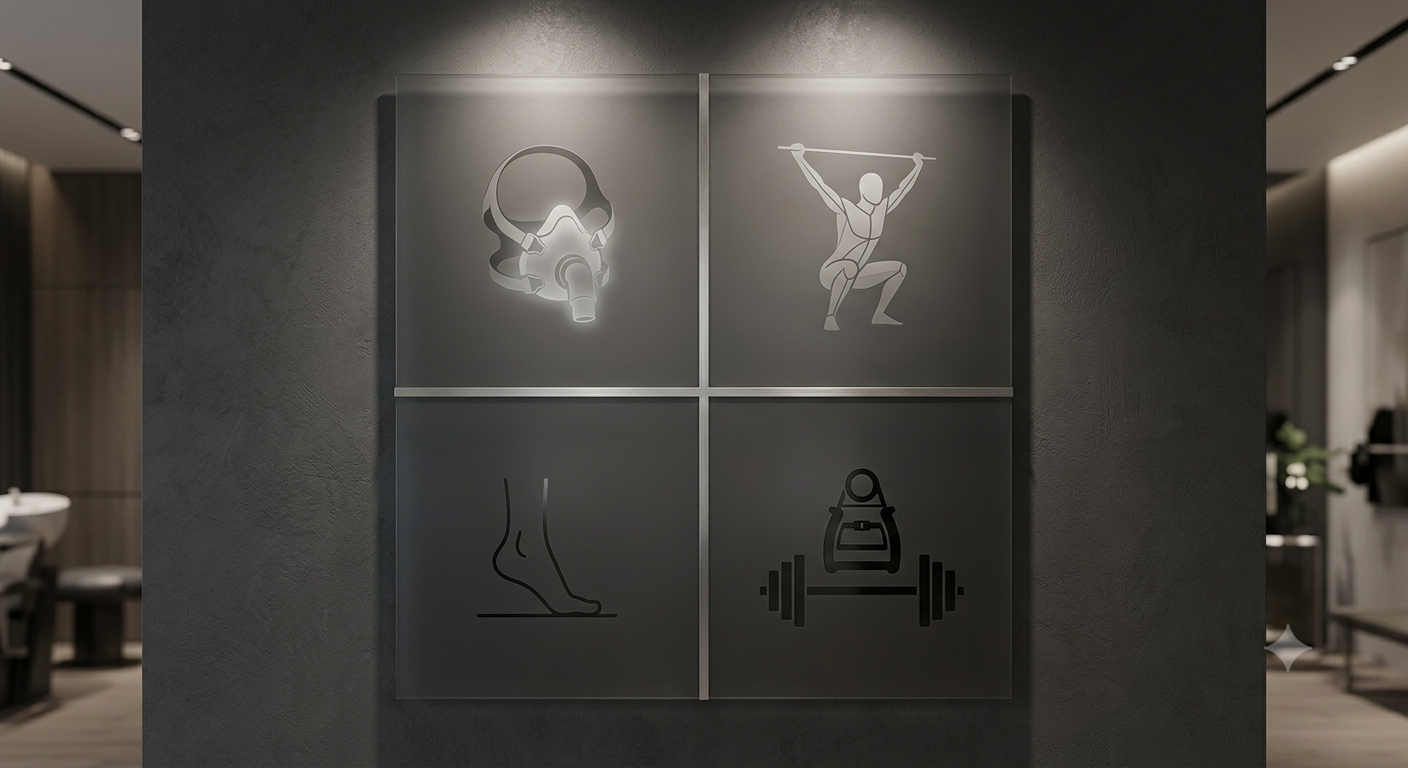
1. Active Metabolic Assessment (VO2 Max Testing) Cardiovascular fitness, specifically your VO2 max, is one of the strongest predictors of how long and how well you’ll live. It’s measured directly, so I can prescribe precise Zone 2 training (the foundation of aerobic health) and higher-intensity work that protects your heart and lungs for decades to come. This isn’t just “cardio” — it’s building the engine that supports everything else.
2. Mobility Assessment – Overhead Squat Assessment (OHSA) + Targeted Screens I use the Overhead Squat Assessment (a foundational movement screen) along with targeted mobility checks for the ankles, hips, thoracic spine, and shoulders. These reveal compensations and restrictions that affect how you squat, lunge, reach, rotate, and get up from the floor. Good mobility today prevents the “I can’t do that anymore” conversations later.
3. Stability & Balance Testing – Single-Leg Stance I time how long you can stand on one leg (eyes open, and progressing to eyes closed when appropriate). Balance and single-leg stability are critical for fall prevention, confident movement, and everyday tasks. This is simple to test but incredibly revealing — and highly trainable.
4. Strength & Functional Power Assessments (Built Around Real Movement Patterns) I evaluate the foundational movement patterns your body is designed to perform:
- Squat and lunge variations (lower body strength and control)
- Push and pull patterns (horizontal and vertical)
- Rotational movements
- Loaded carries
Specific tests include:
- Grip strength (using a dynamometer) — one of the simplest and most powerful predictors of overall mortality and functional independence. Strong grip correlates with the ability to carry loads, open jars, and maintain upper body function.
- Sit-to-Stand or Sitting-Rising Test (SRT) — You sit on the floor and stand back up using as little support as possible. This single test beautifully combines lower body strength, mobility, balance, and coordination. Higher scores are strongly linked to lower mortality risk.
- Loaded carries (farmer’s walks or similar) — Tests your ability to move under load while maintaining posture and breathing. Directly relevant to carrying groceries, luggage, or anything else life throws at you.
Together, these give us a complete picture of your current capacity across the exact qualities you’ll need for your personal Centenarian Decathlon.
Nutrition Fuels the Training for Life
No conversation about long-term training is complete without nutrition. Building and preserving muscle, supporting recovery, and maintaining metabolic health require consistent, strategic fueling — especially as we age. Protein timing and dosing, overall nutrient density, and recovery strategies become even more important when your goal is decades of high function rather than short-term aesthetics.

Your Next Step
If this resonates with you — if you’re ready to move beyond just “working out” and start training with a clear vision of the life you want to protect — I’d love to help.
I’m offering Training for Life Assessments that include the full battery described above, including an Active Metabolic Assessment, which produces your VO2 Max and heart rate training zones, mobility screens, stability testing, and functional strength evaluations. From there, we create a personalized backcasting plan and training roadmap tailored to your goals.
The best time to start training for the life you want is today. The second-best time is the moment you decide to get clear on where you actually stand.
Ready to find out what your Centenarian Decathlon looks like — and how to train for it?
Reach out to book your Training for Life Assessment via Work With Kelly, and please subscribe to my blog for more information on nutrition, training, recovery, and personal growth.
Let’s build something that lasts.
Best of luck with your journey.


Leave a Reply