
As a master health and nutrition coach, I talk to many people about their weight loss goals. One statement I always make is that I want this to be the last time they ever start a weight loss program. My purpose is to instill in them a belief that they can succeed and to lay the groundwork up front to prevent relapse.
Surely you’ve heard of someone who lost a significant amount of weight only to gain it back a short time later. What’s the problem? It could be many things; however, one of the biggest reasons is that “diets” simply don’t work. Counting calories, balancing macros, or going Keto or Paleo may result in short-term success, but these strategies often fail in the long run.

So, how do you achieve your ideal body weight and maintain it for life? While there are several core skills and behaviors to adopt, my purpose here isn’t to focus on the mechanics of nutrition and exercise. Instead, we need to address the emotional side—because, after all, how we think controls everything.
To understand this, we must consider the three levels of motivation I learned from my mentor, nutritionist Keith Klein.
1. Fear-Based Motivation
Have you ever received a bad report from your doctor? Or perhaps a friend or family member commented that you’ve put on weight? As a nutrition coach, I regularly hear people complain that their clothes don’t fit, using that frustration as their reason to change.

While these aren’t positive feelings, they can be effective if they push you into action. The danger is that negative motivation wears off. This is the Law of Diminishing Intent: the longer you put something off, the less likely you are to do it. If you are currently feeling the push of fear-based motivation, my best suggestion is to act quickly before that spark disappears.
2. Results-Based Motivation
Imagine you get that doctor’s report and take action. You change your nutrition, start exercising, and you’re down 5 lbs after a couple of weeks. This is where the next level kicks in. You start thinking that you just might be able to reach your goal because you’re seeing progress. You become even more determined.
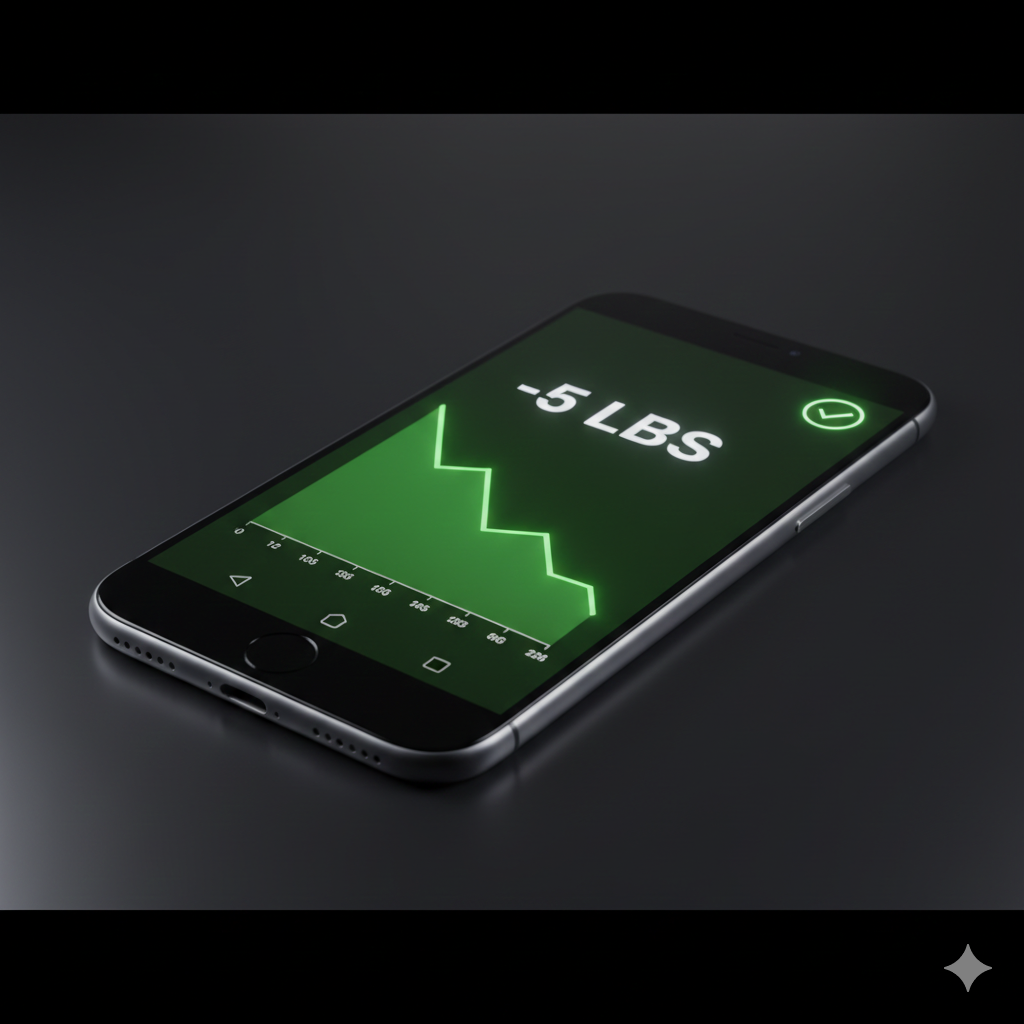
Two more weeks go by, and you’re down 10 lbs. A few weeks later, it’s 15 lbs. Finally, you hit that magic 20 lb mark. Now, one of two things will happen.
In life, there is no such thing as “treading water.” You are either moving forward or falling backward. If you were fixated only on losing those 20 lbs, you might slip. This happens because many people set only short-term goals; once they’re achieved, there’s nothing left to strive for. The worst-case scenario is gaining the weight back, setting you up for “Yo-Yo” dieting.
Here is the technical reality of that cycle: when you lose 20 lbs on a typical diet, some comes from fat, but some comes from muscle. Your best strategy for maintaining muscle is to incorporate strength training. All the cardio in the world won’t retain muscle the way lifting will.
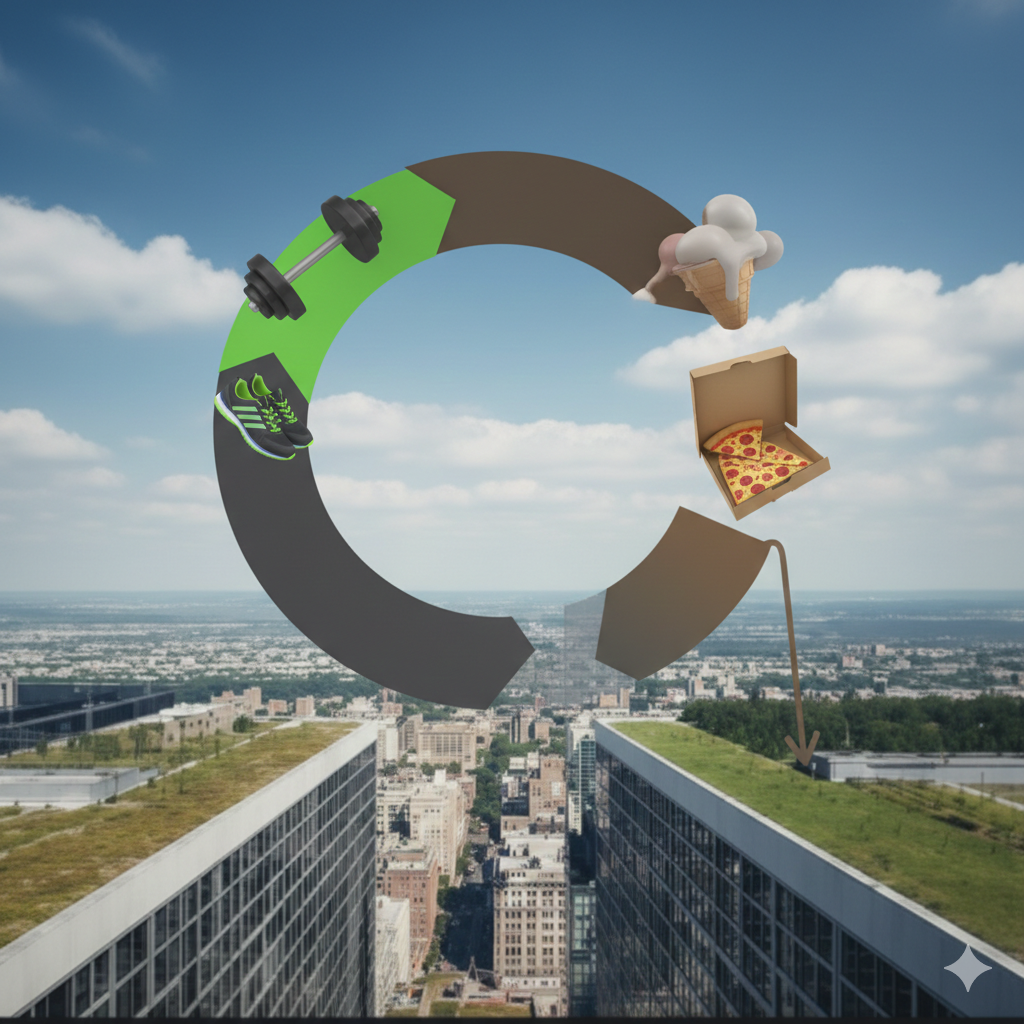
If you lose 20 lbs (15 lbs fat, 5 lbs muscle) and then go back to your old ways, you will gain that weight back—but it will almost entirely be fat. The only way to regain lost muscle is to earn it back in the gym. Repeat this a few times, and your body fat-to-muscle ratio increases, which systematically slows your metabolism.
The key to avoiding this fallback is to set short-term goals while simultaneously building new, positive behaviors you can maintain for the rest of your life. This is how you transition to the final level of motivation.
3. Inner-Based Motivation
I wish there were a shortcut, but this level simply takes time. By focusing on long-term growth and building consistent habits, you will reach a point where outside circumstances no longer derail you. Your fitness journey becomes a way of life, regardless of the curveballs life throws your way. You simply move forward and persist without exception.

To visualize this, I use two examples I learned from another mentor, Darren Hardy.
The Spiral Staircase Imagine standing at the bottom of a 100-story building with a spiral staircase leading to the roof. Looking at the top is overwhelming. Now, take your eyes off the top and focus only on the step right in front of you. Take that step. Not too bad, right? Now take the next. It’s no more difficult than the one before. You can walk to the moon if you break your goals into bite-sized chunks and focus on one piece at a time. The key is to simply not look up.

The 20-Foot Plank Imagine a 20-foot plank on the ground. If I offered you $20 to walk across it, you’d do it in a heartbeat. But what if that same plank was suspended between two 100-story buildings? You probably wouldn’t do it for any amount of money.

But what if your most treasured family member was on the other roof and the building was on fire? Would you cross it then? Of course—without hesitation. The change in circumstances changed everything.

Finding Your “Why”
When your “Why” is big enough, the facts don’t matter. That is why identifying your true reasons for pursuing a goal is vital. Grit and determination alone often fail; it’s like trying to push a piece of string across a table. It just bunches up. But if you pull the string from the front, it follows in a straight line. Your “Why” acts as that magnet, pulling you forward.
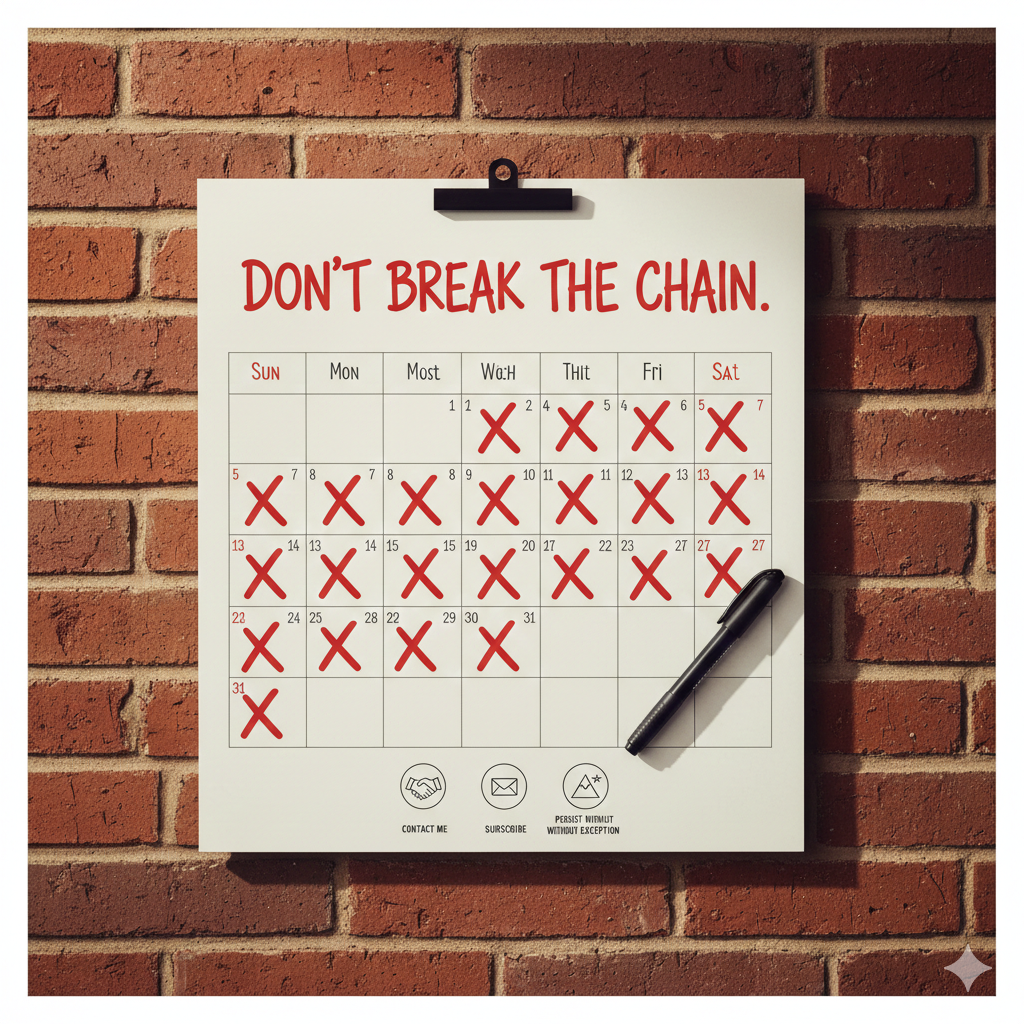
I read an article about Jerry Seinfeld where he shared a secret to his success: his wall calendar. When he started out, his goal was just to write every day. Some days were “gold,” and some were “garbage,” but he wrote regardless. He used a big wall calendar and put a red ‘X’ over every day he wrote. The physical act of marking that calendar created a chain he didn’t want to break. Today, we call this “gamification,” a powerful tool for driving results.
Action Steps for Your Journey
To turn these concepts into reality, I have a few concrete steps for you:
- Determine your “Why” and your goals. Write them down. I personally like using sticky notes—a trick I learned from the “King of Sales,” Jeffrey Gitomer.
- Identify 2–3 key behaviors. What are the small things you must do daily to reach your goal?
- Surround yourself with reminders. Post your “Why” and your goals in these high-traffic areas:
- Bathroom and bedroom mirrors
- The refrigerator and microwave
- Your laptop or desktop
- The center of your steering wheel
Change is never easy, but if you surround yourself with your reasons for starting, they will help you stay the course when life’s storms come crashing in.
Take the Next Step
Change in any area of life is rarely easy, but you don’t have to do it alone. If you are ready to identify your “why” and build a lifestyle that lasts, I am here to help.
- Reach Out: If you need guidance on your fitness journey or want to learn more about my coaching, please contact me via Work with Kelly today. Let’s work together to make this the last time you ever have to “start” again.
- Stay Inspired: Don’t miss a single post! Subscribe to my blog and receive my latest insights on health, fitness, and personal development delivered directly to your inbox.

Above all, persist without exception. I heard this phrase from my mentor, Andy Andrews, over 20 years ago, and it has become part of who I am. Never stop pursuing your dreams. If you persist, without exception, you will reach them.
Best of luck in your journey.
 kellyamidonblog.com
Leave a comment