
This past Friday morning, as I was wrapping up my cardio, one of our members, Tim, was finishing his treadmill session right in front of me.
As he stepped off, he pulled off his headphones and turned my way. I paused the video on my tablet, said good morning, and asked how his workout went. He said it was good, so I followed up with the bigger question: “What are your biggest goals with your training right now?”
Tim told me he had already lost about fifty pounds while taking one of the GLP-1 medications under his doctor’s supervision. I congratulated him—that’s a real accomplishment. He said he still had more to go, though he didn’t share a specific number. So I asked, “What’s the end game?” His answer hit me hard: “I just want to be able to play on the floor with my grandkids.”

That comment stopped me cold because it connects directly to something I first learned from Peter Attia, MD: the Centenarian Decathlon and the idea of backcasting from your future self to today. It’s one of the most powerful frameworks I know for turning vague hopes into clear, daily marching orders.
Peter defines your “marginal years” as the last ten years of your life. The Centenarian Decathlon is simply picking the top physical activities you most want to be able to do during those years. The list doesn’t have to stop at ten—in fact, the longer and more personal the list, the more emotional pull it creates in the present.
When Tim (who is 55) said he wants to play on the floor with his grandkids, he was naming a present-day goal. I love that he has it. But if we ever work together, I’m going to challenge him to raise the bar and set some aggressive goals twenty to thirty years out. I want to make sure he actually gets to live the long, full life he’s imagining.
For the record, I currently train clients in their 60s, 70s, and 80s who groan every time I make them get on the floor for Bird Dogs and other core work—because they know they have to get back up. For some of them, it’s genuinely difficult. So never underestimate how legitimate a goal like “play on the floor with my grandkids (or great-grandkids) in my 80s” really is.
Prioritizing Muscle
Back to Tim. I could tell he was short on time, so I didn’t dive into the full Centenarian Decathlon conversation. I did ask how much attention he was paying to his muscle mass. His answer: not much.
I quickly shared why maximizing muscle through strength training and nutrition is mission-critical as we age. Statistically, we lose muscle every decade if we don’t train for it. The only proven ways to slow that loss—or even reverse it for a while—are lifting weights and eating enough protein. Those two things are non-negotiable.
I also asked whether he was using our InBody scale (which tracks weight, muscle mass in pounds, body fat percentage, visceral fat, and basal metabolic rate). He wasn’t checking it regularly. I encouraged him to weigh in at least once a week so he could see what was actually happening to his body composition as the scale went down. He thanked me and had to run off to work.
The conversation was positive, but I left it feeling like I missed an opportunity to connect more deeply. For all the progress Tim has made, there are clear ways he could take far more control over how his body ages.
GLP-1 Medications: Powerful Tool, Not Magic
From my perspective as a fitness professional and nutrition coach who has now worked with several clients on GLP-1 drugs (tirzepatide, semaglutide, etc.), these medications are impressive. They genuinely reduce appetite and deliver meaningful weight loss and other health benefits.
But they are not a shortcut or a magic bullet.
I’ve watched clients lose 20–25 pounds, then regain it all once they stopped the medication or went off the rails with eating. The drug helps create a calorie deficit, but long-term success still requires permanently changing eating behavior.
One consistent challenge I’ve seen is that when appetite drops dramatically, it becomes even harder to hit protein targets. And when you’re losing body fat—especially at 55+—protecting muscle mass is everything. You don’t want to lose muscle along with the fat. Once you’re past 40–50, rebuilding lost muscle gets noticeably harder every year. Tim had no idea what was happening to his muscle mass, and from watching him train, his program design wasn’t optimized to preserve it.
The Aging Muscle Tax
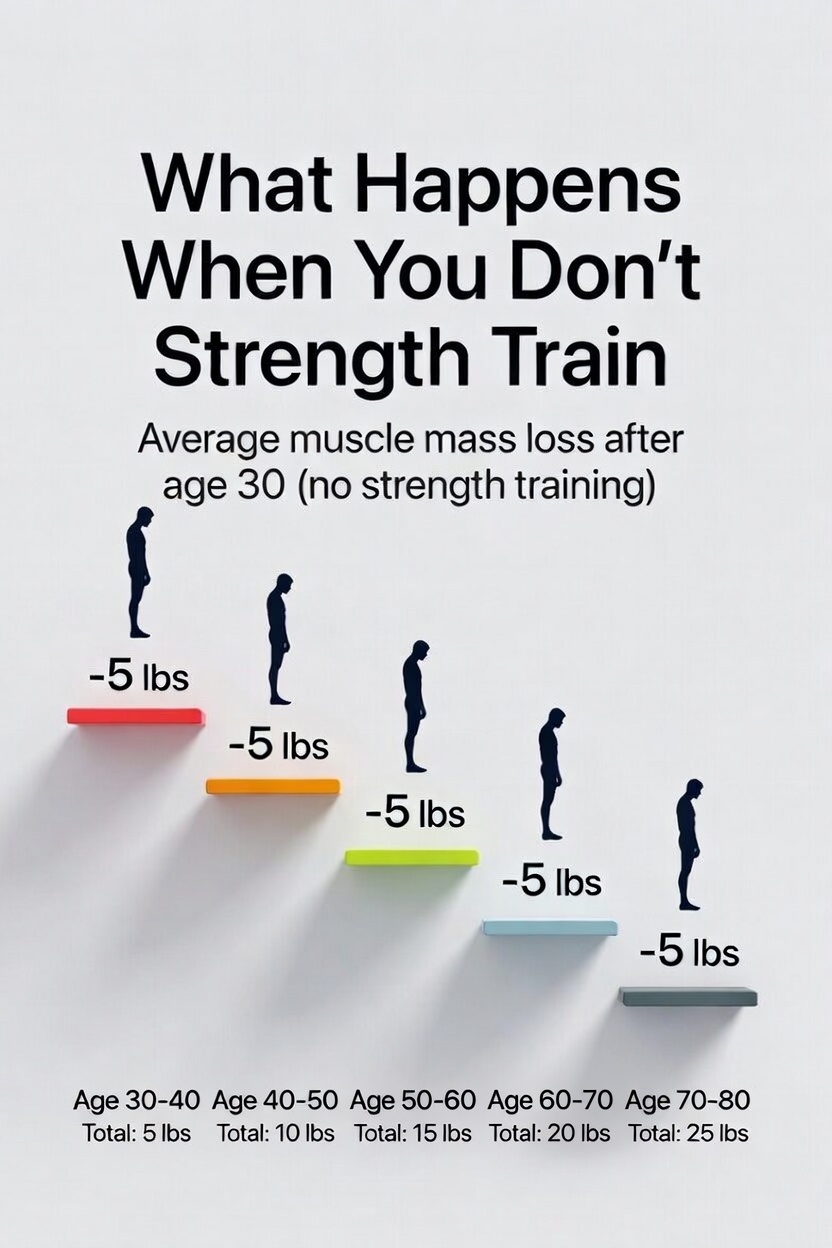
Here’s the reality most people never hear: if you’re not strength training, you lose roughly five pounds of muscle every decade after age 30. From 30 to 80, that’s 25 pounds of muscle gone. Your body literally shrinks. Your engines for movement, balance, and independence disappear.
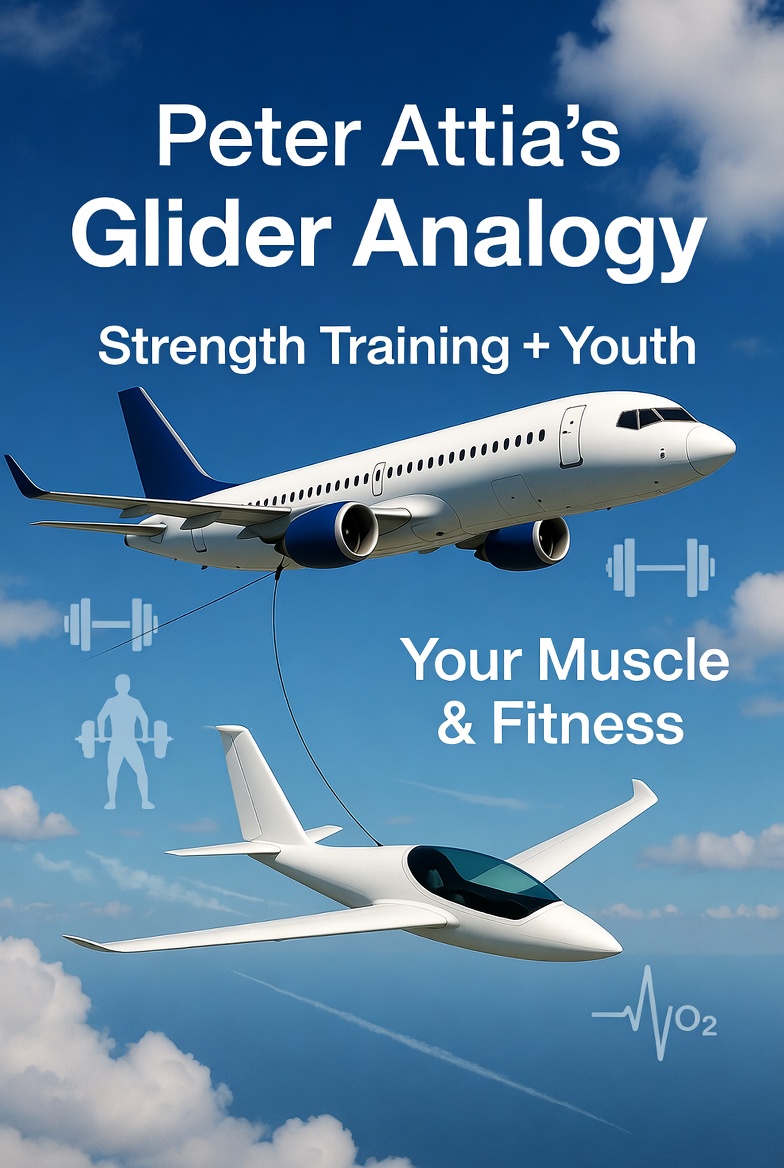
You can slow, minimize, or even partially offset that loss with consistent strength training and protein. Think of it like Peter Attia’s glider analogy: the higher you climb with strength training while the “powered plane” (youth and hormones) is still pulling you, the longer and gentler your glide will be when the plane eventually lets go.
Backcasting: Turning Your 85-Year-Old Dreams Into Today’s Training Plan
This is where the Centenarian Decathlon becomes incredibly practical.
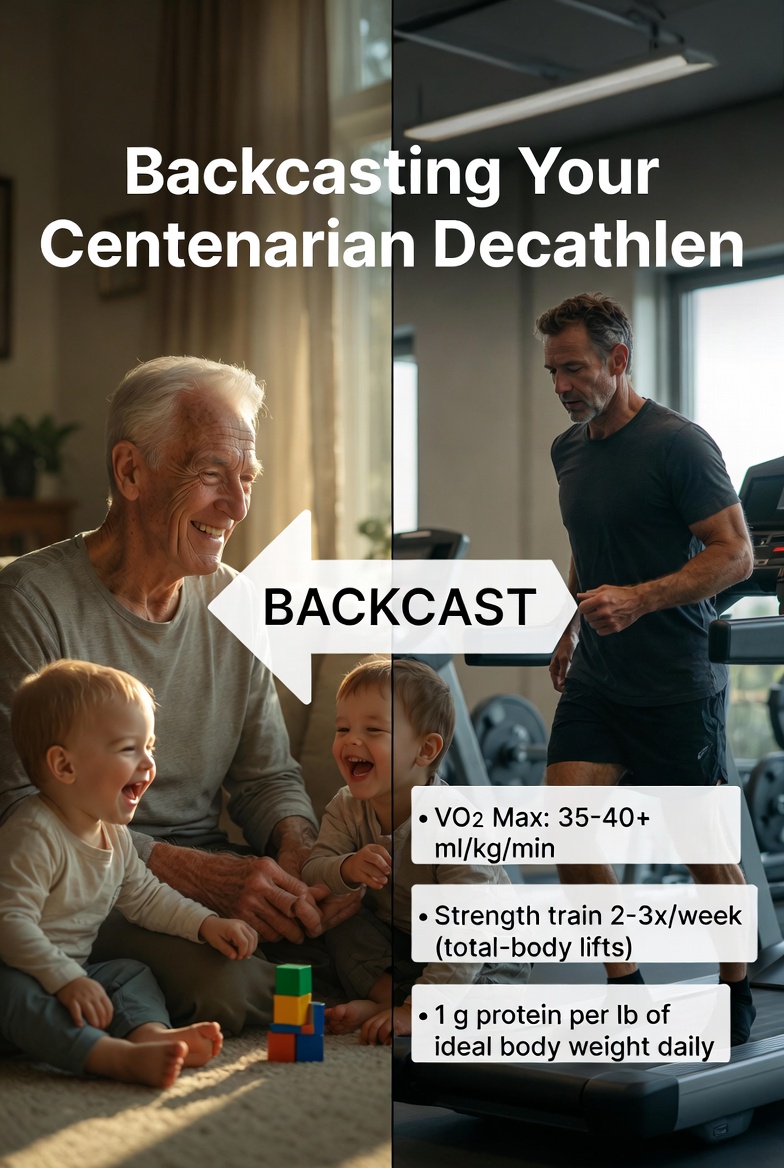
You list the physical things you want to be able to do in your marginal years (I use age 85 as the example). Then you backcast: If I want to do X at 85, what VO₂ max, strength levels, and mobility do I need right now at my current age?
With AI and the data we have on how VO₂ max, muscle, and power decline with age, you can make this objective and measurable. Most people are “upside down” when they first run the numbers—they’re not where they need to be today to reach their future goals.
Here’s my personal (partial) list of things I want to be able to do at 85:
- Drive myself to the grocery store, shop, and come home independently.
- Travel independently—drive or Uber to the airport and walk the entire way through security to my gate (no scooter).
- Play nine holes of golf and walk the course (roughly two miles) with just a pull cart.
- Get down on the floor and play Legos (or whatever) with my grandkids or great-grandkids—and stand back up on my own power.
- Still be able to have sex.
- Strength-train at least 3 days a week and do cardio 3 days a week.
- Walk two to three miles comfortably whenever I want (this is also how I create much of my content—by dictating while I walk).
Every single one of those activities requires a certain VO₂ max and a baseline of strength and power. The backcast tells you exactly where you need to be today and what you have to do between now and 85 to get there.
What “Doing the Work” Actually Looks Like
If you’re 40 (or any age, really) and serious:
- Strength train at least 2 days per week (3 is better), 30–60 minutes per session. Total-body workouts are extremely efficient; however, an upper/lower split can work well depending on your schedule.
- Cardio on a 1:1 ratio with strength training. Include steady Zone 2 work and some higher-intensity intervals to protect and improve VO₂ max. (Your cardiovascular fitness has a surprisingly long runway for improvement, even into your 80s and beyond—Peter shares the story of a man over 100 who improved his VO₂ max and cycling performance in consecutive years.)
- Protein at roughly 1 gram per pound of ideal body weight every day. Most people have no idea how much they’re actually eating and fall far short.
Energy balance still matters for body composition, but protein is the lever most people ignore.
The Tomorrow War Moment
A few weeks ago, I watched The Tomorrow War with Chris Pratt. Without spoiling it, his character gets a glimpse of his future—and it’s not pretty. He then has the chance to go back and change his present based on what he saw.
That’s exactly what backcasting gives you. You get to look at your 85-year-old self and decide, right now, whether you like the trajectory. If not, you change course today.
The technology and data exist. The only question is whether you’ll use them.

Your Challenge
Name one thing—the most important physical thing—that you want to be able to do in the middle of your marginal years.
Plug it into AI or ask me directly: “What do I need to be able to do today in terms of VO₂ max and strength to make that possible at 85?”
If the gap feels big, that’s okay. You now have your marching orders.
If you want help walking through your own Centenarian Decathlon, backcasting the numbers, building the training plan, or locking in the nutrition, just reach out via Work With Kelly.
I’d be honored to help you turn that future vision into today’s reality.
Your 85-year-old self (and your grandkids) will thank you.
Best of luck in your journey.



Leave a Reply