
How do you want to live? That’s a question most people, I think, never really give any serious consideration to. I’ve heard it said that most people spend more time planning their vacations than planning their lives. And one of the most profound and simple statements I ever heard from the late, great Zig Ziglar is this: “How do you hit a target that you don’t have?”
How specific have you been in identifying how you want to live in the future? I first heard Earl Nightingale talk about three key financial numbers:
1 – The yearly income you want to earn (now or in the near future). This is your target annual earnings—the specific income level you decide to work toward by increasing your value and service.
2 – The amount of money you want to have in a savings and/or investment account. This is your target nest egg or accumulated savings/investments.
3 – The amount of money you want as retirement income (annual income in retirement, whether you ever actually retire from active work or not). This is your desired ongoing yearly income once you’re no longer relying primarily on earned wages—essentially your “passive” or retirement paycheck goal.
Nightingale stressed that most people drift through life without ever picking concrete numbers for any of these, which is why so few achieve financial independence. He said something to the effect of: decide on these three, carry the numbers with you or review them often, and you’ll have a clear plan that your mind can then work toward. And the principle applies far beyond money. It’s the same with life itself.
The first time the question “How do you want to live?” was truly impressed upon me was more than thirty years ago, from a mentor of mine. Bryan Parks was a super-sharp businessman with a background in petroleum engineering. He was also a leader at a marketing company I was involved with, and he once gave a talk to a group of business professionals. While I don’t remember anything else, Bryan’s key take-home point was that most people get this backward: they chase a career path based on the career itself, but they never stop to consider the lifestyle that career will actually give them.
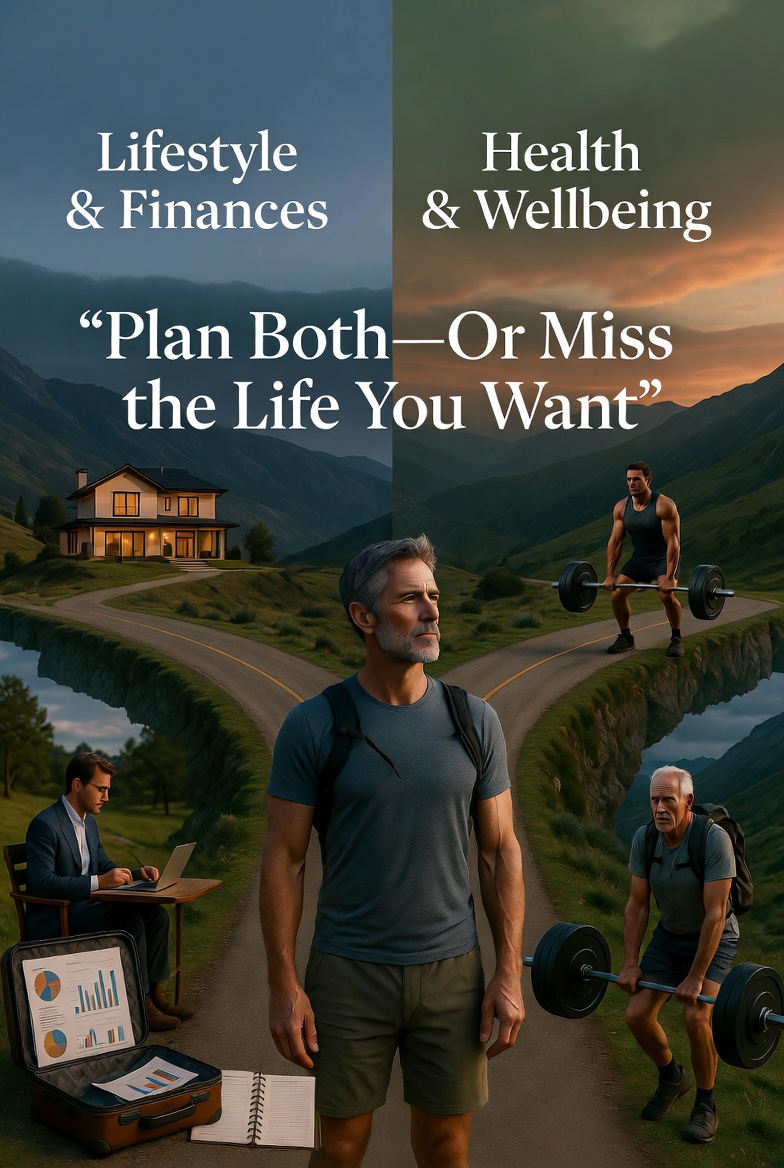
That insight hit me hard then, and it still does today. So I want to tackle this question from the very beginning with a clear two-pronged approach:
- Lifestyle and finances—the career or business path you choose and the life it actually affords.
- Health and well-being—how you want to physically live, especially in your later years.
Most of us treat these two areas separately, or we address one while ignoring the other until it’s too late. But they belong together. You can build the perfect financial life, only to lose your health and be unable to enjoy it. Or you can stay healthy but never create the time, freedom, or resources to live the way you truly want. Let’s look at both prongs together, right from the start.
The Lifestyle and Finances Prong
Bryan Parks was right: most people pick a career first and hope the lifestyle works out. I’m a perfect example of getting it backward—twice.
Right out of college, I pursued a career in the golf industry. I had a business background and enough game to become a club professional, but I never stopped to consider the paycheck, the hours, or the schedule. Assistant pros in the early ’90s (and still today) didn’t make much. You worked retail hours—early mornings, late evenings, weekends, and holidays—precisely when everyone else was off. My two best friends from college were advancing in their careers, making more money, and actually had weekends free to play golf. I quickly realized I had chosen the path for the career, not the life I wanted.
Years later, I became a fitness professional and now work with Lifetime Fitness, one of the largest commercial gym chains in the country. I absolutely love what I do—training clients, creating content, and building influence—but it still comes with long hours, weekends, holidays (except Christmas), and a business model that largely trades hours for dollars. It has been incredibly rewarding, and I’ve had real success over the last eight-plus years. Yet looking back, I see I entered the fitness industry the same way I entered golf: without first defining how I wanted to live and then choosing a path that supported it.
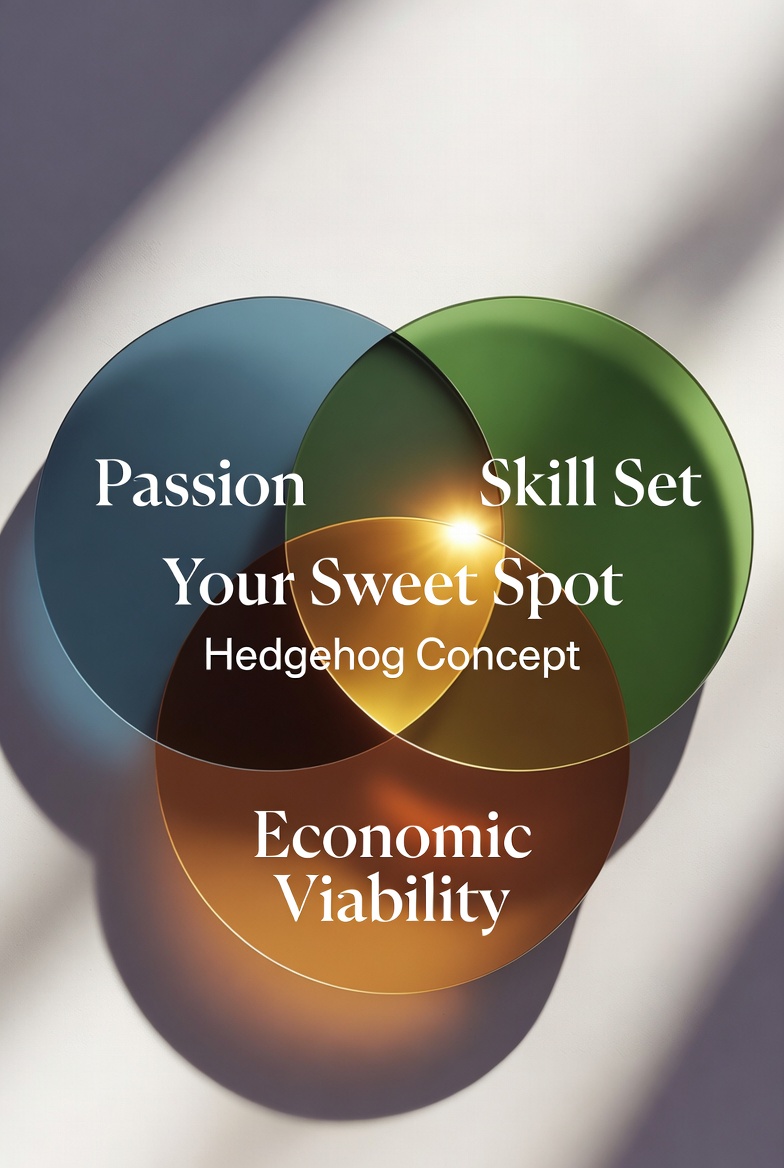
There is nothing wrong with being an employee, a solopreneur, or a business owner with a team. The key is alignment. As Jim Collins teaches in Good to Great, real success comes when you find your “hedgehog concept”—the overlap of what you are passionate about, what you are skilled at, and what has genuine economic viability. Passion alone isn’t enough. You can love something, be great at it, and still struggle if there’s no market or if the lifestyle it demands doesn’t match what you want.
So here’s the better sequence: First, get crystal clear on how you want to live. What does your ideal weekly schedule look like? Do you want to start early or later? Work Monday–Friday or have flexibility on weekends? Travel for business or sleep in your own bed every night? Then build or choose the career, business, or role that supports that vision.
I’ve molded my current role at Lifetime to serve my bigger goals. I train first thing in the morning because that’s when I’m wired to do it. I see my work now as a rocket ship and launching pad for the legacy I want to leave—impacting people through my writing, speaking, and content long after I’m gone. But it took years and some painful lessons to get here.
The Health and Wellbeing Prong
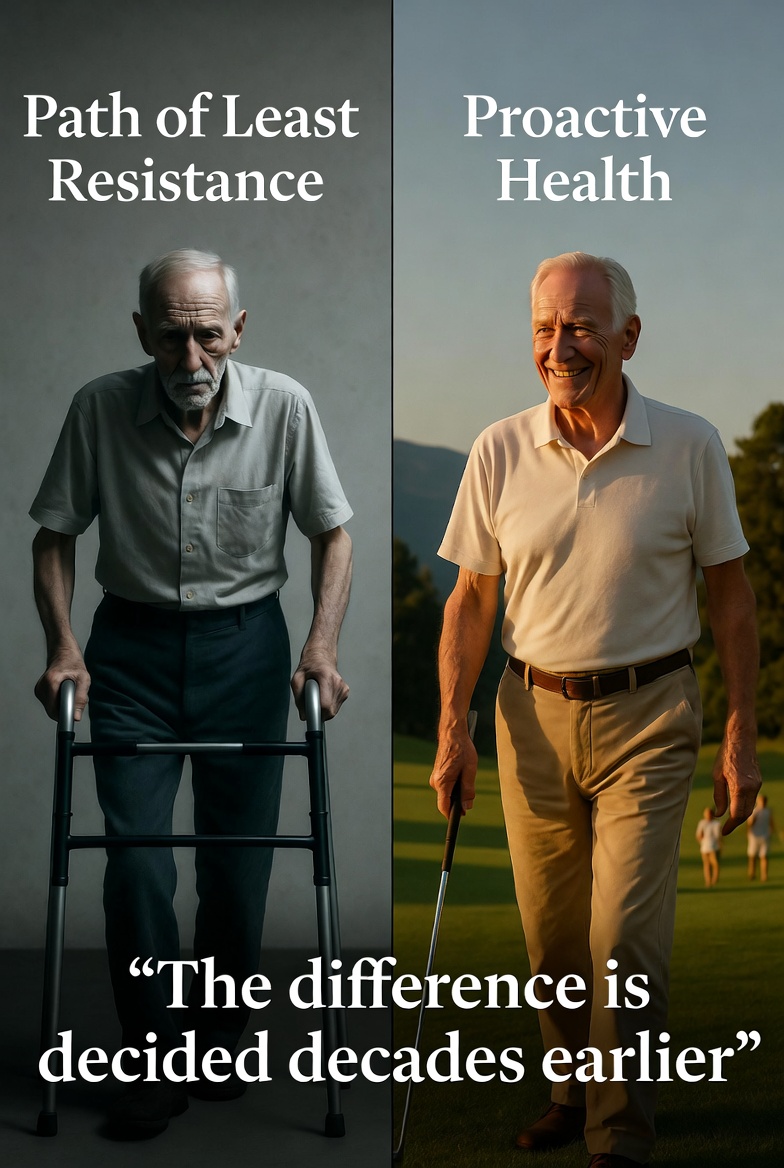
We make the exact same mistake with our health. There are two groups of people. The vast majority take the path of least resistance: little to no exercise, poor nutrition, inconsistent sleep, and minimal stress management. Then there’s the much smaller group that actually trains, eats well, prioritizes sleep, and takes steps to manage stress.
Around age thirty, the slow decline begins, whether you train or not. Without consistent strength training, you will lose, on average, five pounds of muscle every decade. From age 30 to 80, that’s 25 pounds of muscle gone, which greatly diminishes your capacity to move and to enjoy life functionally.
Strength will at best prevent, or at least slow this decline, but it takes consistent, dedicated work.
Everything accelerates with age. If you haven’t defined how you want to physically live—especially in your later years—you are setting yourself up for a lot of pain and suffering. As the scripture goes, “What does it profit a man to gain the whole world but lose his soul…or physical health?”
Peter Attia, MD, who shifted his practice from cancer surgery to longevity, asks every new patient to define what they want to be able to do in their “marginal years”—roughly the last ten years of life (say, ages 80–90). Be brutally specific: Walk two miles? Drive yourself to the grocery store and load your own bags? Travel without needing a scooter at the airport? Play a round of golf? Stay intimate with your spouse?
Dr. Benjamin Hardy teaches the power of backcasting in goal setting: start from the future outcome you want and work backward to the present. Most people set goals for the future based on their current circumstances in terms of time and resources, including finances, skills, and connections. This can be very limiting and short-sighted. With Hardy’s model, you act in the present as if you had already achieved your future goals. This framework provides a powerful shift and can lead to truly dynamic accomplishments.
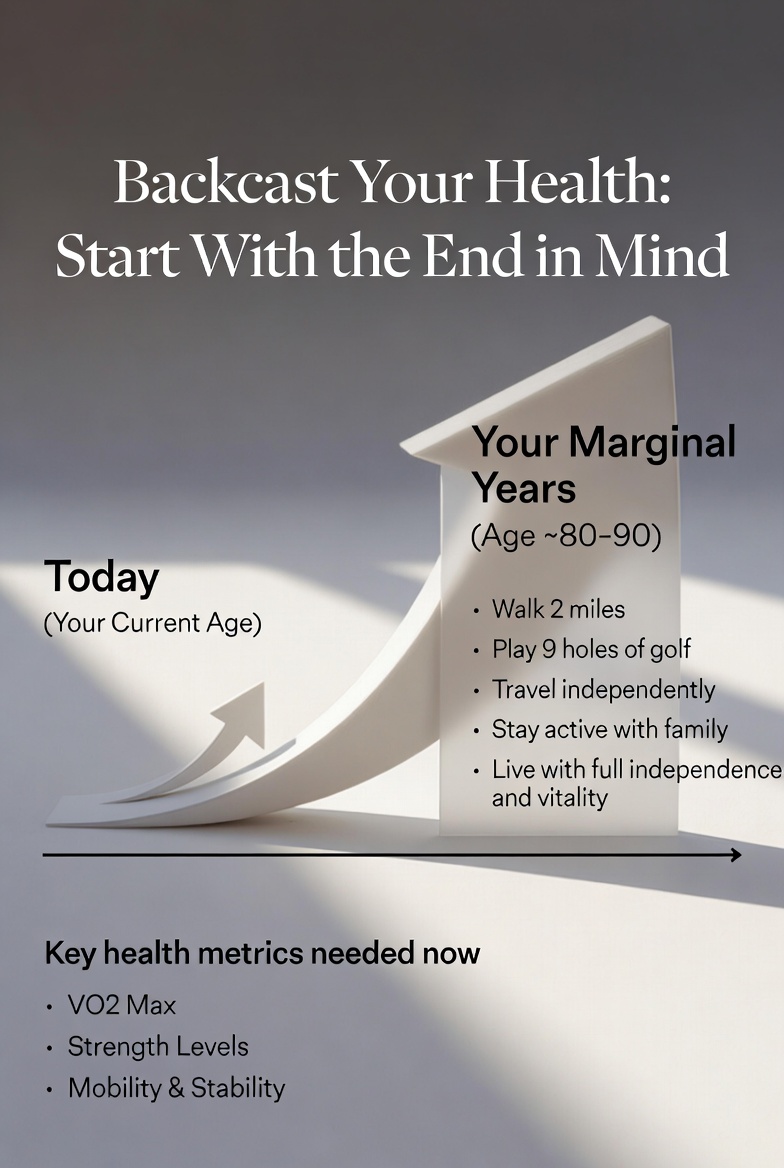
You can apply the exact same principle to your health. With today’s knowledge and technology, you can determine the strength, VO2 max (a measurable marker of cardiovascular capacity), mobility, stability, and balance you’ll need at age 85 to do those activities—and then reverse-engineer where you must be today.
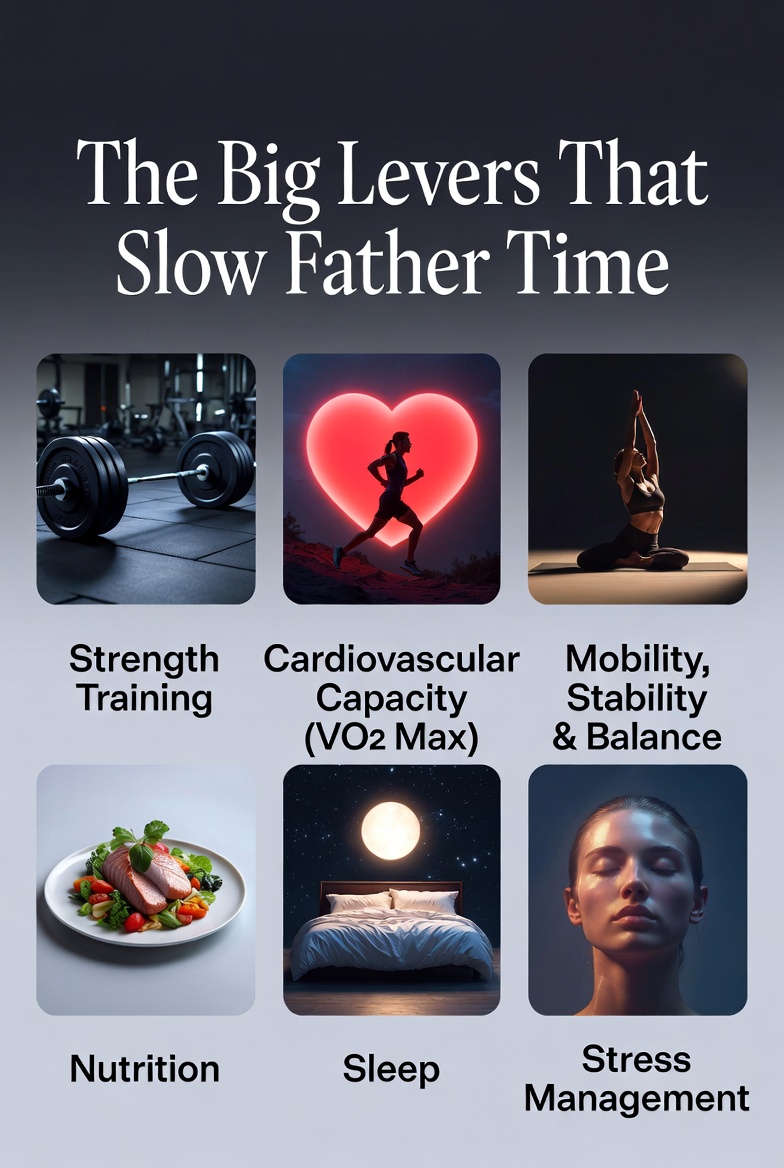
You won’t stop the aging process, but you can slow it dramatically. The big levers are:
- Strength training (there is no substitute)
- Cardiovascular work
- Mobility, stability, and balance training
- Nutrition, sleep, and stress management
The earlier you start, the better. You’ll live longer and live a fuller, more robust life.
I was reminded of this just the other day, talking with my dad, who is about to turn 79. He mentioned his brother-in-law, in his early eighties, who exercises three days a week but has already developed a shuffle in his walk. Despite his best efforts, age is catching up and taking a toll on his health and functionality.
This reminds me of one of my favorite quotes from Lethal Weapon 4, when Roger Murtaugh (Danny Glover) says to Martin Riggs (Mel Gibson), “You can’t beat the clock, Riggs.”
You can’t beat Father Time, but you sure can slow him down.
Perspective, Success, and Taking Action
Two of the most impactful lessons I’ve learned about defining success came from Zig Ziglar and Darren Hardy.
Zig once helped a woman who hated her job and was deeply depressed. In a short conversation, he simply asked her to list the positives: they paid her, she had benefits, vacation, a 401(k), etc. Her entire perspective shifted. I went through the same exercise with my own career at Lifetime and realized I was already standing on a launch pad.
Darren Hardy, former editor of Success magazine, interviewed Maria Shriver and was stunned by her definition of success. It prompted him to write his own—and he discovered he was far closer to his ideal life than he realized. He created a filtering system for new opportunities so he wouldn’t mess up what was already working.
When I ran my own life and career through both filters, I saw that I’m well on the way to the legacy I want to leave. There’s still work to do, but I’m moving in the right direction.
If Not Now, When?
For the last several years, I’ve chosen a word or phrase of the year for focus. For this year (2026), it took me a while to land on it, but when I did, it hit like a lightning bolt: If not now, when?
It eradicates procrastination. It applies to every area of life—career moves, health habits, relationships, legacy work. Life is not a dress rehearsal. As Sylvester Stallone has said, “Life is a one-strike baseball game.” This is your one shot.
So swing really hard.
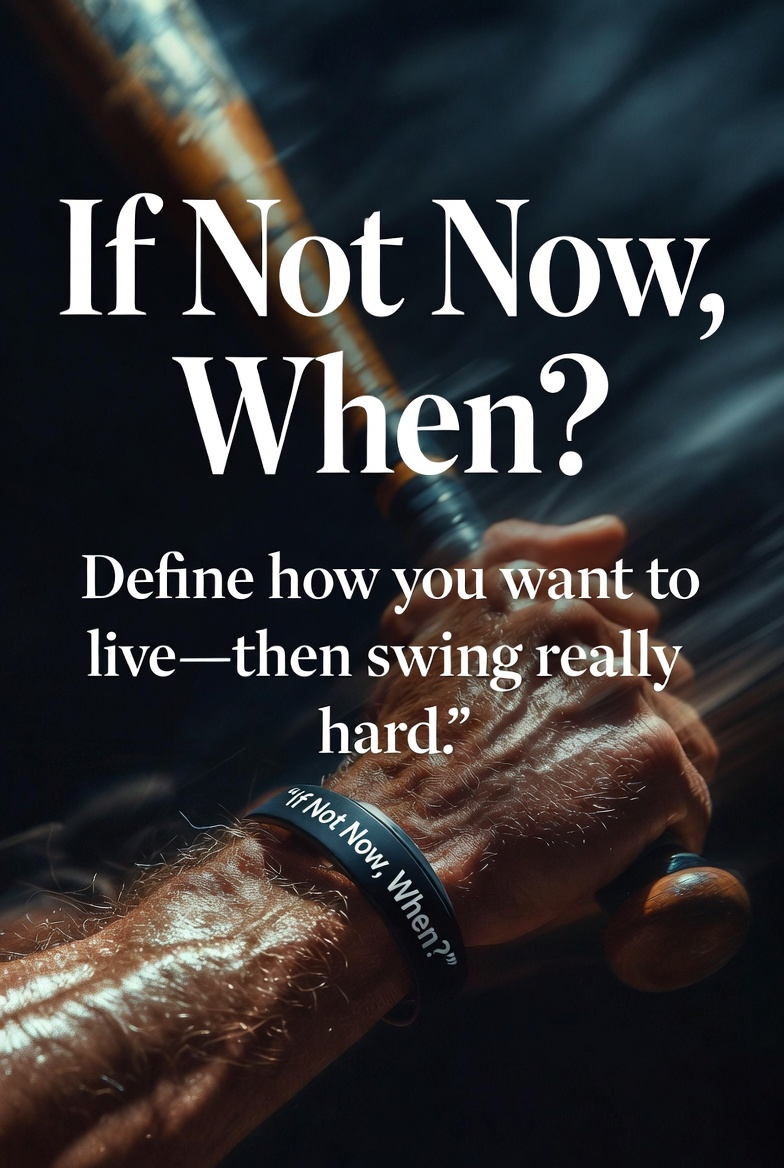
Define how you want to live—both the lifestyle and finances you desire and the physical vitality you want to enjoy it with—then start building it today.
If not now, when?
If this message resonates with you, I’d love for you to subscribe to my blog so you never miss future posts on designing the life, finances, and health you truly want. And if you’re ready to take real action on your own vision—whether that’s clarifying your ideal lifestyle, building financial freedom, or creating the physical vitality to enjoy it all—please reach out to me directly via Work With Kelly for personalized coaching. I’d be honored to help you make it happen.
Best of luck in your journey.


Love this post. Thanks!
Brian
LikeLike