
We’ve all seen it in the gym: someone walking on the treadmill at a steady 2.5–3.5 mph, earbuds in, maybe scrolling on their phone. It looks like “cardio time.” But is it really moving the needle on their fitness, heart health, or VO2 max?
As a fitness professional who’s had countless conversations with members, this scene hits home. A few days ago, it sparked a great discussion with one of our members. That conversation prompted me to write this follow-up to my recent post about VO2 max—arguably the single best predictor of longevity and overall health. Today, let’s break down the difference between daily movement (like those treadmill walks) and intentional cardio training, how to balance both, and why getting this right matters more than most people realize.

The Power of Daily Steps: Your Anti-Sedentary Foundation
Let’s start with the good news. Getting in consistent daily steps is genuinely powerful for your health.
Research consistently shows that 7,000–8,000 steps per day is a sweet spot for big reductions in risk:
- Up to 47–70% lower all-cause mortality compared to very low step counts (around 2,000).
- Significant drops in risks for heart disease, cancer, dementia, depression, diabetes, and falls.
Andrew Huberman has noted that under roughly 5,000 steps per day puts you in sedentary territory—something many of us want to avoid. Hitting 7k–8k steps supports better glucose control, mental health, NEAT (non-exercise activity thermogenesis), and overall vitality.
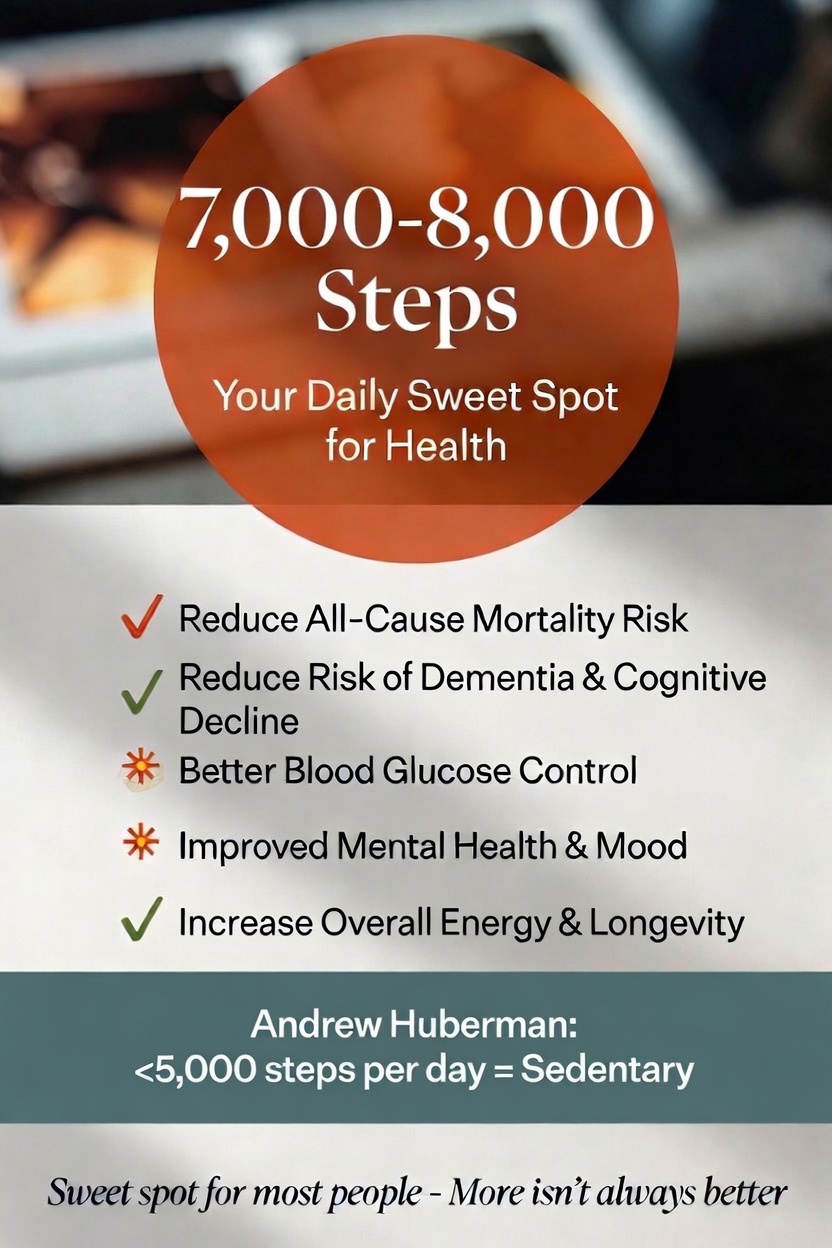
Important caveat: More isn’t always better, especially if you’re already training hard. As strength & conditioning coach Joel Jamieson points out, piling on a ton of extra steps daily on top of workouts, work, and family life can overload your recovery system for many people. Quality recovery beats mindless volume, and more doesn’t necessarily mean better.
Bottom line: Daily steps are foundational—they keep you active. But for most fit individuals, slow treadmill walking often doesn’t elevate heart rate enough to count as conditioning work.
What Actually Counts as “Cardio” for Improving VO2 Max?
This is where the rubber meets the road.
If your heart rate stays very low during that 3 mph walk (easy for fitter people to stay under their effective training zones), you’re mostly accumulating steps—not challenging your aerobic system enough to drive meaningful improvements in VO2 max or cardiovascular efficiency.
True cardio training for fitness gains requires sustained time in zones that create an adaptive stimulus, with the foundation coming from Zone 2 work and the addition of higher-intensity interval work. This builds mitochondria, improves fat oxidation, strengthens the heart, and raises your VO2 max ceiling.
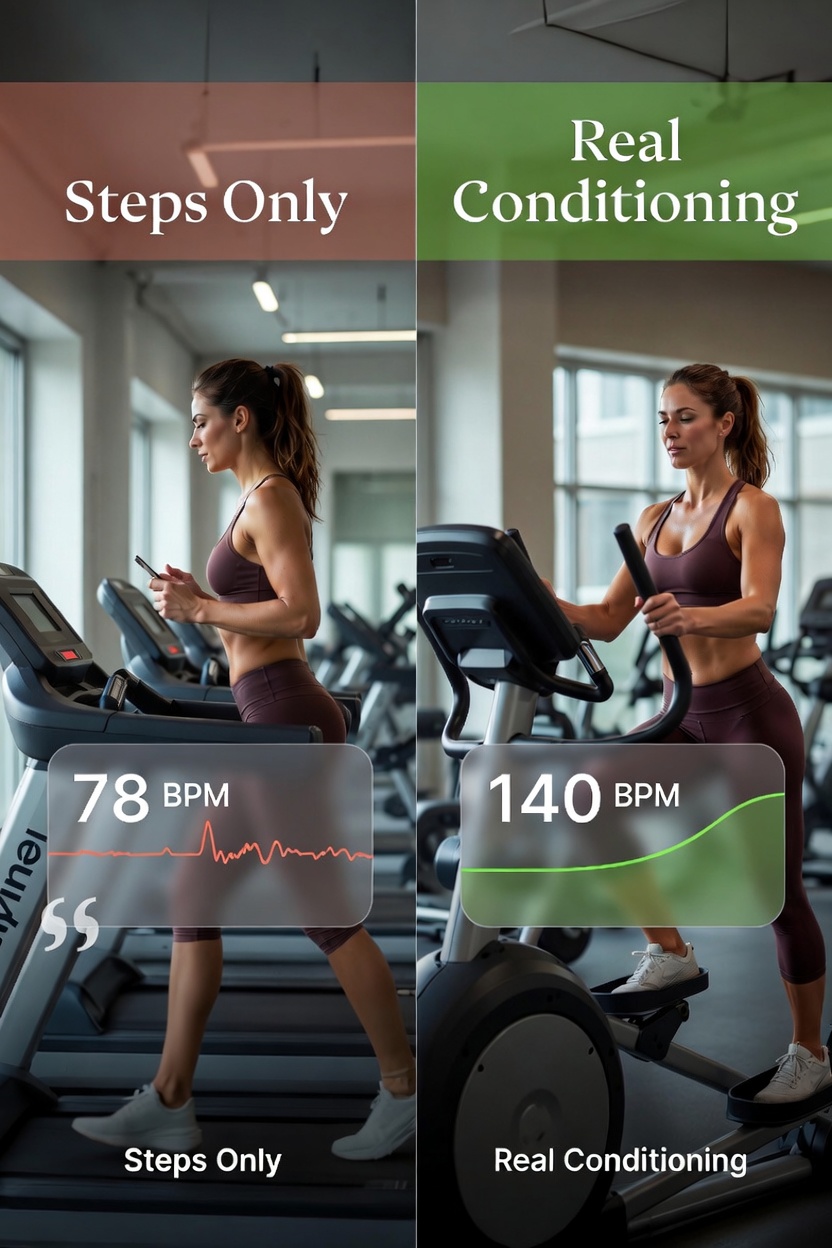
In my experience, I can’t walk fast enough on flat ground or on a treadmill with a modest elevation to hit my personal “blue zone” threshold with the Morpheus training system without it feeling like an uncomfortable speed walk. I prefer the elliptical or rowing ergometer, where I can better control intensity. Many of you reading this probably feel the same.
And depending on my recovery via my morning test with Morpheus, my Zone 2 range averages 135 to 145 BPM. This is a far cry from staying below 100 BPM walking outside or on a treadmill.
Heart Rate Zones: Morpheus (3 Zones) vs. Traditional 5-Zone Models
There are different ways to think about zones, and they actually complement each other well.
Morpheus (Joel Jamieson’s system) uses a dynamic 3-zone model:
- Blue — Low-to-moderate (recovery-focused aerobic work, including Zone 2).
- Green — Conditioning/moderate (the sweet spot for building aerobic capacity).
- Red — High intensity/overload.
What makes Morpheus special is that zones adjust daily based on your recovery (HRV, resting heart rate, sleep, previous training). It prevents overtraining while guiding smart volume. To my knowledge, there’s no other system on the market that takes measurements from your body and applies them directly to your training.
Lifetime Fitness / Standard 5-Zone Model (what we use with our Active Metabolic Assessment):
- Zone 1: Very light
- Zone 2: Aerobic (fat-burning, endurance…combined with Zone 1 – should make up 80% of your cardio)
- Zone 3: Tempo
- Zone 4: Threshold
- Zone 5: Anaerobic / VO2 max (Zones 3+4+5 improve cardio strength – should make up 20% of your cardio)
These are more static percentages of your max heart rate but give precise, individualized data from testing (including your actual VO2 max).
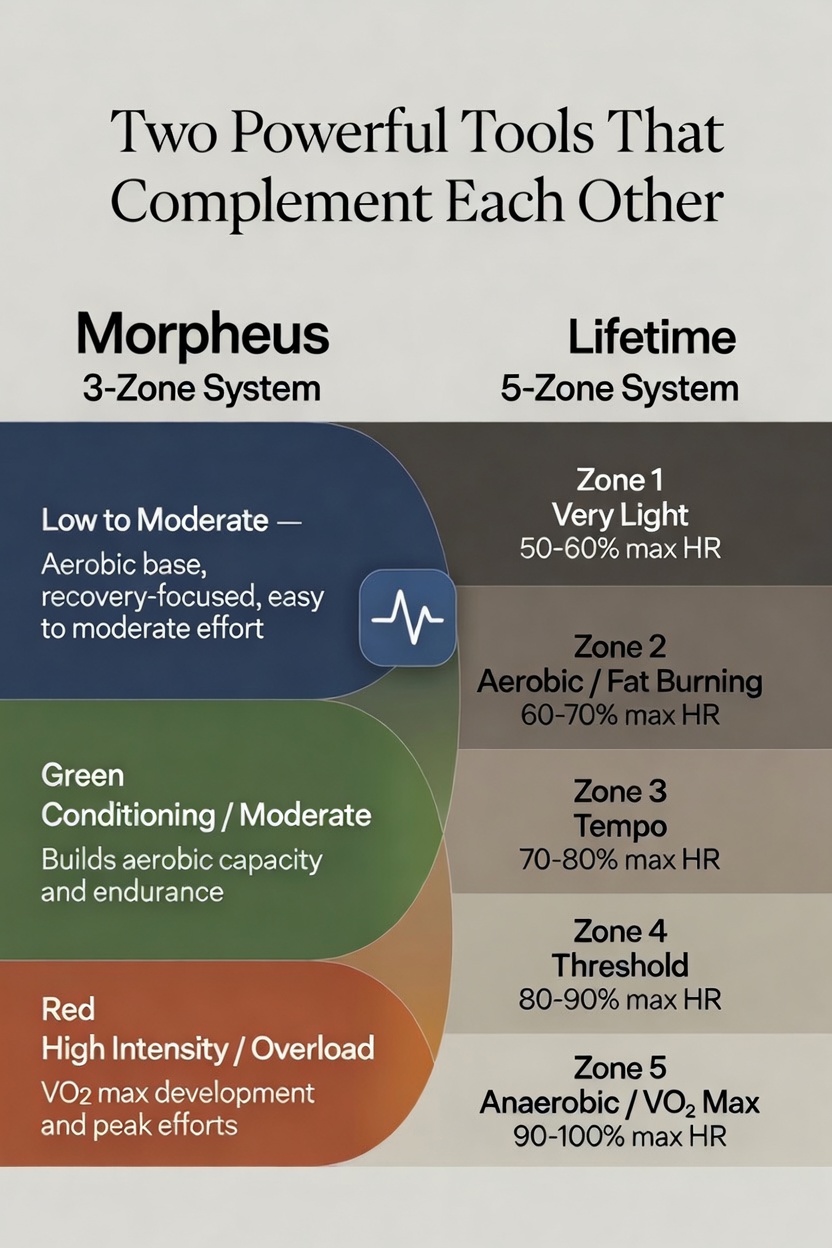
They overlap beautifully: Morpheus Blue often covers Lifetime Zones 1–2 (and low 3). Green and Red then map onto the higher zones. Use our AMA for your personalized foundation and VO2 max baseline, then layer Morpheus (if you have it) for daily recovery-guided decisions. This blend is powerful and will help you maximize the effort you put into your cardio workouts.
The Complete Picture: Steps + Cardio + Strength + Recovery
You need all of it. Here’s a practical framework I recommend to most members:
- Daily Steps: Aim for 7,000–8,000 as your baseline (more if recovery allows).
- Dedicated Cardio: 2–3 sessions per week in proper zones (use a heart rate monitor). Mix steady state with some higher-intensity intervals.
- Strength Training: 2–3 sessions per week. I generally suggest a roughly 1:1 strength-to-cardio ratio for balanced results. If you’ve been a “cardio king/queen,” shift toward more lifting (maybe 60/40). The reverse is true if you’re lifting heavy with no cardio history. Don’t go extreme in either direction—you need both.
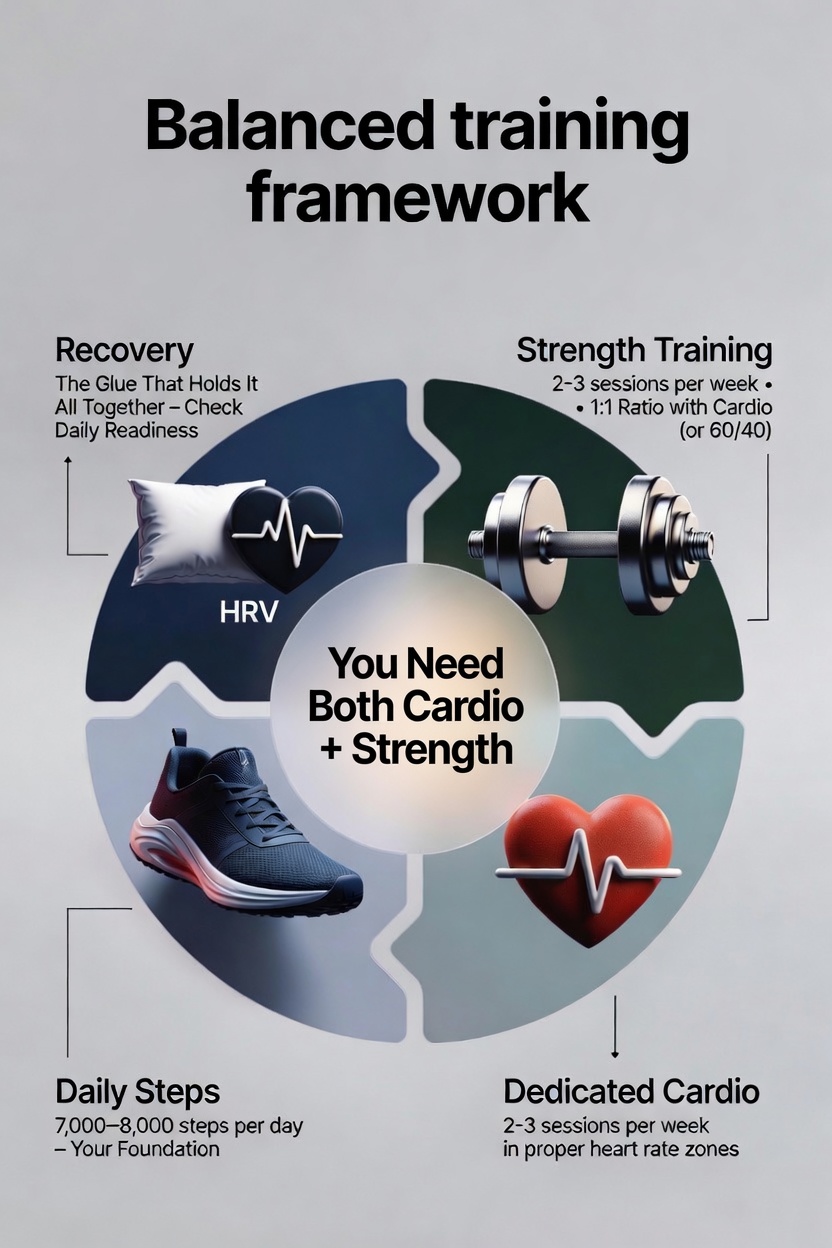
Recovery is the unsung hero. Tools that factor in daily readiness (like Morpheus) help you avoid frying your system.
Practical Takeaways & Next Steps
- Get tested — Book an Active Metabolic Assessment at Lifetime. You’ll walk away with your VO2 max score and exact 5-zone training prescription. This is the best starting point.
- Track honestly — Wear a heart rate monitor during your sessions. That “easy” treadmill walk might need incline, speed, or a different machine to hit the right zones.
- Build the layers — Steps for daily health → Zoned cardio for fitness gains → Strength for muscle, bone, and metabolism → Smart recovery for sustainability.
- Be consistent, not perfect — Small upgrades compound over time.
Movement is medicine. But smart, zoned, recovered movement is better medicine. If you’re already a member, let’s chat about your current routine—I’d love to help you dial it in.
What’s one change you’re going to make this week? Drop it in the comments or reach out via Work With Kelly. And if you missed my post on What is VO2 Max and Why Does It Matter?, check it out for the “why” behind all of this.
Here’s to training smarter, living stronger, and as always, best of luck with your journey.


Leave a Reply